A few months ago, I was chatting with a materials engineer at a small aerospace supplier in Stuttgart. She was telling me how, just two years prior, her team had to reject a client’s design because no printable alloy could handle the thermal cycling requirements. Then, almost overnight, a new high-entropy alloy powder hit the market — and suddenly the part was not only buildable but outperformed the traditionally machined version. That story stuck with me, because it captures exactly what’s happening in industrial additive manufacturing (AM) materials right now: the material science is finally catching up to the ambition of the machines.
So let’s dig into what’s actually changing in 2026, what the data tells us, and — critically — what this means if you’re deciding whether to invest, retool, or simply stay curious.
The Numbers Don’t Lie: Where the Market Stands in 2026
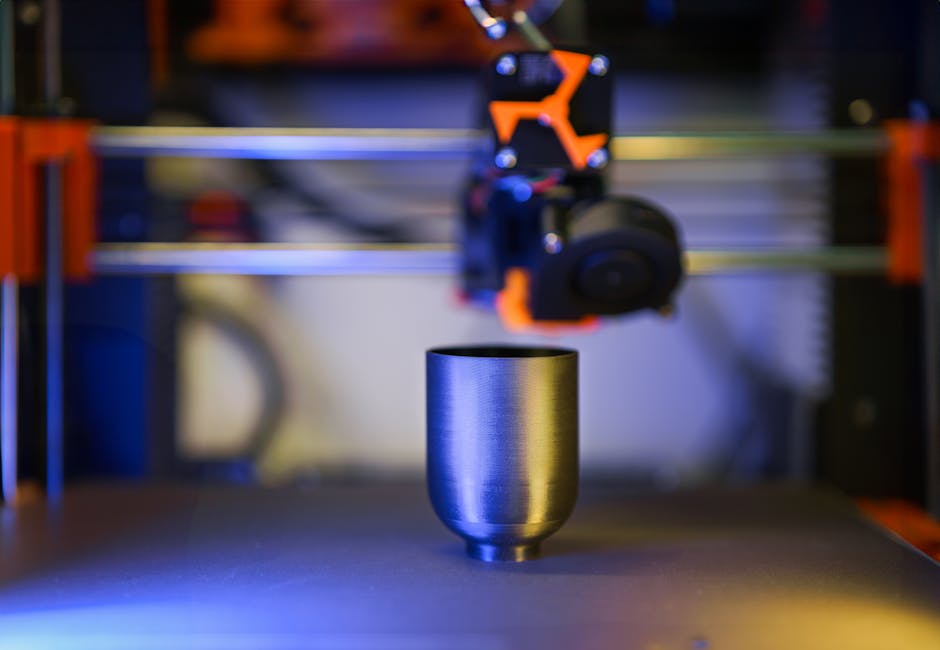
According to the latest industry analysis from SmarTech Analysis and Wohlers Associates, the global market for AM materials alone is projected to cross $8.2 billion USD in 2026, up from roughly $5.4 billion in 2023. That’s not just printer sales — that’s feedstock: powders, filaments, resins, and bio-inks. The materials segment is now growing faster than hardware, which is a telling signal that the industry is maturing from experimentation into production-scale deployment.
What’s driving this? Three converging forces:
- Supply chain resilience pressure: Post-pandemic and post-geopolitical disruption, manufacturers want on-demand, localized part production — and that requires reliable, certified AM materials.
- Sustainability mandates: The EU’s updated industrial decarbonization framework (effective January 2026) has pushed manufacturers to adopt near-net-shape processes that minimize waste. AM, by nature, fits perfectly.
- Performance parity — and beyond: In several categories, AM-produced parts now match or exceed the mechanical properties of wrought or cast equivalents.
Metal Powders: High-Entropy Alloys and Refractory Materials Take Center Stage
If there’s one material category dominating R&D conversations in 2026, it’s High-Entropy Alloys (HEAs). Unlike conventional alloys built around one dominant element (think: stainless steel is mostly iron, titanium alloys are mostly titanium), HEAs consist of five or more principal elements in roughly equal proportions. The result? Extraordinary combinations of strength, corrosion resistance, and thermal stability that were previously impossible to achieve simultaneously.
Companies like Höganäs (Sweden) and Carpenter Additive (USA) have rolled out atomized HEA powder grades specifically optimized for Laser Powder Bed Fusion (LPBF) and Directed Energy Deposition (DED) processes. Early adopters in the aerospace and energy sectors are reporting fatigue life improvements of 15–30% over traditional Inconel 718 in high-temperature applications.
Meanwhile, refractory materials — tungsten, molybdenum, and their composites — are gaining traction for defense and semiconductor tooling applications. The challenge has always been their extreme melting points (tungsten melts at over 3,400°C), but advances in Electron Beam Powder Bed Fusion (EB-PBF) processing parameters are making these materials genuinely printable at scale.
Polymers and Composites: PEEK Isn’t the Ceiling Anymore
For years, PEEK (Polyether ether ketone) was the gold standard for high-performance polymer AM — praised for its chemical resistance, biocompatibility, and thermal stability. In 2026, it’s still excellent, but it’s no longer the ceiling.
PAEK-family materials (Polyaryletherketone) including PEKK and PEKKEK are now commercially available in filament and powder form from suppliers like Solvay and Evonik. These offer slightly superior stiffness-to-weight ratios and, crucially, better processability on Multi Jet Fusion (MJF) platforms — opening up high-throughput production that wasn’t feasible with traditional PEEK.
The real excitement, though, is in continuous fiber-reinforced composites. Markforged’s X7 platform and Continuous Composites’ CF3D technology have both received significant industrial adoption in 2026, particularly in automotive and industrial robotics end-use parts. We’re talking about carbon fiber, fiberglass, and even Kevlar being deposited in continuous strands — not just chopped filler — resulting in parts with structural properties that genuinely compete with aluminum for many applications.
Real-World Examples: Who’s Actually Doing This?
Let’s ground this in reality, because the hype-to-deployment gap in manufacturing can be enormous.
- Siemens Energy (Germany/Global): Has been using DED-printed turbine blade repair with IN738 superalloy powder since 2024, but in 2026 expanded to full blade manufacturing using a new proprietary powder blend, cutting lead time from 18 weeks to under 4 weeks.
- POSCO (South Korea): The steel giant launched a dedicated AM materials division in late 2025, producing custom stainless and tool steel powders optimized for Korean defense and shipbuilding clients — a clear signal that traditional materials producers are pivoting toward AM feedstock as a revenue stream.
- Relativity Space (USA): Their Terran R rocket, in active development, uses an updated aluminum-lithium alloy (developed in partnership with Elementum 3D) that’s been reformulated for their large-format DED system. The alloy achieves aerospace-grade strength while remaining printable at scale — something that was genuinely unsolved just three years ago.
- KAIST & Hyundai Motor (South Korea): A joint research program published findings in early 2026 on gradient-composition titanium parts for EV structural components — where the material composition actually changes continuously through the part to optimize stiffness where needed and dampen vibration elsewhere. This is called Functionally Graded Materials (FGM), and it’s moving from the lab toward the production floor.
The Certification Bottleneck — and How It’s Being Solved
Here’s the honest reality check: having a great material means very little if it isn’t certified for your industry. Aerospace (AS9100), medical (ISO 13485), and automotive (IATF 16949) all require rigorous qualification. And traditionally, qualifying a new AM material has taken 3–5 years and millions of dollars.
Two developments in 2026 are beginning to crack this open:
- Digital material twins: Companies like Ansys and Seurat Technologies are using physics-based simulation to pre-validate material behavior, significantly shortening experimental qualification cycles. The FAA and EASA have both issued updated guidance acknowledging simulation-assisted qualification pathways — a regulatory shift that was years in the making.
- AM material databases: NIST’s AM Material Database (AMMD), expanded significantly in late 2025, now includes standardized test data for over 400 material-process combinations. This shared infrastructure means a material qualified at one facility has a much clearer path to acceptance at another.
Realistic Alternatives: What Should You Actually Do With This Information?
Not everyone reading this is running an aerospace OEM. So let’s be practical about how to engage with these developments based on where you are:
- If you’re a small/mid-size manufacturer: You probably don’t need to develop your own powder alloys. Focus on qualifying one or two well-supported materials (17-4PH stainless, AlSi10Mg, or PEEK) on a certified service bureau platform before chasing exotic materials. Get the fundamentals right first.
- If you’re in R&D or product development: This is the moment to prototype with composite filaments and HEA powders through service providers like Xometry or Protolabs, which now offer these materials on-demand. You can evaluate performance without capital investment.
- If you’re an investor or strategist: The materials segment — not the hardware — is where durable value is being created. Powder atomization, material informatics, and certification support services are all underserved relative to printer OEMs.
- If you’re a student or early-career engineer: Material informatics and process-structure-property relationships in AM are genuinely hot skills in 2026. Consider coursework or projects at the intersection of alloy design and machine learning — it’s a rare combination that’s in high demand.
The trajectory is clear: industrial AM is no longer waiting for better materials — in many categories, the materials are now ahead of the widespread adoption. The challenge has shifted from “can we print this?” to “how do we qualify, scale, and economically justify printing this?” That’s actually a much more interesting problem to solve.
Editor’s Comment : What excites me most about where we are in 2026 isn’t any single breakthrough alloy or composite — it’s the maturation of the ecosystem around them. Certification frameworks, shared databases, simulation-assisted qualification: these are the unglamorous infrastructure pieces that turn a laboratory curiosity into something a factory floor can rely on. If you’re in any part of the industrial manufacturing world, the time to build literacy in AM materials is now — not because everything will change tomorrow, but because the companies that understand these materials deeply today will have a quietly enormous advantage in the next five years.
태그: [‘industrial additive manufacturing’, ‘AM materials 2026’, ‘metal powder 3D printing’, ‘high entropy alloys’, ‘continuous fiber composites’, ‘PEEK alternatives additive manufacturing’, ‘additive manufacturing trends 2026’]
Leave a Reply