Picture this: it’s early 2026, and an aerospace engineer in Toulouse is holding a turbine bracket that weighs roughly 40% less than its traditionally machined counterpart — yet it’s stronger, more heat-resistant, and was printed overnight. A few years ago, that sentence would have sounded like science fiction. Today, it’s Tuesday morning at Airbus’s advanced manufacturing floor. That shift didn’t happen because 3D printing got faster. It happened because the materials got smarter.
If you’ve been keeping an eye on additive manufacturing (that’s the technical umbrella term for 3D printing), you already know the technology has exploded beyond hobby-grade PLA spools. But what’s really driving the industrial revolution right now is a fascinating materials arms race — specifically around carbon fiber composites and metal powders. Let’s dig into what’s actually happening, what the numbers say, and what it means for you whether you’re a maker, an engineer, or just a curious mind.
Why Materials Were Always the Bottleneck
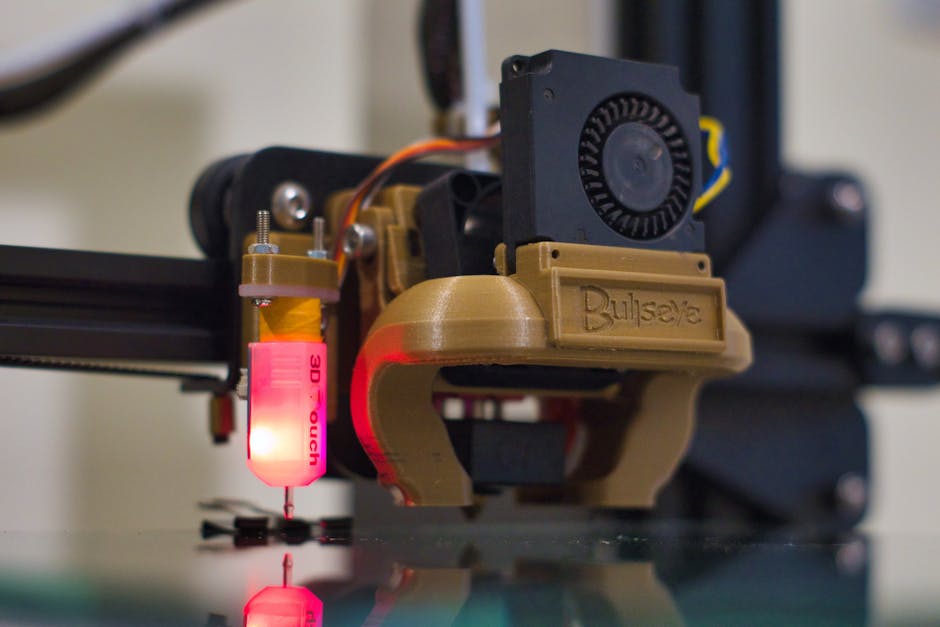
Early desktop 3D printers democratized prototyping, sure. But the dirty secret was always that standard thermoplastics like PLA or ABS are, well, kind of weak. They warp, they degrade under UV, and they definitely don’t belong anywhere near a car engine or a load-bearing structural joint. The hardware got refined over years, but printing a truly functional part — one that performs under real-world stress — required materials that simply weren’t accessible at scale.
That changed gradually, then all at once. By 2026, the global 3D printing materials market is valued at approximately $4.8 billion USD, with advanced composites and metal powders together accounting for nearly 38% of total market share according to industry analyst reports from SmarTech Analysis. That’s not a niche segment anymore — that’s the growth engine.
Carbon Fiber in 3D Printing: Chopped vs. Continuous — It Matters
When people say “carbon fiber 3D printing,” they usually mean one of two very different things, and understanding the distinction is key to knowing what’s actually possible.
- Chopped carbon fiber filament: Short carbon fibers (typically 0.2–0.4mm) are blended into a base polymer like nylon or PEEK. The result is stiffer and lighter than plain plastic — great for enclosures, brackets, and tooling fixtures. Brands like Markforged, Polymaker, and ColorFabb have made this accessible even at the prosumer level.
- Continuous carbon fiber reinforcement (CCFR): This is the game-changer. Companies like Markforged (with their Mark Two and FX20 systems) and Anisoprint feed an unbroken strand of carbon fiber alongside the base material during printing. The mechanical properties jump dramatically — tensile strength can rival aluminum at a fraction of the weight. We’re talking parts with tensile strength exceeding 800 MPa in some configurations.
- Carbon fiber-reinforced PEEK (CF-PEEK): Combine continuous fiber with polyether ether ketone — a polymer famous for thermal and chemical resistance — and you get parts suitable for medical implants, chemical processing, and high-temperature aerospace components. In 2026, CF-PEEK printing has finally become more commercially viable as high-temperature printers have dropped in price by roughly 30% compared to 2023 levels.
Metal Powder Printing: Three Technologies You Should Know
Metal additive manufacturing is where things get truly wild. The core challenge has always been getting metal powder to fuse precisely and predictably. Three dominant technologies are carving up the market right now:
- Selective Laser Melting (SLM) / Laser Powder Bed Fusion (LPBF): A high-powered laser melts metal powder layer by layer in a controlled atmosphere. Materials range from titanium alloys (Ti-6Al-4V is the workhorse) to Inconel superalloys and tool steels. Resolution is exceptional — down to 20–50 microns. GE Additive and EOS dominate here.
- Binder Jetting: A liquid binder is jetted onto metal powder to form a “green” part, which is then sintered in a furnace. Desktop Metal and HP’s Metal Jet systems have pushed this toward high-volume production. Binder jetting is faster and cheaper per part at scale, though post-processing adds complexity.
- Direct Energy Deposition (DED): Metal powder or wire is fed directly into a focused energy beam (laser or electron beam), building up or repairing parts in open space. This is particularly exciting for repair applications — imagine refurbishing a worn turbine blade instead of scrapping it entirely.
Real-World Examples: Who’s Actually Using This?
It’s easy to get lost in specs, so let’s ground this in actual deployments happening in 2026.
NASA’s Artemis Program (USA): Multiple engine components on the SLS and associated lunar landers incorporate LPBF-printed Inconel and titanium parts. NASA’s Marshall Space Flight Center has reported lead time reductions of up to 70% compared to traditional casting for certain propulsion components.
Hyundai Motor Group (South Korea): Hyundai has been running a dedicated metal AM center in Ulsan since late 2024, using binder jetting to produce aluminum and steel components for EV platforms. Their focus is on lightweighting structural brackets — reports suggest average weight savings of 18–22% per component redesigned for additive manufacturing.
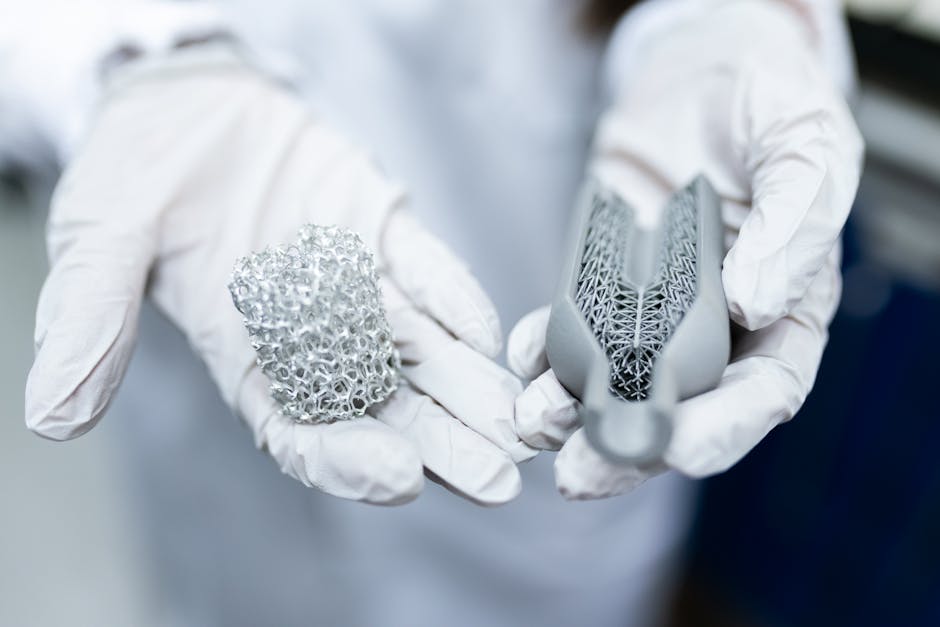
Stryker & Zimmer Biomet (Medical): Orthopedic implants — hip cups, spinal cages, knee components — printed in titanium with deliberately porous lattice structures that encourage bone ingrowth. The porous geometry is something conventional machining simply cannot replicate. Stryker’s Tritanium series is now on its third generation of AM-optimized design.
Local Motors / Divergent Technologies (Automotive): Divergent’s Czinger 21C hypercar uses a 3D-printed carbon fiber and aluminum chassis node structure. The company’s DAPS (Divergent Adaptive Production System) platform claims to reduce chassis manufacturing energy consumption by over 90% versus stamped steel.
The Material Science Behind the Magic
Here’s where it gets genuinely fascinating from a physics standpoint. Carbon fiber’s strength-to-weight ratio is remarkable because of its crystalline structure — graphene-like carbon atoms aligned along the fiber axis create extraordinary tensile strength (around 3,500–7,000 MPa for raw fiber) while maintaining low density (~1.8 g/cm³, versus steel at 7.8 g/cm³). The challenge in printing is preserving fiber alignment and avoiding void formation (delamination points).
For metal powders, particle size distribution and morphology are critical. Spherical powder particles (achieved via gas atomization) pack more efficiently and flow better in powder bed systems, directly impacting part density and surface finish. Titanium and nickel superalloy powders typically range from 15–45 microns for LPBF applications. One of the biggest 2026 developments is the commercial availability of aluminum-scandium alloys in powder form — these offer improved weldability and strength compared to standard AlSi10Mg, opening doors for automotive and aerospace structural parts.
Challenges That Still Need Honest Acknowledgment
Let’s not get carried away with the hype. There are real friction points that engineers and businesses navigate daily:
- Cost: Metal powder for LPBF can run $50–$400 per kilogram depending on alloy. Machine costs for industrial SLM systems remain in the $500K–$2M range. ROI calculations require careful analysis.
- Post-processing overhead: Printed metal parts almost always require heat treatment, support removal, and surface finishing. This adds time and cost that isn’t always visible in “print speed” benchmarks.
- Certification and qualification: In aerospace and medical, proving that a printed part meets regulatory standards (FAA, FDA) is an extensive, expensive process. The material variability inherent in powder-bed processes still demands rigorous statistical qualification.
- Powder handling safety: Fine metal powders — especially reactive ones like titanium — are an explosion and inhalation hazard. Proper facility infrastructure is non-negotiable.
Realistic Alternatives: Finding Your Entry Point
Not everyone needs a $1.5M EOS machine on day one — and honestly, most people shouldn’t start there. Here’s how to think about where carbon fiber and metal printing actually fit your situation:
- For makers and small studios: Start with a high-quality chopped carbon fiber filament printer (Bambu Lab’s X1C with CF-nylon handles beautifully under $1,500) for functional parts that need stiffness without full metal cost.
- For SMEs needing metal parts: Before buying equipment, outsource to a metal AM service bureau (Xometry, Protolabs, or regional providers) to validate design and demand. Bureau pricing has dropped significantly in 2026 — many simple titanium parts are now $150–$400 for one-offs.
- For engineering teams serious about carbon fiber: Evaluate Markforged’s industrial continuous fiber systems or Anisoprint’s Composer for structural applications. The software-side simulation tools (Autodesk Fusion with generative design, nTopology) are just as important as the hardware — design for additive, don’t just replicate traditional geometries.
- For organizations eyeing in-house metal AM: Desktop Metal’s Studio System 2 offers a relatively accessible entry point (~$120K) using bound metal deposition with no loose powder — a much safer and simpler operational footprint for getting started with steel and stainless parts.
The bottom line is that 2026 is genuinely an inflection point. The materials science has crossed enough thresholds that carbon fiber and metal powder printing aren’t just for billion-dollar aerospace programs anymore. They’re becoming legitimate tools for mid-market manufacturing, medical device startups, and even ambitious product designers. The question isn’t really “is this technology ready?” anymore — it’s “which application, at which scale, with which material makes sense for your specific problem?”
That’s a much more interesting question, and one worth spending real time with.
Editor’s Comment : What strikes me most about the carbon fiber and metal powder revolution in 2026 isn’t the jaw-dropping strength numbers or the NASA applications — it’s the democratization curve. We’ve seen this pattern before with CNC machining and injection molding: technologies that begin as exclusive industrial tools gradually become accessible enough that a determined small team can leverage them competitively. We’re right at that inflection point with advanced 3D printing materials. My advice? Don’t wait until it’s ubiquitous to learn it. The practitioners who build fluency now — understanding both the material science and the design philosophy — will have a meaningful head start when the technology becomes standard equipment.
태그: [‘3D printing materials 2026’, ‘carbon fiber additive manufacturing’, ‘metal powder 3D printing’, ‘continuous carbon fiber reinforcement’, ‘selective laser melting titanium’, ‘advanced manufacturing innovation’, ‘industrial 3D printing trends’]
Leave a Reply