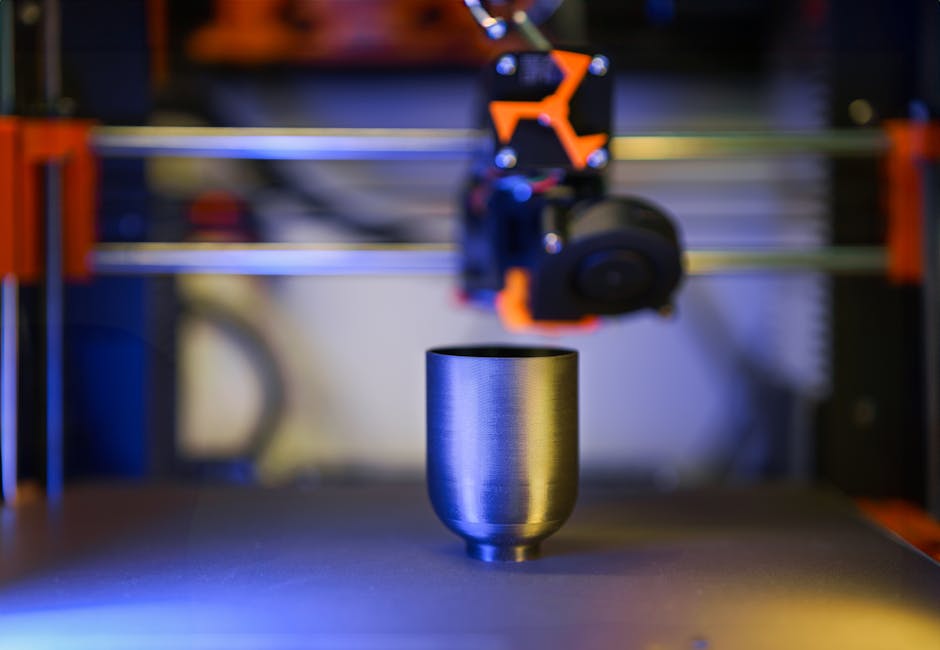
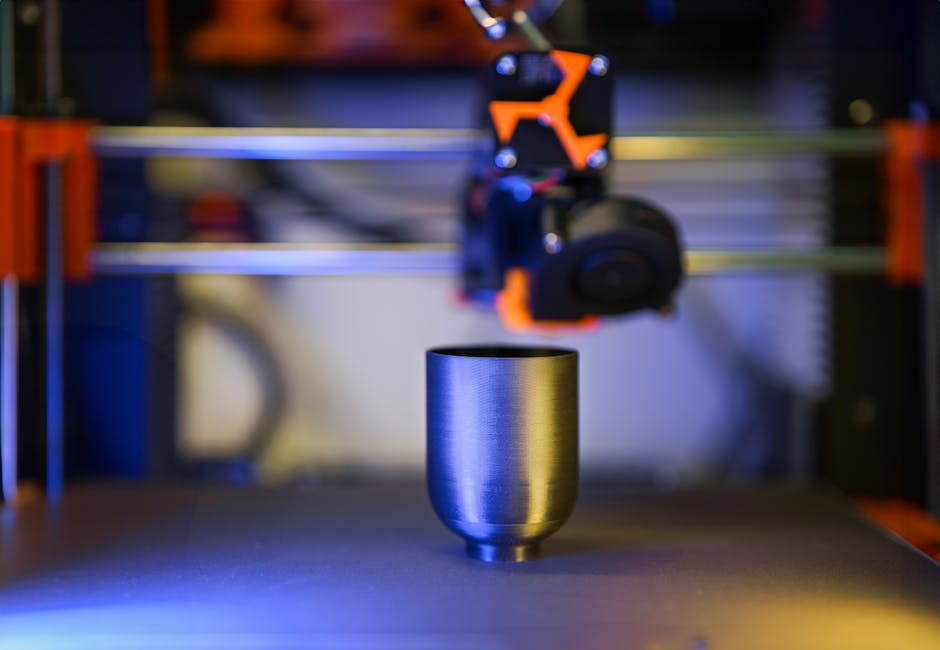
Picture this: a small team of engineers in Pangyo, South Korea, receives an urgent order for a custom titanium surgical implant. Five years ago, fulfilling that request would have meant weeks of overseas sourcing, mountains of paperwork, and costs that would make any CFO wince. Today? That same team fires up their metal 3D printer, runs a simulation, and has a prototype ready before the client’s next meeting. This isn’t science fiction — it’s the new normal being carved out by a wave of South Korean 3D printing startups that are genuinely reshaping what domestic manufacturing looks like.
The Numbers Tell a Compelling Story
Let’s ground ourselves in some data first, because the growth here is hard to ignore. South Korea’s additive manufacturing market crossed the ₩1.2 trillion (~$870 million USD) threshold in 2025, and projections heading into 2026 suggest a compound annual growth rate of roughly 18–21% through 2030. What’s particularly interesting is where that growth is concentrated — it’s not coming from legacy conglomerates adapting slowly. It’s being driven by agile startups with headcounts under 200 who are moving faster than anyone expected.
The government’s Manufacturing Innovation 3.0 initiative has funneled over ₩300 billion in R&D subsidies toward smart factory integration since 2023, and 3D printing technology has been one of the clearest beneficiaries. That policy tailwind, combined with South Korea’s world-class semiconductor and materials science talent pool, has created a genuinely unique environment.
Key Sectors Being Disrupted Right Now
It’s tempting to think of 3D printing as a niche tool for prototyping, but the Korean startups leading this charge are targeting full-scale production in some surprisingly traditional industries:
- Medical devices & bioprinting: Companies like T&R Biofab (a pioneer in bio-ink printing) have expanded their tissue engineering capabilities into cartilage and bone scaffold production, collaborating with Seoul National University Hospital for clinical trials underway in 2026.
- Aerospace & defense components: With South Korea’s domestic aerospace ambitions accelerating post-Nuri rocket success, startups such as Spaceup are producing lightweight lattice-structured brackets that reduce component weight by up to 40% compared to traditionally machined parts.
- Construction & architecture: The startup Hyundai E&C’s spin-off 3D Build Co. (not affiliated with the auto group) has been printing load-bearing concrete wall sections for modular housing projects in Incheon — cutting on-site labor hours by an estimated 35%.
- Consumer electronics enclosures: Several Pangyo-based firms are now offering on-demand small-batch production of custom device housings, cutting lead times from 6–8 weeks (traditional injection molding) down to 48–72 hours.
- Automotive spare parts: Legacy auto suppliers are partnering with startups to 3D print discontinued components for older vehicle models, solving a real headache for both repair shops and collectors.
A Closer Look at Two Standout Cases
Case 1 — Rokit Healthcare (로킷헬스케어): This Seoul-based bioprinting company has arguably become South Korea’s most internationally recognized 3D printing success story. Their Dr. INVIVO bioprinter platform, initially developed for skin tissue printing to treat chronic wounds, has since expanded into corneal tissue research. In 2026, they’re in active partnership talks with Southeast Asian hospital networks to deploy portable bioprinters in field medical units — a genuinely remarkable pivot from lab instrument to humanitarian tool.
Case 2 — InssTek (인스텍): Based in Daejeon near KAIST, InssTek specializes in directed energy deposition (DED) metal printing — essentially a process that can repair high-value metal parts rather than just creating new ones. Think turbine blades, mold tools, and naval vessel components. Their technology is now licensed to a German industrial partner, which is a meaningful signal that Korean IP in this space is earning global credibility, not just domestic accolades.
What These Startups Are Getting Right (That Others Miss)
Here’s where it gets analytically interesting. A lot of 3D printing hype globally has fizzled because companies tried to boil the ocean — promising to replace all manufacturing overnight. The Korean startups that are thriving in 2026 tend to share a more disciplined approach:
- They target a specific material or process (e.g., titanium DED, bio-ink extrusion) rather than being generalists.
- They integrate deeply with existing supply chains rather than trying to replace them entirely.
- They leverage South Korea’s strong B2B culture to build sticky enterprise relationships before going consumer-facing.
- They invest in post-processing automation — the often-overlooked step that determines whether a printed part is actually usable at production quality.
Realistic Alternatives: Not Every Business Needs to Print
Now, let’s be honest with each other — 3D printing isn’t the right answer for every manufacturing challenge, and it’s worth thinking through this carefully. If you’re running a business evaluating whether to adopt additive manufacturing, consider your actual use case before getting swept up in the excitement:
- High-volume, simple geometry parts? Injection molding or CNC machining still wins on cost per unit at scale. 3D printing’s sweet spot is complexity and customization, not raw volume.
- Budget constraints? Instead of buying industrial equipment outright, South Korea has a growing network of additive manufacturing service bureaus — companies like 3DGURU and Stratasys Korea partners — where you can outsource specific print jobs without capital expenditure.
- Skills gap concerns? The government-backed Korea Institute of Industrial Technology (KITECH) now runs subsidized 3D printing operator training programs, particularly for SMEs. This is a genuinely underused resource.
- Just exploring? Desktop FDM printers (fused deposition modeling — basically melting plastic filament into shapes) are more capable and affordable than ever in 2026, and they’re a legitimate way to build internal literacy before committing to industrial-scale investment.
The broader point is that the most successful adopters aren’t the ones who jump in fastest — they’re the ones who match the right technology tier to the right problem. South Korea’s leading 3D printing startups understood this intuitively, which is arguably why they’re outperforming flashier, better-funded competitors from Silicon Valley or Shenzhen.
South Korea’s manufacturing identity has always been built on precision, speed, and an almost stubborn commitment to quality. 3D printing, at its best, amplifies all three of those traits. The startups we’re watching in 2026 aren’t disrupting Korean manufacturing — they’re extending its legacy into the next technological era. And that, honestly, is the more interesting story.
Editor’s Comment : What strikes me most about this space isn’t the technology itself — it’s the mindset shift. The most compelling Korean 3D printing founders I’ve come across aren’t thinking “how do we replace factories?” They’re asking “what can we make now that was literally impossible to make before?” That question, more than any printer spec or government subsidy, is what’s going to determine who’s still standing five years from now. If you’re curious about dipping your toes in, start small, start specific, and find a problem worth solving — the tools will meet you there.
태그: [‘3D printing startups South Korea’, ‘additive manufacturing innovation 2026’, ‘Korean manufacturing technology’, ‘bioprinting Korea’, ‘smart factory Korea’, ‘InssTek Rokit Healthcare’, ‘manufacturing disruption Asia’]
Leave a Reply