Picture this: a mid-sized EV startup in Stuttgart walks into a traditional parts supplier asking for a topology-optimized suspension bracket — one that needs to shed 40% of its weight without losing structural integrity. The supplier quotes 14 weeks and a six-figure tooling bill. The startup walks out, fires up a metal powder bed fusion printer, and has a functional prototype in 11 days. That’s not a futuristic scenario anymore. In 2026, it’s Tuesday.
The automotive industry’s obsession with lightweighting isn’t new — every 10% reduction in vehicle weight translates to roughly a 6–8% improvement in fuel efficiency or extended EV range. But the tools available to achieve that goal have changed dramatically. 3D printing, or more precisely additive manufacturing (AM), is no longer just a prototyping toy. It’s a serious, production-grade technology reshaping how lightweight automotive components are designed, tested, and built.
Let’s dig into the real numbers, real examples, and — most importantly — what this actually means for different players in the industry.
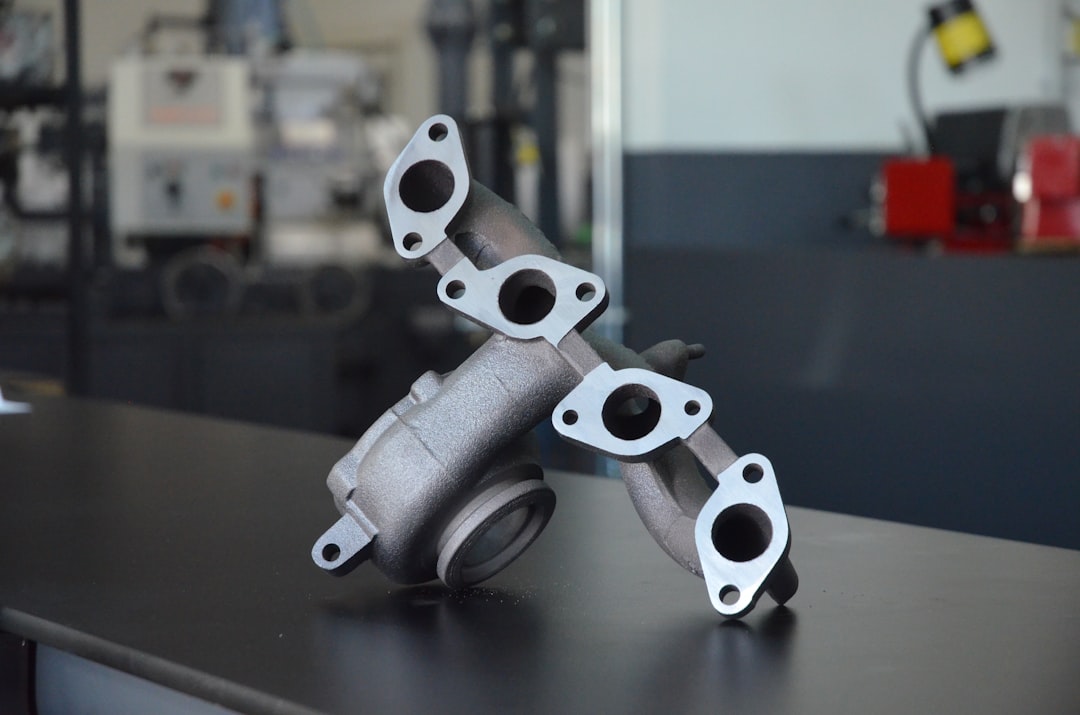
Why Lightweighting Still Matters (More Than Ever) in 2026
With global EV adoption crossing the 38% new-vehicle sales threshold in early 2026, range anxiety remains a top consumer concern. Battery packs are heavy — a typical 75 kWh lithium-ion pack weighs around 450–500 kg. Engineers are essentially fighting physics: add more battery for range, but the extra weight eats into that very range. The only logical escape hatch? Make everything else lighter.
Traditional lightweighting approaches include:
- High-Strength Steel (HSS): Strong but dense; difficult to form into complex shapes without expensive tooling.
- Aluminum casting/forging: Lighter, but still constrained by subtractive machining logic — you start with a block and cut away material.
- Carbon Fiber Reinforced Polymer (CFRP): Excellent weight-to-strength ratio, but notoriously expensive and labor-intensive to manufacture at scale.
- Additive Manufacturing (AM): Builds material only where it’s structurally needed — a fundamentally different and more efficient philosophy.
That last point is the key insight. AM doesn’t just produce lighter parts; it produces parts that are geometrically impossible to make any other way.
The Data Behind the Weight Savings
Let’s get specific, because vague claims about “lighter and stronger” get old fast.
A 2025–2026 industry analysis by the Fraunhofer Institute for Laser Technology found that topology-optimized aluminum parts produced via Laser Powder Bed Fusion (L-PBF) achieved an average weight reduction of 35–55% compared to conventionally machined equivalents, with equivalent or superior fatigue strength. For titanium alloy parts — often used in high-performance and motorsport applications — the weight savings ranged from 40–60%, with Ti-6Al-4V (Grade 5) remaining the material of choice.
More practically, the Society of Automotive Engineers (SAE) published benchmark data in early 2026 showing that AM-produced structural nodes in electric vehicle battery enclosures reduced component count by an average of 73% (from multi-part assemblies to single-print units), cutting assembly labor costs significantly while also reducing potential failure points.
The cost equation has also shifted. In 2020, metal AM parts cost roughly $300–500 per kilogram of finished material. By 2026, advances in multi-laser systems and reusable powder management have pushed that figure down to approximately $80–150 per kg for high-volume applications — still premium, but increasingly competitive with low-volume CFRP fabrication.
Real-World Manufacturing Cases: Who’s Actually Doing This?
Theory is nice. Examples are better. Here’s where AM lightweighting is making measurable impact right now:
1. BMW Group — Topology-Optimized Strut Tower Brace (Munich, Germany)
BMW’s Additive Manufacturing Campus in Munich has been producing structural components for the i-series and the new Neue Klasse platform since 2024. Their topology-optimized strut tower brace, printed in AlSi10Mg aluminum alloy, weighs 44% less than the previous stamped steel version while passing identical crash and fatigue certification standards. Crucially, BMW integrated the AM parts into the standard assembly line by 2026 — not as special-order items, but as routine production components.
2. Hyundai Mobis — EV Subframe Nodes (South Korea)
Hyundai’s parts subsidiary began a quiet but significant pilot program in late 2024, using directed energy deposition (DED) printing to manufacture subframe connection nodes for the IONIQ platform. The printed nodes consolidate what were previously 7 individual stamped and welded components into a single part, achieving a 31% weight reduction and a reported 18% reduction in total assembly time. The program scaled to partial production volumes in 2025 and is now a standard part of their next-gen EV platform supply chain.
3. Divergent Technologies — Full Structural Vehicle Architecture (Los Angeles, USA)
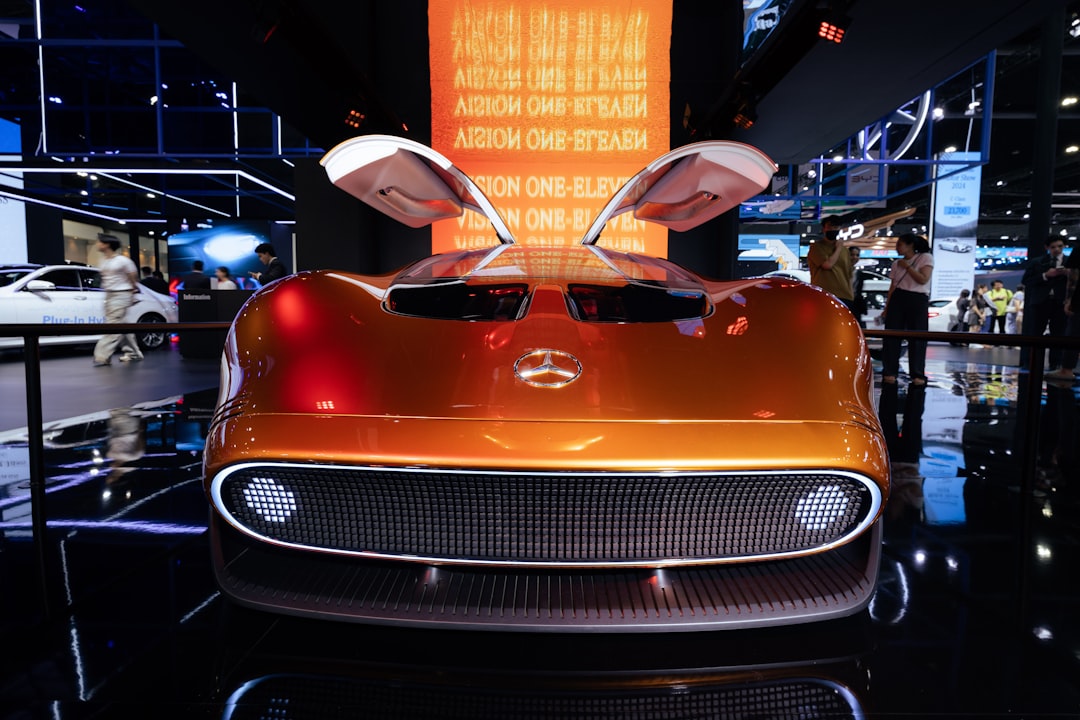
Perhaps the most aggressive case is Divergent Technologies, which has built its entire business model around AM-first vehicle construction. Their Czinger 21C hypercar — already legendary in engineering circles — uses a 3D-printed titanium and aluminum monocoque chassis. In 2026, they announced licensing agreements with three OEMs (names undisclosed pending contract finalization) to integrate their DAPS (Divergent Adaptive Production System) into commercial vehicle manufacturing. Their chassis components demonstrate weight reductions of up to 60% versus equivalent steel welded structures.
4. Porsche — Additive-Manufactured Pistons (Weissach, Germany)
Porsche’s motorsport division pioneered 3D-printed pistons in the 911 GT2 RS engine as early as 2020, but by 2026, the technology has filtered into Porsche’s high-performance road car production line. The printed pistons feature an integrated cooling duct geometry that is physically impossible to machine conventionally — resulting in a 10% weight reduction per piston and allowing a 30% increase in maximum engine speed capability. This is textbook AM advantage: geometry freedom unlocking performance that mass isn’t the only metric.
The Process Behind the Magic: Key AM Technologies in Automotive
Not all 3D printing is created equal. In automotive lightweighting, three main technologies dominate:
- Laser Powder Bed Fusion (L-PBF / SLM): Best for complex, high-precision metal parts (aluminum, titanium, stainless steel). Used for structural brackets, nodes, and housing components. Layer thickness: 20–100 microns.
- Directed Energy Deposition (DED): Ideal for larger parts and repair applications. Builds material onto an existing substrate or builds freeform geometries. Used for subframes and large structural elements.
- Binder Jetting: Fastest for high-volume metal parts; slightly less dense than L-PBF but rapidly improving. Companies like Desktop Metal and ExOne have pushed automotive adoption significantly in 2025–2026.
- Continuous Fiber Reinforcement (CFR) FFF: For polymer composite parts — think interior brackets, cable management, and secondary structural elements. Markforged’s systems are common in Tier 1 supplier tooling and fixture manufacturing.
Realistic Alternatives: Not Every Shop Needs a $2M Metal Printer
Here’s where I want to be genuinely useful rather than just dazzling you with hypercar stories. The AM lightweighting revolution is real, but it’s not equally accessible to everyone. Let’s think through who can actually benefit and how:
If you’re an OEM or Tier 1 supplier with high-volume production demands: Investment in L-PBF or Binder Jetting systems makes strong ROI sense for structural nodes, brackets, and consolidation of multi-part assemblies. The break-even point is lower than it was in 2023, typically around 500–2,000 annual units depending on part complexity.
If you’re a Tier 2/3 supplier or specialty shop: Consider service bureau partnerships before capital investment. Companies like Protolabs, Materialise, and Xometry now offer next-day metal AM quoting and production. You get the part; they own the machine. This is the pragmatic path for most mid-sized manufacturers in 2026.
If you’re in motorsport or low-volume performance vehicles: This is where AM is most unambiguously your friend. Even desktop metal printers (think Markforged Metal X or Desktop Metal Studio System at $100K–$200K) can produce functional titanium and stainless structural parts that genuinely change your weight budget.
If you’re a designer or engineer at any level: The most valuable skill you can invest in right now is topology optimization software fluency — tools like Altair Inspire, nTopology, or Autodesk Fusion’s generative design module. The printer is only as smart as the geometry you feed it. Great topology optimization paired with even modest AM capability produces remarkable results.
The Challenges We Shouldn’t Ignore
Honest assessment means acknowledging the friction points. AM in automotive production isn’t frictionless:
- Post-processing costs: Metal AM parts almost always require stress relief heat treatment, support removal, and surface finishing — adding 20–40% to production time and cost.
- Certification and qualification: Aerospace learned this the hard way; automotive is still building the standards framework. Part-to-part consistency documentation and non-destructive testing (NDT) requirements add overhead.
- Supply chain integration: Inserting AM parts into traditional stamped/welded assembly lines requires fixture redesign and sometimes complete line reconfiguration.
- Material traceability: Powder recycling and lot traceability remain active challenges, particularly for safety-critical structural components.
None of these are dealbreakers — they’re engineering problems being actively solved. But walking into an AM project without accounting for them will burn your budget and your schedule.
The trajectory is clear: additive manufacturing has moved from the R&D lab to the assembly line, and the lightweight automotive parts it produces are measurably better by the numbers that matter most — weight, strength, consolidation, and increasingly, cost. The question in 2026 isn’t whether your organization should engage with AM lightweighting. It’s how and at what scale to do it intelligently.
Editor’s Comment : What genuinely excites me about this space isn’t the headline-grabbing hypercars — it’s the quiet, systematic adoption happening at places like Hyundai Mobis and BMW’s production floors. When a mainstream EV platform starts integrating AM-produced structural nodes as standard supply chain items (not special editions, not concept cars), that’s the signal that the technology has crossed the chasm. If you’re anywhere in the automotive supply chain and still treating 3D printing as a “prototyping thing,” that assumption is now officially overdue for retirement.
태그: [‘3D printing automotive’, ‘lightweight car parts manufacturing’, ‘additive manufacturing EV’, ‘metal 3D printing 2026’, ‘topology optimization automotive’, ‘automotive lightweighting technology’, ‘BMW Hyundai 3D printed parts’]
Leave a Reply