A friend of mine — seasoned traveler, frequent flyer, the kind of person who scoffs at travel anxiety — nearly missed a Singapore Airlines flight out of Incheon last spring. Not because of traffic. Not because of a delayed subway. Because he trusted the first result on Google Maps for “Incheon Airport Terminal 1” and ended up at the wrong drop-off zone, 20 minutes away from his actual check-in counter, with 45 minutes to boarding. That story haunted me enough to dig deep into how Incheon International Airport actually works in 2025 — and what most travel guides still get catastrophically wrong.
Two Terminals, One Massive Headache If You Mix Them Up
Let’s start with the thing that trips up even experienced travelers: Incheon has two terminals, Terminal 1 (T1) and Terminal 2 (T2), and they are not walking distance apart. The inter-terminal shuttle bus takes approximately 15–18 minutes, and if you’re already cutting it close, that gap can mean a missed flight — full stop.
Here’s the airline split as of 2025:
- Terminal 2 (T2): Korean Air, Delta, Air France, KLM, Garuda Indonesia, Czech Airlines, Xiamen Airlines
- Terminal 1 (T1): Virtually all other airlines — Asiana, Singapore Airlines, Emirates, Cathay Pacific, United, Lufthansa, ANA, and more
The mistake my friend made? He flies Korean Air domestically all the time, so his muscle memory said “T1.” His international flight was actually Korean Air to Singapore — which departs from T2. Always, always verify your terminal on your boarding pass or e-ticket before you leave for the airport.
Getting There: Real Numbers on Every Option
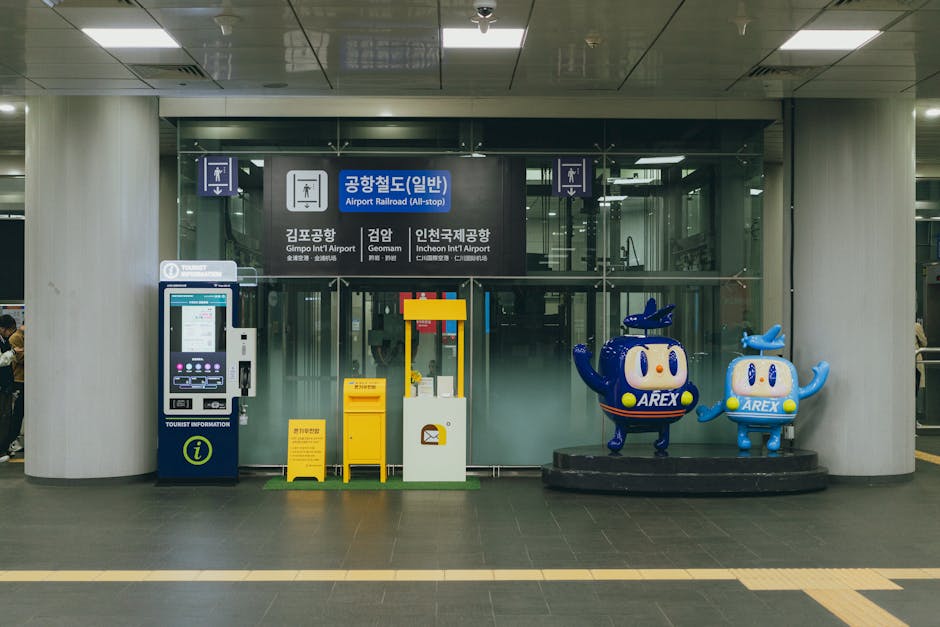
The AREX (Airport Railroad Express) is still the gold standard for getting to Incheon in 2025, but there are two versions that confuse a lot of people:
- AREX Express (직통열차): Seoul Station → Incheon Airport T1 in exactly 43 minutes, T2 in 51 minutes. Fare: ₩11,000 (adults, one way). Runs every 30 minutes from around 5:20 AM to 10:50 PM.
- AREX All-Stop (일반열차): Takes 66–70 minutes, stops at Gimpo Airport, Hongik University, etc. Fare: ₩4,850 from Seoul Station. Runs more frequently.
- KAL Limousine Bus: From Gangnam or Hongdae areas, roughly ₩17,000. Travel time is 70–100 minutes depending on traffic — not advisable during peak hours (7–9 AM, 5–8 PM).
- Taxi/Kakao T: Standard taxi from central Seoul runs ₩55,000–₩75,000 with tolls included. Premium black car (모범택시) averages ₩80,000–₩95,000. In 2025, Kakao T has improved surge pricing transparency, so check the app estimate before you commit.
My personal recommendation for most travelers: AREX Express if you’re near Seoul Station, All-Stop if you’re in Hongdae or Gimpo corridor, and taxi only if you’re traveling with 3+ bags or from a location poorly connected to the subway.
Check-In Timing: The 2025 Reality Check
Incheon’s official recommendation is to arrive 3 hours before international departure. In practice, here’s what that actually looks like in 2025:
- Peak hours (July–August, Chuseok/Seollal holidays): Security lines at T1 can reach 40–60 minutes. Budget 3.5 hours minimum.
- Off-peak weekday mornings (9 AM–12 PM): Security typically clears in 10–15 minutes. 2 hours is usually fine for experienced travelers.
- Self check-in kiosks: Available for most major carriers. Korean Air and Asiana have expanded kiosk lanes in 2025, and bag drop queues have been separated — this saves 15–25 minutes on average.
- Smart Pass (생체인식): Incheon rolled out expanded biometric gates in 2025. If you’re enrolled (available at the Smart Pass counters near departure halls), you can skip the standard immigration line — saving up to 30 minutes during rush periods.
Layover Strategy: What Actually Makes Sense
Incheon is consistently ranked among the top 3 airports globally by Skytrax, and the facilities back that up. But knowing where things are saves you from wandering:
- Free Transit Tour: For layovers of 5–23 hours, Incheon offers complimentary city tours (Korean Culture Tour, Seoul City Tour, and DMZ options). Registration desk is at Transit Hotel Zone, Basement Level, T1. Slots fill fast — register as soon as you land.
- Shower facilities: Available in the transit zone. ₩7,000 for a 20-minute session. Towels and toiletries included. Worth every won on a long haul.
- Sleeping pods (T2): Nap zone on the 4th floor of T2. Around ₩15,000/hour. Requires a transit boarding pass for access.
- Currency exchange: Rates inside security (post-customs) are consistently 1.5–2% better than landside counters. If you need Korean won for a layover tour, exchange a small amount at the Travelex counters near Gate 28 (T1) or Gate 251 (T2).
The Hidden Stress Points Most Guides Skip
Here’s where things get practical in a way most glossy travel articles skip entirely:
- T1 Gates 101–132 are a 15–20 minute walk from the main check-in hall. If your gate ends in a number above 100, factor this into your timeline. There are inter-concourse transit carts, but they run on their own schedule.
- Duty-free pickup for pre-ordered items is at a separate counter from the in-store duty-free. If you ordered online (Lotte Duty Free, Shilla, etc.), your pickup counter is Level 1, near specific airline clusters. Confirm the exact counter when you order — this caught several travelers off guard in early 2025 after a counter reorganization.
- SIM cards and pocket Wi-Fi: KT, SK Telecom, and U+ all have booths at both arrival and departure halls. In 2025, a 30-day unlimited data eSIM runs about ₩30,000–₩40,000 — genuinely good value. Physical SIM is slightly cheaper but requires a passport check.
- Incheon Airport’s free Wi-Fi (AIP_Free_WiFi_5G) is reliable for basic use but throttles above 20 Mbps. Fine for messaging, not ideal for streaming or large uploads.
If You Have Extra Time: The Bits Worth Knowing
The Incheon Airport Transit Hotel (inside T1, airside) offers day-use rooms from ₩50,000 for 4 hours. It’s not luxury, but it’s legitimately comfortable — clean beds, quiet, and you never leave the secure zone. For long-haul travelers connecting onward, this is a significantly underused resource.
The Korean Cultural Street on T1’s 3rd floor (post-security) has a surprisingly solid selection of traditional crafts, ginseng products, and K-beauty items at regulated, fixed prices — no bargaining needed, and no tourist markup concerns. It’s actually a better place to buy Korean gifts than most airport duty-free shops.
For food, skip the chain restaurants near the main hall. The basement food court (지하 식당가) in T1 has a proper Korean set meal (백반) for ₩9,000–₩12,000 — same quality as a neighborhood restaurant, which is rare for an airport.
Wrapping It All Up
Incheon is genuinely one of the best airports in the world to transit through in 2025 — but it rewards people who know how it works and punishes those who wing it. The terminal confusion is real. The walking distances are real. The check-in timing pressures are real. None of this is insurmountable once you’ve mapped it out beforehand.
If you’re arriving for the first time: screenshot your terminal assignment, add 30 minutes to whatever time feels comfortable, and use the AREX Express if geography allows. If you’re a transit passenger: register for the free city tour the moment you land, and check out the nap pods if you have a long wait.
The airport itself won’t let you down — it’s your preparation that makes or breaks the experience.
Have you had a terminal mix-up at Incheon, or found a hidden gem in the transit zone that other travelers should know about? Drop it in the comments — real firsthand tips are always more useful than any official brochure.
📚 관련된 다른 글도 읽어 보세요
- Industrial Additive Manufacturing Precision: Real-World Case Studies That Are Actually Changing the Game in 2026
- 적층 제조, 진짜 대량 생산 가능한가? 2026년 현장 엔지니어가 수치로 검토함
- 삽질 3개월 끝에 완성한 중고 서버 홈랩: Dell R730xd 실구매 후기 + 2026 세팅 가이드
태그: Incheon Airport guide, ICN terminal tips, Korea travel 2025, AREX airport train, Incheon layover, Korea transit tips, Seoul airport travel
Leave a Reply