A friend of mine — seasoned traveler, never checks anything twice — showed up at Incheon Airport Terminal 1 last spring only to discover her airline had quietly moved to Terminal 2. She had a 90-minute buffer, which sounds generous until you realize the inter-terminal transit takes about 18 minutes by the free shuttle, plus security re-screening on the other end. She made her flight by four minutes. Four. Minutes.
That story kicked off a pretty deep dive on my end, because I realized I’d been operating on autopilot too. “Just go to Incheon” sounds simple until Terminal 2 expanded its airline roster in recent years and the split became genuinely confusing. Let’s work through this together so nobody else is sprinting through a moving walkway in dress shoes.
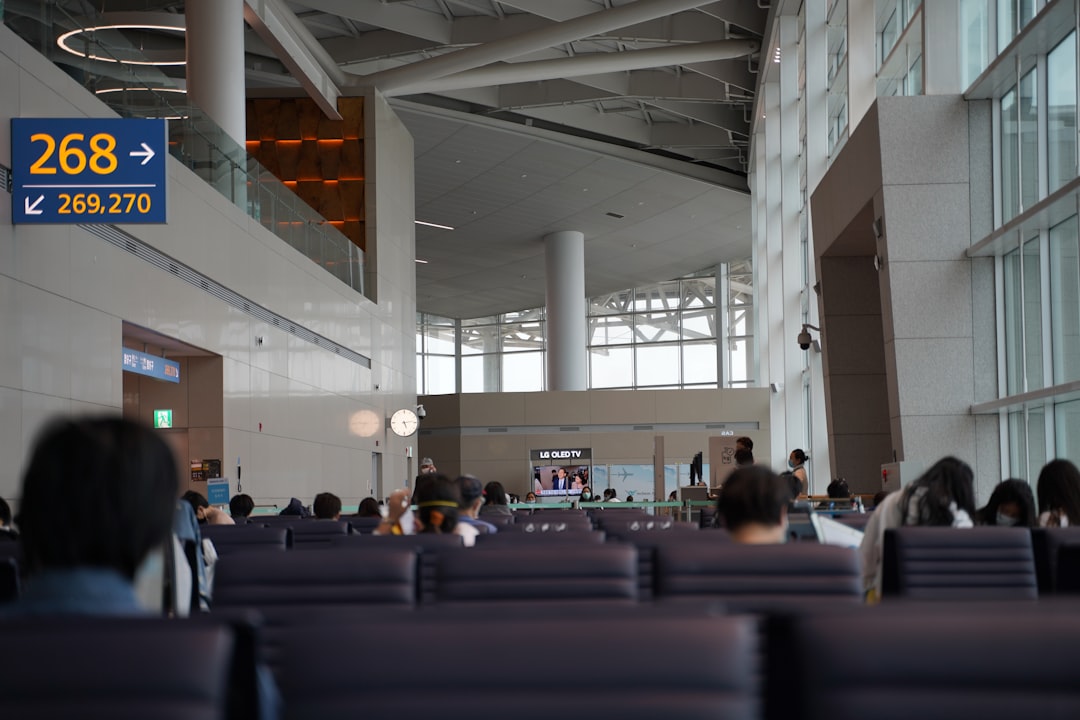
The Core Split: Which Airlines Are Actually Where in 2025
Here’s the foundational thing to get straight. Incheon International Airport operates two physically separate terminal buildings. They are not connected by an indoor walkway — you need the dedicated shuttle bus (free, runs every 5–7 minutes, takes roughly 15–18 minutes terminal-to-terminal) or the Airport Railroad (AREX, about 6 minutes, ₩900 fare between terminals).
Terminal 2 (T2) is home to the SkyTeam alliance anchor carriers plus their partners:
- Korean Air (KE) — the original T2 anchor when it opened in January 2018
- Delta Air Lines (DL)
- Air France (AF)
- KLM Royal Dutch Airlines (KL)
- Aeroflot (suspended routes as of 2025, but check before assuming)
- Garuda Indonesia (GA) — moved to T2 in 2023 expansion
- Czech Airlines and select SkyTeam codeshares
Terminal 1 (T1) handles essentially everyone else — Asiana Airlines (OZ), all low-cost carriers (LCC) including Jeju Air, Jin Air, T’way, Air Busan, Eastar Jet, plus international carriers like United, American, Cathay Pacific, Singapore Airlines, Emirates, Japan Airlines, ANA, and dozens more. T1 is older, larger by gate count, and frankly more chaotic during peak travel windows.
The 18-Minute Problem: Why the Buffer Matters More Than You Think
Let’s put real numbers to this. The shuttle bus departs from Level 1, Exit 5 (T1 side) and Level 1, Exit 4 or 5 (T2 side). During off-peak hours I clocked the actual door-to-door time at about 22 minutes when factoring in wait time. During morning peak (06:00–09:00 KST), I’ve seen travelers wait 12 minutes for a shuttle because the prior one was packed.
The AREX inter-terminal service is faster and more predictable — trains run every 6–7 minutes and the ride itself is 6 minutes — but you need to factor elevator/escalator time to the underground station from departures level. Realistically: 12–15 minutes door-to-platform if you’re not familiar with the layout, plus the 6-minute ride, plus exit time at the other end. Call it 20–25 minutes total in an unfamiliar situation.
Practical rule of thumb: If you discover you’re at the wrong terminal and your gate closes in under 60 minutes, you are in genuine trouble. Under 45 minutes is a near-certain miss.
How to Check Correctly Before You Leave Home
Google Maps and many third-party booking apps pull departure terminal data inconsistently — they’ll show the airport name correctly but won’t always distinguish T1 vs T2 in the display card. Here’s where to actually verify:
- Incheon Airport Official Website (www.airport.kr) — Real-time flight information board, searchable by flight number. Terminal assignment is clearly labeled. This is the ground truth source.
- Your airline’s app or check-in confirmation email — Look for the terminal code explicitly. Korean Air boarding passes print “Terminal 2” in Korean (제2여객터미널) and English. If yours just says “ICN” without terminal detail, call the airline.
- IATA flight status aggregators like FlightAware or FlightRadar24 also carry terminal data for ICN, though with occasional 24–48 hour lag on schedule changes.
- Check again 48 hours before departure — Airlines do reassign terminals, especially with irregular operations, charter adjustments, or seasonal schedule changes.
Facilities Comparison: Where to Spend Your Layover Time Wisely
Beyond not missing your flight, knowing the terminal split helps you plan layovers. T2 is newer (opened 2018, Phase 2 expanded through 2023) and has a noticeably less crowded feel during off-peak hours. The duty-free density is lower than T1, but the food court on Level 3 has shorter queues and the lounges — particularly the Korean Air KAL Lounge and Joongang Lounge — are widely considered among the best in Asia for their tier.
T1 has the sheer volume advantage: more dining variety, the iconic Morning Calm Premium Lounge accessible to many Priority Pass holders, the Korean Cultural Street (a free cultural experience zone on the transit level), and direct connections to the Incheon Airport Transit Hotel if you need a few hours of proper sleep.
For families specifically: T1’s Family Lounge (near Gates 23–26) has dedicated nursing rooms, child play areas, and stroller rental. T2’s family facilities are more distributed and slightly harder to locate if you’re new to the building.
The Low-Cost Carrier Wrinkle: Domestic Connections Out of T1
If you’re connecting from an international flight to a Korean domestic leg — say, Seoul to Busan on Jeju Air — everything goes through T1, full stop. All domestic-serving LCCs operate exclusively from T1. This catches people arriving on Korean Air (T2) who need to make a domestic connection. That inter-terminal transit time needs to be baked into your minimum connection time calculation, and officially Incheon recommends at minimum 90 minutes for international-to-domestic connections requiring terminal transfer.
Korean Air’s own minimum connection time (MCT) for a T2-to-T1 domestic transfer is listed as 90 minutes in their booking system, but seasoned travelers report that 120 minutes is the comfortable threshold, especially if you have checked luggage re-routing.
Quick Reference Checklist Before You Head to the Airport
- ✅ Confirm terminal assignment on airport.kr within 48 hours of departure
- ✅ If flying Korean Air, Delta, Air France, or KLM — you’re T2
- ✅ If flying Asiana, any Korean LCC, or most non-SkyTeam internationals — you’re T1
- ✅ Budget 25–30 minutes for inter-terminal transfer (including wait + ride + exit)
- ✅ For domestic connections from international, use 120-minute buffer minimum
- ✅ AREX inter-terminal fare: ₩900, faster and more schedule-reliable than shuttle
- ✅ Re-verify if your flight is rescheduled, swapped to a different aircraft, or rebooked
The honest bottom line here is that Incheon is still one of the best-run airports in the world — it’s topped Skytrax rankings repeatedly — but the two-terminal system creates a specific failure mode that punishes assumption-making. The airport isn’t the problem. Outdated information and autopilot habits are.
If you’re in a situation where you genuinely don’t know your terminal with confidence, the safest call is always to arrive at Incheon 3 hours before international departure instead of the standard 2-hour guideline. That buffer absorbs almost any terminal mixup scenario without drama.
Travel Tip: Screenshot your terminal assignment from airport.kr the night before and save it offline — airport Wi-Fi queues during peak check-in hours are real, and having that confirmation ready without needing a connection has saved more than one traveler a frantic search at the information desk.
📚 관련된 다른 글도 읽어 보세요
- 이것만 알면 나도 할 수 있다 — 2026년 기준 미국 주식 처음 시작하는 법 완전 정복
- 2026년 기준 전기차 진짜 유지비 — 사기 전에 제발 이것만 확인하세요
- Why I Almost Gave Up on Rental Properties — A Real 2025 Investor’s Honest Look
태그: Incheon Airport, Terminal 1 vs Terminal 2, ICN airport guide, Korea travel tips, airport transit, Korean Air terminal, Incheon layover
Leave a Reply