Picture this: it’s 2015, and an engineer at GE Aviation is staring at a fuel nozzle assembly made from 20 separate brazed components. Fast-forward to today in 2026, and that same part is a single, flawlessly printed piece — 25% lighter, five times more durable, and produced in a fraction of the time. That leap didn’t happen overnight, but it tells us everything about where additive manufacturing (AM) has taken the aerospace industry. If you’ve been wondering whether 3D printing in aerospace is still a “future concept” or a living, breathing reality, buckle up — because the answer is firmly the latter.
What Exactly Is Additive Manufacturing? A Quick Primer
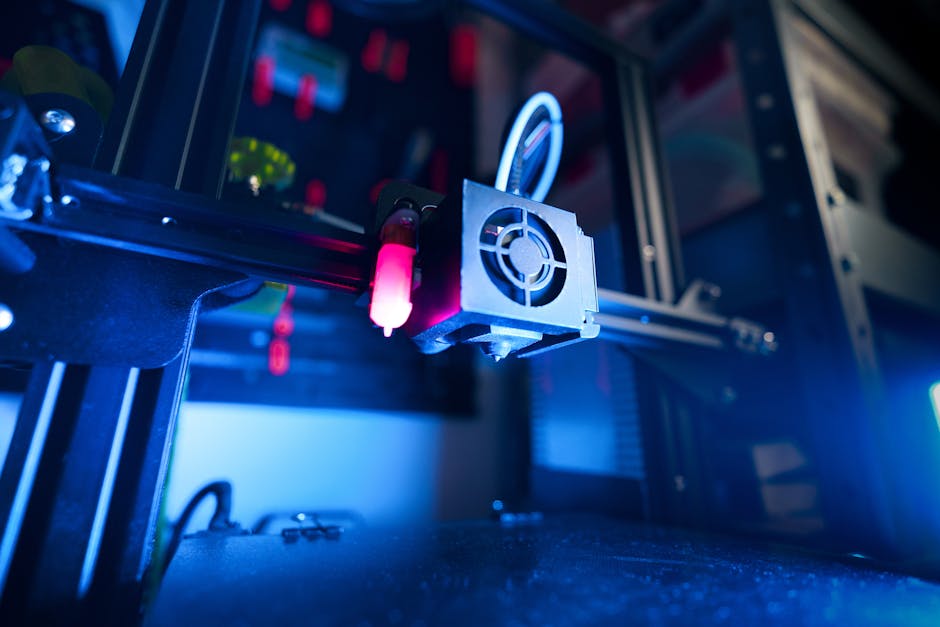
Before we dive into the big examples, let’s level-set. Additive manufacturing is the process of building a part layer by layer from a digital design — the polar opposite of traditional subtractive manufacturing, where you carve material away from a block. In aerospace, the dominant AM methods include:
- Selective Laser Melting (SLM): Uses a high-powered laser to fuse metallic powder, ideal for dense, structural parts.
- Electron Beam Melting (EBM): Operates in a vacuum using an electron beam — excellent for reactive metals like titanium.
- Direct Energy Deposition (DED): Melts material as it’s deposited, great for repairing or adding features to existing parts.
- Binder Jetting: A newer player gaining traction for high-volume, complex geometries at lower cost.
Each method has its sweet spot depending on the material, complexity, and production volume required. That nuance matters a lot when we’re talking about parts that need to survive 30,000 feet, hypersonic speeds, or the vacuum of space.
Why Aerospace and AM Are a Perfect Match: The Data Tells the Story
Aerospace has always been obsessed with two things: reducing weight and ensuring reliability. AM delivers on both — but the numbers are what really make engineers sit up straight.
- Weight reduction: Topology-optimized AM parts routinely achieve 40–70% weight savings compared to traditionally machined equivalents. In aerospace, every kilogram saved translates to roughly $1,300–$2,500 in annual fuel savings per aircraft.
- Buy-to-fly ratio: Traditional titanium machining wastes up to 90% of raw material. AM brings that waste down to under 10% in many cases — a massive cost and sustainability win.
- Part consolidation: Complex assemblies with dozens of parts can be redesigned as single printed components, slashing assembly time and potential failure points.
- Lead time compression: Replacement or custom parts that once took 12–18 months to procure through traditional supply chains can now be produced in days or weeks.
As of 2026, the global aerospace AM market is estimated to exceed $6.8 billion annually, with compounded annual growth tracking above 18% through the end of the decade. That’s not speculation — that’s an industry doubling down on a technology that’s already proven itself.
Real-World Applications: From Jet Engines to Spacecraft
Let’s get specific, because this is where the story gets genuinely exciting.
1. GE Aerospace — The Fuel Nozzle That Changed Everything
GE’s LEAP engine fuel nozzle remains one of the most cited AM success stories in aerospace history — and for good reason. Printed from a cobalt-chrome powder alloy, the nozzle is 25% lighter and has a service life five times longer than its predecessor. As of 2026, GE Aerospace has printed well over 100,000 of these nozzles, making it one of the highest-volume AM metal parts in production globally. The success of this nozzle was essentially the proof-of-concept that unlocked boardroom budgets across the industry.
2. Boeing — Structural Brackets and Beyond
Boeing has been integrating AM parts into its commercial and defense platforms at an accelerating pace. The Boeing 787 Dreamliner now flies with titanium structural brackets produced via AM — each one lighter than its forged equivalent and geometrically impossible to produce through traditional methods. Boeing’s defense division has gone further, using large-scale DED systems to print structural frames for classified platforms, with some printed titanium components spanning over a meter in dimension.
3. Airbus — The Bionic Partition That Went Viral
Airbus’s “bionic partition” for the A320 — a cabin wall component inspired by bone microstructure — demonstrated that AM’s value isn’t just in engines and brackets. The partition is 45% lighter than its conventional counterpart. Across a fleet of A320 aircraft, Airbus calculated that this single part could reduce CO₂ emissions by up to 465,000 metric tons annually. In 2026, Airbus continues to expand its Additive Manufacturing Centre in Filton, UK, and has integrated AM components across multiple fuselage and nacelle systems.
4. SpaceX and the Rocket Engine Revolution
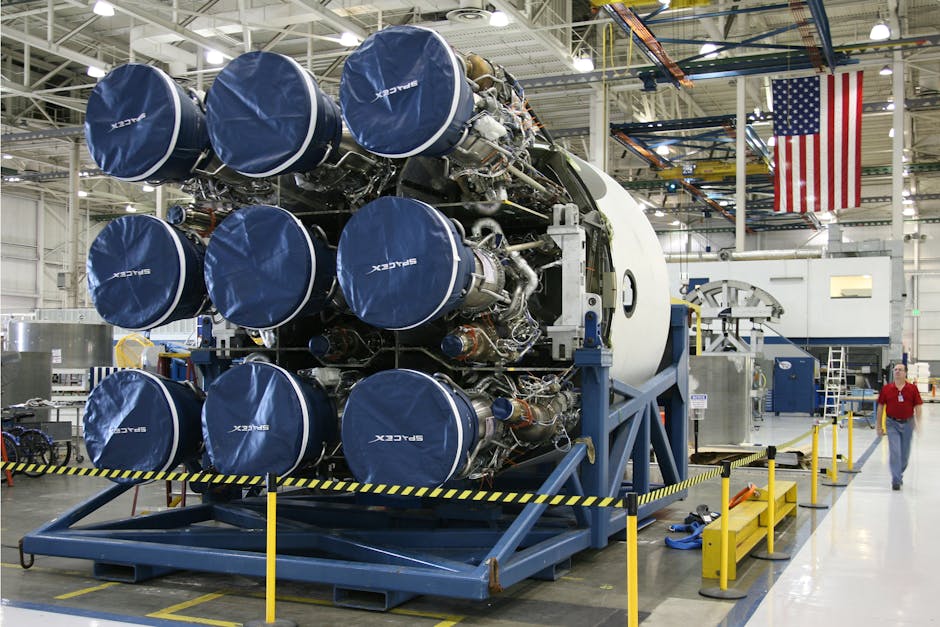
SpaceX has arguably pushed aerospace AM further than any other organization. The Merlin engine’s regeneratively cooled thrust chamber uses AM components, and the Raptor engine — powering the Starship — relies heavily on AM for its complex internal cooling channels, which are geometrically impossible to drill or cast conventionally. Rival Rocket Lab prints the entire Rutherford engine (including the chamber, injectors, and pump components) using AM, achieving a production time of just 24 hours per engine. In 2026, the commercial launch sector’s aggressive production demands have made AM not just preferable but operationally necessary.
5. Korean Aerospace Industries (KAI) — A Domestic Perspective
Closer to home in the Asia-Pacific region, Korea Aerospace Industries has been ramping up AM integration as part of its KF-21 Boramae fighter program and next-generation rotorcraft platforms. KAI partnered with domestic research institutes like KITECH (Korea Institute of Industrial Technology) to develop titanium AM capabilities for structural brackets and cooling components. By 2026, KAI has qualified multiple AM part families for flight use — a significant milestone reflecting how AM expertise has genuinely globalized beyond the traditional aerospace powers.
The Challenges You Should Know About (Honesty Matters Here)
Now, I want to be fair — because AM in aerospace isn’t without its hurdles, and a balanced view helps everyone make smarter decisions.
- Certification complexity: Aviation regulators like the FAA and EASA require exhaustive qualification of AM parts, including microstructure analysis, non-destructive testing, and process validation. This process can take years and adds significant cost.
- Surface finish limitations: AM parts often require post-processing (machining, shot peening, HIP treatment) to meet aerospace surface and fatigue specifications — adding time and cost back into the equation.
- Material database gaps: The AM materials knowledge base, while growing rapidly, still lags behind decades of data for traditionally processed alloys. Engineers must proceed carefully.
- Scalability vs. unit cost: AM shines for low-to-medium volume complexity. For very high-volume, simpler parts, traditional manufacturing remains more cost-effective.
Realistic Alternatives Depending on Your Situation
If you’re an aerospace engineer or procurement professional trying to decide whether AM is right for your next project, here’s a grounded framework:
- If your part has complex internal channels (cooling, fuel flow): AM is almost certainly your best option — traditional methods simply can’t achieve the geometry.
- If you need rapid prototyping or low-volume custom parts: AM wins on lead time and cost flexibility every time.
- If you’re dealing with a high-volume, structurally simple component: Stick with forging or casting. The unit economics don’t favor AM here yet.
- If you’re a smaller aerospace supplier or MRO operator: Consider hybrid approaches — DED for repairing expensive components rather than full replacement, which can deliver 60–80% cost savings on legacy parts.
- If sustainability is a core KPI: AM’s dramatically improved buy-to-fly ratio and weight savings make it compelling even when the unit cost is slightly higher.
The trajectory is clear: additive manufacturing isn’t replacing aerospace manufacturing — it’s becoming an indispensable layer of it. The organizations investing in AM capability and certification expertise today are building a moat that will be extremely difficult to cross in five years. Whether you’re a student, an engineer, or just an aviation enthusiast following where technology is headed, the 3D-printed sky above us is more real than most people realize.
Editor’s Comment : What genuinely excites me about the aerospace AM story in 2026 is that it’s no longer a debate about “if” — it’s a sophisticated conversation about “where and how.” The real frontier now is certification acceleration and multi-material printing, and whichever players crack those two challenges will define the next decade of aerospace manufacturing. Keep watching this space; it moves faster than a LEAP engine at 35,000 feet.
태그: [‘additive manufacturing aerospace’, ‘3D printing aerospace applications’, ‘aerospace AM 2026’, ‘metal additive manufacturing’, ‘GE fuel nozzle 3D printing’, ‘SpaceX Raptor engine AM’, ‘aerospace lightweight components’]
Leave a Reply