A colleague of mine — a sports medicine physician in Seoul — recently told me about a patient who’d been living with a shattered orbital bone for two years, unable to find an off-the-shelf implant that fit properly. The traditional solution involved multiple revision surgeries and a lot of misery. Then, in late 2025, her hospital partnered with a medical-grade 3D printing lab, and within three weeks, the patient had a titanium implant sculpted precisely from CT scan data. The recovery? Remarkably smooth. That story stuck with me, and it’s exactly why I wanted to write this review today — because custom 3D-printed medical implants are no longer science fiction. They’re quietly becoming the new standard of care, and it’s worth understanding what that actually means for you.
What Exactly Is a Custom 3D-Printed Implant?
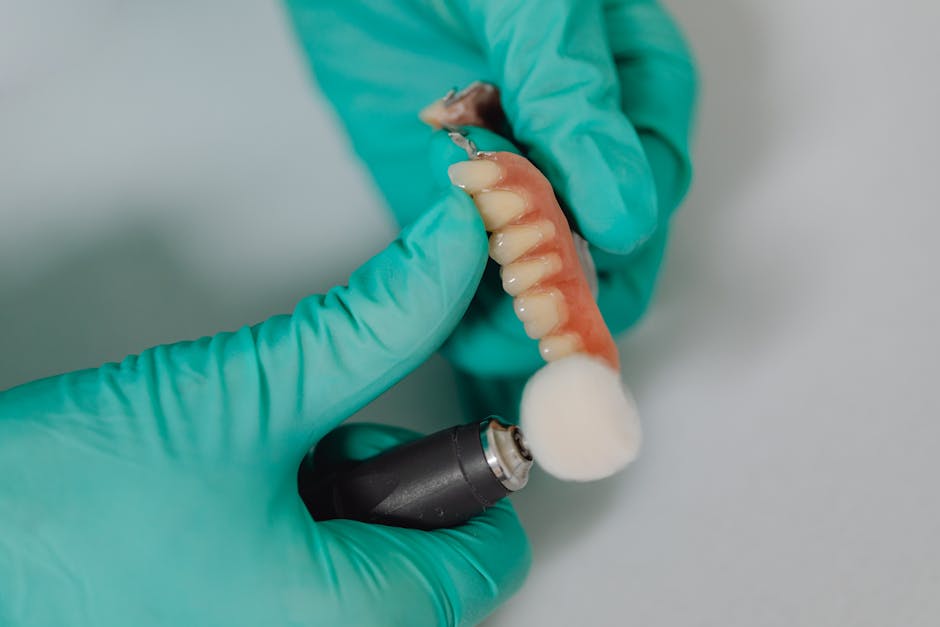
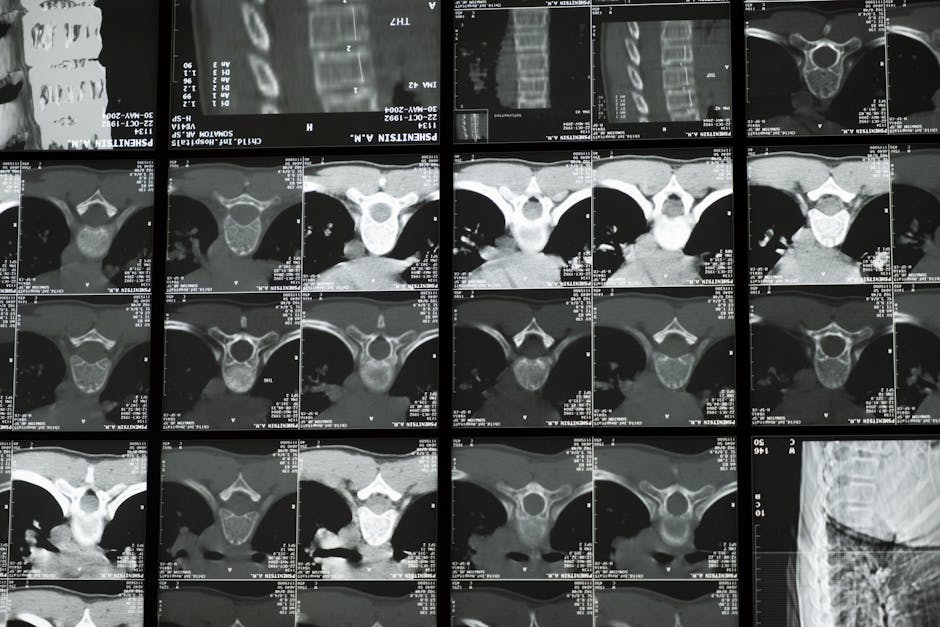
Let’s start from the ground up, because the terminology can get confusing fast. A custom 3D-printed medical implant — sometimes called an patient-specific implant (PSI) — is a prosthetic device manufactured using additive manufacturing technology, where material (usually titanium alloy, PEEK polymer, or cobalt-chrome) is built up layer by layer, guided by a digital 3D model derived directly from a patient’s medical imaging (CT or MRI scans).
Unlike mass-produced implants that come in S/M/L sizes and require surgeons to “make do,” PSIs are engineered to match your exact anatomy. Think of it like the difference between buying shoes off a rack versus having them hand-cobbled to a plaster cast of your foot. The fit is fundamentally different.
The Data in 2026: How Far Has This Technology Come?
The numbers in 2026 are genuinely exciting. Here’s what the current landscape looks like:
- Market size: The global medical 3D printing market reached approximately $4.8 billion USD in 2025 and is projected to exceed $6.2 billion by end of 2026, according to industry research aggregators tracking additive manufacturing adoption rates.
- Lead time reduction: Five years ago, fabricating a complex craniofacial implant could take 6–8 weeks. Today’s advanced sintering systems at leading centers produce comparable implants in 5–10 business days.
- Fit accuracy: Studies from orthopedic surgery journals published in early 2026 show PSIs achieving sub-millimeter positional accuracy (±0.3mm tolerance) compared to conventional implants, which can deviate by 3–5mm requiring intraoperative adjustment.
- Revision surgery rates: Early multi-center data from European orthopedic consortiums suggests PSIs are associated with approximately 28–34% lower revision rates over a 3-year follow-up period compared to standard implants in complex reconstructive cases.
- Material evolution: Porous titanium lattice structures — designed computationally to mimic cancellous bone — are now routinely used, promoting osseointegration (bone growing into the implant) far more reliably than smooth surfaces.
Where Are These Implants Being Used?
The application range in 2026 is broader than most people realize. Let’s break it down by specialty:
- Craniofacial & maxillofacial surgery: Skull reconstruction after trauma or tumor removal, orbital floor repair, and jaw reconstruction are perhaps the most established use cases. The geometry here is extraordinarily complex, making custom fabrication almost mandatory for good outcomes.
- Orthopedic joint reconstruction: Custom knee and hip implants for patients with unusual anatomy (severe deformity, revision cases, pediatric patients still growing) are seeing rapid adoption.
- Spinal surgery: 3D-printed interbody cages and vertebral body replacement devices with patient-matched end plates are reducing subsidence (the implant sinking into bone) significantly.
- Dental implantology: Guided surgical templates and custom abutments have been mainstream for years, but fully printed zirconia crown-implant systems are gaining regulatory approvals globally through 2025–2026.
- Cardiac & vascular: Still largely experimental, but 3D-printed patient-specific cardiac patches and structural heart devices are in active clinical trials at major centers.
Real-World Examples: Domestic & International
Let me give you some concrete examples rather than staying abstract, because this is where the story really comes alive.
South Korea — Samsung Medical Center & InVivo Therapeutics Partnership (2025–2026): One of the most-discussed domestic cases involves a 47-year-old patient who underwent total pelvic ring reconstruction following a rare bone tumor resection. Using proprietary Korean-developed software and EBM (electron beam melting) titanium printing, the surgical team fabricated a hemipelvic implant with integrated acetabular cup in under two weeks. As of early 2026, the patient is walking with a cane — an outcome considered nearly impossible with conventional implant inventory.
Germany — Charité Berlin & EOS Systems: Charité’s craniofacial unit published landmark 2026 data showing that in a cohort of 112 complex skull base reconstructions using custom PEEK implants, infection rates dropped to 3.6% compared to a historical 9.1% with titanium mesh — partly attributed to better fit reducing dead space where bacteria colonize.
United States — Mayo Clinic Additive Manufacturing Lab: Mayo’s in-house printing facility, which went fully operational for PSI production in 2024, reported in their 2026 annual review that they’ve now produced over 800 patient-specific devices across spine, ortho, and craniofacial divisions, with a surgeon satisfaction score of 4.6/5 for intraoperative fit compared to 3.1/5 for comparable conventional implants.
Japan — Stryker Japan & PMDA Fast-Track Approval: Japan’s regulatory body PMDA granted expedited approval pathways for certain categories of PSI devices in mid-2025, and Stryker’s Japanese division launched a custom knee implant service that’s processed over 1,200 cases in nine months. Early patient-reported outcome scores (KOOS surveys) show statistically significant improvements in pain and function at 6-month follow-up.
The Real Costs — And Are They Justified?
Here’s where I want to be really honest with you, because the enthusiasm around this technology is sometimes outpacing realistic expectations.
A custom 3D-printed implant typically costs 2.5 to 6 times more than a comparable standard implant, depending on complexity and material. For a simple dental guide template, the premium might be minimal. For a full hemipelvic reconstruction? You could be looking at $15,000–$40,000 USD for the implant alone in the US market (as of 2026 pricing), before surgical fees.
Insurance coverage remains inconsistent and frustrating. Many payers in the US and even parts of Europe still categorize PSIs as “investigational” for certain indications, despite growing evidence. In South Korea, the National Health Insurance Service (NHIS) covers specific PSI categories under limited conditions as of the 2026 coverage update, which is a meaningful step forward but still leaves gaps.
The lead time, while dramatically reduced, also requires surgical planning discipline. If you’re dealing with an urgent trauma case, a 5–10 day fabrication window may not be feasible, and conventional implants or a bridging solution might still be the practical choice.
Realistic Alternatives Worth Considering
Not everyone is an ideal candidate for a fully custom implant, and that’s perfectly okay. Here’s how to think through your options logically:
- Semi-custom or parametric implants: These use adjustable templates based on a library of anatomical shapes, offering much better fit than fully standard implants at a moderate price premium. Good middle ground for many orthopedic cases.
- Intraoperative 3D-printed surgical guides + standard implant: Rather than printing the implant itself, printing a surgical cutting or drilling guide that ensures the standard implant is placed with patient-specific precision. This is already FDA-cleared, widely reimbursed, and dramatically improves outcomes at a fraction of the PSI cost.
- Conventional implants with advanced sizing systems: For straightforward cases without anatomical complexity, modern templating software and expanded size ranges from major manufacturers (Zimmer Biomet, Smith+Nephew) have closed the gap considerably. Don’t let perfect be the enemy of good.
- Waiting for technology cost reduction: If your case is semi-elective and your surgeon agrees there’s no urgency, it’s worth discussing whether waiting 12–24 months while the cost and accessibility landscape continues improving makes sense for your situation.
The bottom line? Custom 3D-printed implants in 2026 represent a genuine leap forward in surgical precision, particularly for complex anatomy, revision cases, and patients where standard sizing fails. The evidence base is solidifying rapidly, and the technology’s day-to-day reliability has reached a point where I’d confidently say it’s no longer experimental — it’s emerging best practice. The honest caveats are cost, access, and the need for a surgical team experienced with PSI-specific planning workflows. If those boxes check out for your situation, the data strongly supports exploring this option with your specialist.
Editor’s Comment : What strikes me most about this technology in 2026 isn’t just the engineering — it’s the philosophical shift it represents. Medicine has always tried to fit the patient to available tools. Custom implants quietly flip that equation: now the tools conform to the patient. That’s a big deal. If you’re facing a reconstructive procedure and haven’t asked your surgeon specifically about PSI options, that conversation is worth having. Bring the questions, bring your imaging, and push for the fit your body actually needs — not just the one that was on the shelf.
태그: [‘custom 3D printed implants 2026’, ‘patient-specific implants review’, ‘medical additive manufacturing’, ‘3D printing orthopedic surgery’, ‘titanium PEEK implants’, ‘PSI implant cost and benefits’, ‘future of reconstructive surgery’]
Leave a Reply