A colleague of mine — a senior process engineer at a mid-sized aerospace supplier in Stuttgart — told me something that stuck with me last month: “We spent six figures on a metal 3D printer, and our biggest headache isn’t the machine. It’s everything that happens before and after the print button.” That sentence perfectly captures where the additive manufacturing (AM) industry finds itself in 2026. The hardware has matured dramatically, but quality control and post-processing? That’s where the real battle is being fought.
If you’re working in manufacturing, product design, or even prototyping, you’ve probably run into this gap yourself. Let’s think through it together — what the current landscape looks like, what the data tells us, and what realistic options you have depending on your budget and workflow.
Why Quality Control in AM Is a Different Beast
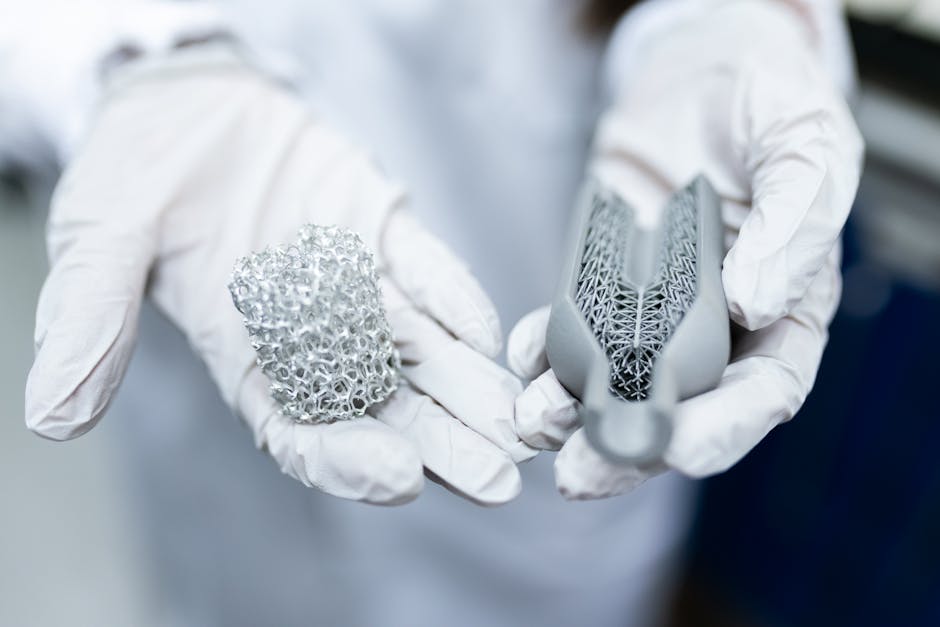
Traditional subtractive manufacturing (think CNC milling) removes material from a known, homogeneous block. You measure as you go. Additive manufacturing, by contrast, builds layer by layer — sometimes hundreds or thousands of layers — meaning defects can be buried mid-structure, invisible to the naked eye and even to many conventional inspection tools.
According to a 2026 industry report by Wohlers Associates, approximately 34% of metal AM parts in production environments still require some form of rework or scrapping due to quality issues — a figure that has improved from 41% in 2023, but is still commercially uncomfortable. The most common defect categories include:
- Porosity: Micro-voids formed during powder fusion, often caused by inconsistent laser parameters or contaminated feedstock
- Residual stress and warping: Thermal gradients during the build cycle cause internal stresses that deform the part post-build
- Delamination: Layer adhesion failures, especially common in FDM (Fused Deposition Modeling) polymer parts under mechanical load
- Surface roughness: Ra values in metal AM typically range from 10–30 µm as-built, often 5–10× rougher than machined surfaces
- Dimensional deviation: Thermal shrinkage and support structure removal can shift critical tolerances by 0.1–0.5 mm on larger parts
The 2026 QC Toolkit: In-Process vs. Post-Process Inspection
Here’s where things get genuinely exciting. The QC approach has bifurcated into two philosophies, and honestly, the best operations are using both simultaneously.
In-Process Monitoring is the newer frontier. Systems like EOS’s EOSTATE suite, Sigma Labs’ PrintRite3D, and Zeiss’s AM monitoring platform use real-time melt pool imaging and thermal cameras to detect anomalies as each layer is deposited. The data these systems generate is staggering — a single metal powder bed fusion build can produce over 1 TB of sensor data. The challenge in 2026 isn’t data collection; it’s meaningful interpretation. AI-driven anomaly detection models (trained on datasets from hundreds of thousands of builds) have reduced false-positive alert rates from ~22% in 2024 to around 8% today, which makes them actually usable in a production setting without drowning your team in noise.
Post-Process Inspection remains essential because in-process monitoring isn’t yet certified for all applications — particularly in aerospace and medical device sectors where regulatory frameworks (AS9100, ISO 13485) demand traceable, standardized inspection methods. The gold standard here is industrial Computed Tomography (CT scanning), which can detect internal voids as small as 10 µm. A full CT scan of a complex aerospace bracket used to cost $800–$1,200 per part in 2022. Increased competition and faster scanning hardware have pushed that to roughly $300–$600 in 2026 — still not cheap for high-volume production, but viable for flight-critical components.
Post-Processing: The Hidden Time and Cost Sink
Let’s be honest — post-processing is the part of the AM workflow that gets the least glamorous coverage, but it often accounts for 30–60% of total part cost. Understanding your options here can genuinely transform your ROI.
The major post-processing categories in 2026 include:
- Support removal: Still largely manual for complex metal parts; robotic support removal using force-feedback arms has emerged but remains niche
- Heat treatment: Stress relief annealing is virtually mandatory for metal AM parts — typically 2–4 hours at 600–900°C depending on alloy — to release residual stresses before any machining
- HIP (Hot Isostatic Pressing): Closes internal porosity by applying simultaneous heat (~1,100°C for titanium) and high pressure (~100–200 MPa). Increases fatigue life by 15–40% in titanium alloys. Expensive but increasingly required in aerospace contracts
- CNC machining: Finish-machining of functional surfaces to achieve tight tolerances (±0.02 mm) and low roughness — nearly always required for mating/sealing surfaces
- Surface finishing: Abrasive flow machining, electrochemical polishing, vibratory finishing, and media blasting each serve different geometry and roughness requirements
- Coating and plating: PVD coatings, anodizing, and electroless nickel plating add corrosion resistance and wear properties
International Case Studies: Who’s Getting This Right in 2026
Let’s look at some real-world examples that illustrate both ends of the spectrum.
GE Aerospace (USA) has arguably the most mature AM quality system in the world for the LEAP engine fuel nozzles — parts that have accumulated over 100 million flight hours. Their integrated approach combines in-situ monitoring, mandatory HIP, CT inspection of 100% of flight parts, and a digital thread that links every build parameter to the finished part’s serial number. What’s instructive here is that this level of QC took over a decade to develop and certify. It’s genuinely world-class, but it’s also a reminder that robust AM quality systems require sustained institutional investment.
Trumpf and Fraunhofer ILT (Germany) have been collaborating on a closed-loop quality control system where in-process thermal data is fed back to adjust laser power parameters in real time — effectively a self-correcting build. In 2026 trials on Inconel 718 parts, this approach reduced porosity rates by approximately 60% compared to fixed-parameter builds. The technology is still transitioning from research to commercial deployment, but it represents a compelling near-term future.
HD Hyundai’s shipbuilding division (South Korea) has taken an interesting middle path: rather than investing in sophisticated in-process monitoring, they’ve focused on rigorous digital twin validation before printing. Using simulation software (primarily Autodesk Netfabb and Simufact), they predict residual stress patterns and optimize part orientation and support structures computationally. Their finding: 70% of warping issues can be prevented before the machine even starts. For organizations with budget constraints, this compute-first approach is highly practical.
Renishaw’s UK medical device clients have demonstrated that for titanium orthopedic implants, a standardized post-processing protocol — stress relief → HIP → bead blast → electrochemical polish → CT inspection — consistently achieves the mechanical properties and surface specifications required for ISO 10993 biocompatibility. The protocol adds roughly £180–£250 per implant but has essentially eliminated field failures in their customer base since 2024.
Realistic Alternatives Based on Your Situation
Here’s where I want to have a frank conversation about what’s actually appropriate for your context, because a one-size-fits-all QC strategy is a fast track to wasted budget.
If you’re a small design studio or product development team doing prototype work in polymer (FDM, SLA, or MJF), you honestly don’t need a CT scanner. Invest instead in: a calibrated digital caliper set, a basic surface profilometer (desktop models now start around $2,000–$3,000), and — critically — consistent material storage with moisture control for hygroscopic resins and nylons. Most prototype failures I’ve seen in small studios trace back to degraded filament, not machine parameters.
If you’re a medium-sized manufacturer moving AM parts into low-to-medium criticality production (tooling, fixtures, end-use plastic housings), a practical QC investment is: statistical process control (SPC) on your key build parameters, coordinate measuring machine (CMM) spot-checking on a 10–20% sample basis, and partnership with a third-party CT scanning service for first-article inspection of new geometries. This hybrid approach captures 80% of the QC benefit at 30–40% of the cost of a fully in-house system.
If you’re targeting aerospace, defense, or medical applications, there is no shortcut — but there are smart prioritization strategies. Start your certification journey early (AS9100 Rev D or ISO 13485 qualification takes 18–36 months minimum), partner with an accredited material testing lab rather than building that capability in-house initially, and prioritize CT inspection of 100% of initial production builds even if you move to sampling later as your process matures. The cost of a field failure in these sectors dwarfs any QC savings.
For polymer AM at any scale, one underrated investment is process simulation before printing. Tools like Materialise Magics and Autodesk Fusion’s AM workspace now include simulation modules that predict warping and identify optimal part orientation in minutes. This is genuinely accessible at $200–$600/month subscription and prevents a large proportion of geometric failures without any physical inspection cost.
The Emerging Standards Landscape in 2026
One more thing worth flagging: the standards environment has matured considerably. ISO/ASTM 52941 (covering acceptance testing for powder bed fusion systems) and the expanded ASTM F42 committee standards now provide much clearer guidance on qualification testing requirements. The FDA’s 2025 final guidance on AM medical devices has also clarified post-processing validation requirements for the US market. If you’re navigating regulatory compliance, investing in a regulatory consultant with AM-specific experience has an ROI that consistently surprises people — the certification path is significantly shorter when you don’t have to learn it by making expensive mistakes.
The bottom line? Additive manufacturing quality and post-processing in 2026 is genuinely solvable — but it requires matching your investment level to your application’s criticality, leveraging simulation to catch problems before they’re physical, and thinking of post-processing not as an afterthought but as an integrated design constraint from day one.
Editor’s Comment : What consistently fascinates me about the AM quality space is that the technology gap has largely closed — the machines are capable — but the process knowledge gap is still wide. The teams winning in this space aren’t necessarily the ones with the most expensive hardware; they’re the ones who’ve treated QC and post-processing as engineering disciplines worthy of serious systematic investment. If you’re just starting out, resist the urge to spend everything on the printer itself. Budget 30–40% of your total AM investment for QC infrastructure and post-processing capability, and you’ll find your actual part quality — and your client relationships — will thank you for it.
태그: [‘additive manufacturing quality control’, ‘3D printing post-processing’, ‘metal AM inspection 2026’, ‘industrial CT scanning’, ‘powder bed fusion defects’, ‘AM post-processing techniques’, ‘additive manufacturing certification’]
Leave a Reply