Imagine waking up one day and learning that your kidneys are failing — and instead of waiting five to seven years on a transplant list, your doctor tells you a lab-grown replacement could be ready in a matter of months, printed layer by layer from your own cells. Sounds like something out of a Netflix sci-fi series, right? Well, in 2026, we’re closer to that reality than most people realize — but we’re not quite there yet, and the nuances matter enormously.
I’ve been following the bio 3D printing space for years now, and what’s happening in 2026 is genuinely exciting — not in a hype-cycle way, but in a “wait, this is actually progressing” kind of way. Let’s dig in together.
What Exactly Is Bio 3D Printing? (A Quick Grounding)
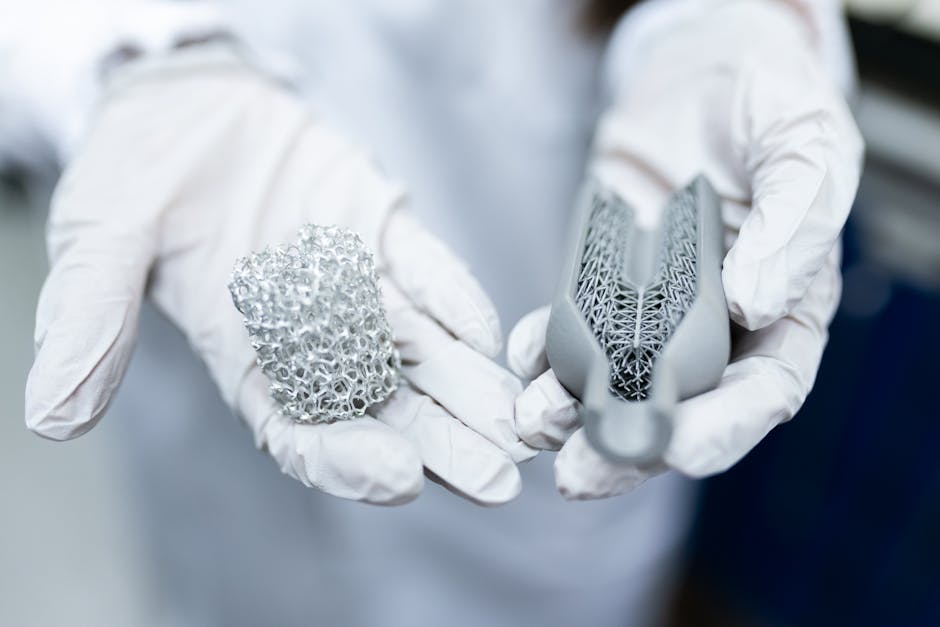
Before we get into the news, let’s make sure we’re on the same page. Bio 3D printing — also called bioprinting — is the process of using a specialized printer to deposit layers of bioink (a mixture of living cells, growth factors, and biomaterials like hydrogels) to build tissue structures. Think of it like inkjet printing, but instead of ink, you’re using living cells, and instead of paper, you’re building 3D biological structures.
The core challenge has always been vascularization — getting blood vessels to thread through printed tissue so cells can receive oxygen and nutrients. Without that, printed tissue dies. This is the wall that researchers have been hammering at for over a decade.
2026 Breakthroughs: What the Data Actually Shows
Here’s where things get genuinely interesting. Several milestones reported in early 2026 are shifting the conversation:
- Vascularized Kidney Tissue (Wake Forest Institute): Researchers published results showing lab-printed kidney organoids with functional micro-vasculature surviving beyond 90 days in animal models — a major leap from the previous 30-day ceiling. The tissue showed measurable filtration activity, though full organ-scale replication remains years away.
- Liver Tissue Drug Testing (Organovo & FDA Collaboration): Organovo’s printed liver tissue is now being actively used by the FDA as a drug toxicity testing platform, reducing reliance on animal models. This is not a transplantable organ — but it’s a massive commercial and scientific validation of the technology.
- Heart Patch Implants in South Korea: Seoul National University Hospital reported early-phase human trials of printed cardiac patches — small pieces of heart muscle tissue used to repair damage after myocardial infarctions. Results showed improved ejection fraction in 68% of participants at the 6-month follow-up.
- Ear and Trachea Reconstruction: These simpler, avascular (no blood vessels needed) structures are already seeing clinical applications in 2026, particularly in pediatric reconstructive surgery in Germany and Japan.
- Bioink Innovation: Companies like CELLINK (now part of Bico Group) have introduced next-generation bioinks with embedded growth factor slow-release technology, dramatically improving cell survival rates post-printing — some formulations now showing over 85% cell viability at 72 hours.
Global Players Shaping the Field in 2026
The bioprinting landscape is no longer just a U.S.-dominated story. Let’s look at who’s doing what:
United States: Still the research epicenter, with institutions like MIT, Stanford, and Wake Forest leading fundamental science. The NIH allocated $340 million to the Tissue Engineering and Regenerative Medicine Initiative in 2025-2026, signaling sustained federal commitment.
South Korea: Rapidly emerging as a clinical application leader. The Korean government’s BioNEXT 2030 initiative has funneled significant resources into translating lab findings into hospital-ready solutions. The cardiac patch trials mentioned earlier are a direct result of this program.
European Union: Germany and the Netherlands are leading in regulatory framework development — arguably as important as the science itself. The EU’s updated Advanced Therapy Medicinal Products (ATMP) guidelines now include a specific bioprinted tissue pathway, which is a huge deal for commercialization.
China: Publishing at an extraordinary volume — Chinese research institutions produced approximately 38% of global bioprinting papers in 2025. Translating that output into clinically approved products remains the challenge, but the pipeline is substantial.
What’s Still Science Fiction (Let’s Be Honest)
I think it’s important to be realistic here, because hype does real harm when patients or families make decisions based on inflated expectations.
- Full transplantable kidneys or livers: Despite the progress, we are realistically looking at 10-15 years before a fully functional, transplantable printed kidney is clinically available. The vascularization problem at organ scale is still unsolved.
- Printing on-demand in hospitals: The idea of a hospital printing an organ overnight remains firmly in the realm of science fiction for complex organs.
- Cost accessibility: Even the current applications — cardiac patches, organoids for drug testing — cost tens of thousands of dollars per unit. Broad patient access is a long-term goal, not a near-term reality.
Realistic Alternatives Worth Knowing Right Now
So if you or someone you know is navigating organ failure or tissue damage in 2026, what’s actually actionable?
- Xenotransplantation: Genetically modified pig organs (particularly kidneys and hearts) have seen remarkable progress. Several xenotransplant recipients in the U.S. have now surpassed 12 months of survival. This is arguably the more immediate bridge solution.
- Bioprinted tissue for drug personalization: If you have a complex condition like drug-resistant cancer, some research centers now use bioprinted tumor organoids made from your own cells to test drug sensitivity before committing to a treatment plan. Ask your oncologist if this is available at your institution.
- Staying on and optimizing transplant lists: National kidney and liver registries have improved matching algorithms significantly. Paired exchange programs, living donor chains — these are mature, proven pathways worth fully exploring.
- Clinical trial enrollment: Platforms like ClinicalTrials.gov list active bioprinting-adjacent trials. Cardiac patch trials, for instance, are actively enrolling in multiple countries.
The field is moving fast, but “fast” in biomedical science still means years to decades for most applications. The honest, empowering approach is knowing what’s real today versus what’s coming — and making the best possible decisions with the tools that exist right now.
Editor’s Comment : What genuinely excites me about the 2026 bioprinting landscape isn’t the headline-grabbing “we printed a heart” claims — it’s the quieter, steadier progress happening in cardiac patches, organoid drug testing, and regulatory frameworks. Science rarely moves in dramatic leaps; it moves in thousands of small, verified steps. The steps being taken right now are solid, and that’s worth celebrating with clear eyes. If you’re personally affected by organ disease, please work with your medical team and don’t wait for future technology when today’s options deserve your full attention.
태그: [‘bio 3D printing 2026’, ‘artificial organ bioprinting’, ‘bioprinting breakthroughs 2026’, ‘3D printed organs news’, ‘organ transplant alternatives’, ‘bioink technology’, ‘regenerative medicine 2026’]
Leave a Reply