Picture this: it’s early 2026, and a mid-size EV rolls off a production line in Stuttgart. It weighs 180 kg less than its predecessor — not because of a smaller battery or a stripped-down interior, but because dozens of its structural components were 3D printed using lattice-structured titanium alloys. No machining waste. No assembly welds. Just geometry doing the heavy lifting — or rather, not doing it.
This isn’t a concept car story. This is where the automotive industry actually stands right now, and honestly, it’s one of the most exciting intersections of engineering and everyday life I’ve covered in years. Let’s dig in together.
Why Weight Matters More Than Ever in 2026
The push for lightweighting isn’t new, but the urgency has intensified dramatically. With global EV adoption crossing 38% of new car sales in early 2026 (according to the International Energy Agency’s Q1 2026 report), range anxiety is still a real consumer concern. Every kilogram shaved off a vehicle translates directly into extended range — roughly 0.3–0.5 km of additional range per kilogram reduced, depending on the powertrain configuration.
Traditional lightweighting approaches — stamped aluminum panels, carbon fiber reinforced polymers (CFRP), and high-strength steel — all hit a ceiling. They’re constrained by subtractive manufacturing logic: you start with material and remove what you don’t need. Additive manufacturing (AM), the technical term for 3D printing, flips that logic entirely. You build only what’s structurally necessary, guided by topology optimization algorithms.
The Numbers Behind the Technology
Let’s talk specifics, because the data here is genuinely striking:
- Weight reduction of 40–70% is achievable on brackets, suspension knuckles, and seat frames using metal AM with topology optimization, compared to traditionally cast equivalents.
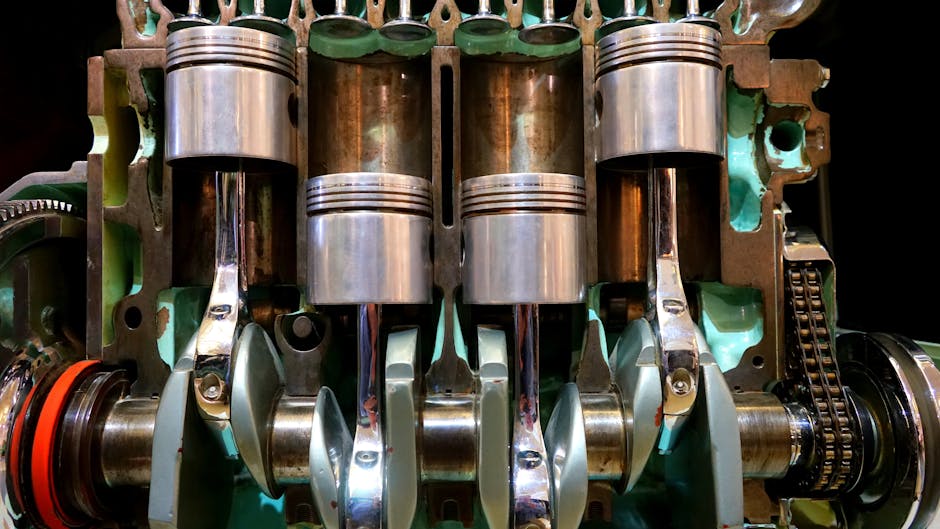
- Porsche’s 3D-printed pistons (a technology they pioneered and have now scaled in 2026 across multiple platforms) are 10% lighter and 20% stiffer than forged counterparts, with internal cooling channels impossible to make any other way.
- The global automotive AM market is projected to reach $12.4 billion by end of 2026, up from $7.1 billion in 2023 (MarketsandMarkets, 2026 Automotive Additive Manufacturing Report).
- Material waste in selective laser melting (SLM) processes runs at roughly 2–5%, versus 40–60% in traditional CNC machining of complex titanium parts.
How Topology Optimization and Generative Design Work Together
Here’s where it gets beautifully nerdy. Topology optimization is a mathematical method that calculates the most efficient distribution of material within a defined design space, given specific load cases. Feed it your stress maps, your boundary conditions, your weight targets — and it spits out a shape that looks almost biological. Organic. Like bone.
That’s not a coincidence. Bone structure is nature’s own topology optimization, evolved over millions of years. Engineers are now essentially borrowing that playbook using software like Altair OptiStruct, Autodesk Fusion 360’s generative design module, and nTopology — all of which have seen major AI-assisted iteration upgrades in their 2026 releases.
The result? Parts that look “wrong” by traditional standards but perform spectacularly. A suspension knuckle might look like a spider’s web of titanium strands, but it handles the same torsional loads as a chunky cast-iron block — at a fraction of the weight.
Real-World Examples: Who’s Actually Doing This?
Let’s ground this in concrete cases, because theory only goes so far.
BMW Group (Germany): BMW’s Landshut facility has been scaling metal AM for production parts since 2020, but their 2026 milestone is notable — they’ve integrated over 60 unique AM components into the Neue Klasse platform, including hydraulic fittings and mounting brackets, reducing per-vehicle weight by approximately 23 kg from AM parts alone.
In the United States, General Motors partnered with Divergent Technologies to use their modular AM chassis system — branded as DAPS (Divergent Adaptive Production System) — on select performance variants of their 2026 lineup. Divergent’s approach is particularly interesting because it doesn’t just print individual parts; it prints entire node-and-tube structural assemblies, reducing part count by up to 75%.
South Korea’s Hyundai Motor Group has been quietly aggressive here too. Their R&D collaboration with POSCO (one of the world’s leading steelmakers) has produced a new AM-optimized steel alloy — internally called HX-9 — that achieves near-titanium strength-to-weight ratios at significantly lower material cost. As of March 2026, this is being piloted in IONIQ 9 subframe components.
In Japan, Toyota’s GR (Gazoo Racing) division has adopted AM for low-volume performance parts with remarkable speed-to-market advantages — a redesigned titanium exhaust bracket that took 14 weeks via traditional methods was printed, tested, and approved in under 3 weeks.
The Honest Challenges — Because Nothing’s Perfect
I’d be doing you a disservice if I only presented the highlights. There are real friction points here:
- Cost at scale: Metal AM parts still cost 3–8x more per unit than die-cast equivalents for high-volume production (100,000+ units/year). The economics work beautifully for luxury, performance, and low-volume segments — less so for budget vehicles.
- Post-processing requirements: Most metal AM parts require significant finishing — stress relief annealing, HIP (hot isostatic pressing) for densification, and surface machining on critical interfaces. This adds time and cost that the “just hit print” narrative tends to obscure.
- Quality certification: Automotive safety standards (FMVSS in the US, UN Regulation 94/95 in Europe) require extensive validation. AM parts introduce microstructure variability that traditional quality frameworks weren’t built to assess. The industry is catching up — ISO/ASTM 52900 standards are now widely adopted — but certification timelines can still be a bottleneck.
- Supply chain maturity: Finding certified AM suppliers capable of automotive-grade production outside of Germany, the US, and South Korea remains genuinely difficult.
Realistic Alternatives Depending on Your Situation
Now, not everyone reading this is a Tier 1 automotive supplier. So let’s think practically about where you might sit in relation to this technology:
If you’re an automotive enthusiast or small custom shop: Desktop metal printers (Markforged Metal X, Desktop Metal Studio System 2) have become remarkably capable by 2026. You won’t be printing titanium suspension knuckles, but custom aluminum brackets, housings, and non-safety-critical brackets are within reach. Start with polymer AM for prototyping, validate your designs, then transition to metal for final parts.
If you’re a mid-tier supplier exploring adoption: Rather than investing in in-house AM equipment immediately, consider partnering with AM service bureaus like Materialise, Stratasys, or Xometry. Use AM for tooling, jigs, and fixtures first — lower risk, faster ROI — then migrate to end-use parts as your team builds process knowledge.
If you’re an OEM evaluating platform integration: The sweet spot in 2026 is hybrid strategies — using AM for the 15–20% of components where it delivers maximum weight savings (complex brackets, fluid routing, structural nodes), while retaining traditional manufacturing for high-volume commodity parts. Don’t try to print everything; be surgical about it.
What’s Coming Next — And It’s Close
A few developments worth watching as 2026 progresses:
- Continuous fiber AM: Companies like Arevo and Markforged are pushing continuous carbon fiber deposition to replace CFRP layup for certain structural applications — at a fraction of the tooling cost.
- Multi-material printing: Printing parts with gradient material properties — hard on the outside, energy-absorbing in the core — is moving from research labs toward early production validation.
- AI-driven print path optimization: Machine learning models trained on hundreds of thousands of print jobs are now predicting and correcting for residual stress and distortion in real time, dramatically improving first-time yield rates.
The trajectory is clear: 3D printing isn’t replacing traditional manufacturing wholesale, but it’s carving out a permanent, expanding role in the lightweighting toolkit. The vehicles we’ll drive in 2030 will carry dozens of components that simply couldn’t have existed without additive manufacturing — and they’ll go farther on a charge because of it.
If you’re anywhere near the automotive or advanced manufacturing space, this is one technology trend worth following very closely. The weight savings are real, the business case is maturing, and the engineering creativity being unlocked is genuinely remarkable.
Editor’s Comment : What strikes me most about 3D printed lightweighting isn’t the material science — impressive as it is — it’s the philosophical shift it represents. For a century, automotive engineering has been about disciplined subtraction: take a block of material, remove what you don’t need. AM says: what if you only ever built what you needed? That’s not just a manufacturing technique. It’s a fundamentally different way of thinking about design. And in an industry as change-resistant as automotive, that mindset shift might be the most significant development of all.
태그: [‘3D printing automotive’, ‘lightweight car parts 2026’, ‘additive manufacturing vehicles’, ‘topology optimization automotive’, ‘metal 3D printing EV’, ‘automotive lightweighting technology’, ‘generative design car manufacturing’]
Leave a Reply