A few months ago, I visited a mid-sized aerospace components manufacturer in Ohio. What struck me wasn’t the gleaming new machines — it was the silence. Where dozens of machinists once stood, a skeleton crew monitored six industrial 3D printers churning out titanium bracket assemblies with tolerances tighter than a human hair. The plant manager told me something I haven’t stopped thinking about: “We don’t think of this as printing anymore. We think of it as growing parts.” That shift in mindset? That’s exactly where industrial 3D printing is in 2026.
The technology has quietly crossed a threshold. We’re no longer talking about prototypes or novelty applications — we’re talking about production-grade, supply-chain-critical manufacturing at scale. Let’s dig into what the data and real-world examples are actually telling us this year.
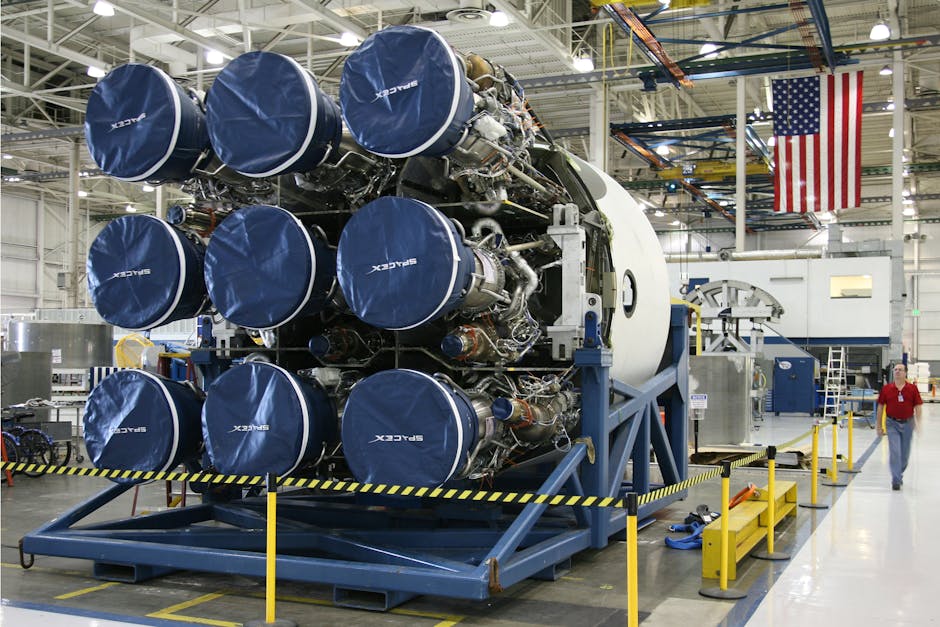
The Numbers Don’t Lie: Market Momentum in 2026
According to industry analysis from Wohlers Associates and IDC’s 2026 Manufacturing Outlook report, the global industrial additive manufacturing market is projected to surpass $32 billion in 2026 — a figure that would have seemed wildly optimistic just five years ago. More telling than the top-line number, though, is where that growth is concentrated:
- Metal additive manufacturing now accounts for roughly 41% of total industrial AM revenue, driven by aerospace, defense, and medical implant sectors.
- Polymer-based industrial printing (particularly high-performance materials like PEEK and ULTEM) has surged in automotive and consumer electronics tooling.
- Construction-scale 3D printing — yes, printing entire building structures — has moved from pilot projects to contracted municipal housing programs in South Korea, the UAE, and parts of Texas.
- Bioprinting for medical scaffolding and drug-delivery implants has received regulatory green lights in the EU and Japan, opening a genuinely new vertical.
- Multi-material printing systems (printing conductive traces, structural material, and insulation simultaneously) are finally hitting production viability, not just lab demos.
The Technologies Driving the Shift
What’s actually under the hood of this growth? A few converging forces are worth understanding, whether you’re a manufacturer, an investor, or just a curious observer.
Binder Jetting at Production Speed: Companies like Desktop Metal (now part of a larger consolidated entity post-2025 industry consolidation) and HP’s Metal Jet S100 line have brought binder jetting to throughput levels that compete directly with metal injection molding — but without the tooling costs. For runs of 5,000–50,000 parts, the economics have genuinely flipped in additive’s favor.
AI-Driven Process Optimization: This is the one that doesn’t get enough attention. In 2026, virtually every enterprise-grade 3D printing system ships with embedded ML models that monitor melt pool dynamics, layer adhesion, and thermal gradients in real time. The result? First-part-correct yields on complex metal parts have climbed from the mid-60% range to above 90% in leading facilities. That’s not incremental — that’s the difference between a viable production method and an expensive experiment.
Sustainable Material Innovation: Recycled-content filaments and powders are no longer a compromise. BASF Forward AM and Evonik’s 2026 material lines include industrial-grade recycled PA12 and bio-derived TPU that meet the same mechanical specs as virgin materials. For manufacturers under ESG pressure, this matters enormously.
Who’s Actually Doing This at Scale? Real-World Examples
Let’s ground this in specifics, because the industry has a tendency toward breathless announcements that don’t always translate to factory reality.
Hyundai Motor Group (South Korea): Hyundai’s Ulsan facility rolled out a dedicated additive manufacturing cell in late 2025 that now produces over 800 unique part numbers — primarily jigs, fixtures, and low-volume replacement parts for legacy models. The ROI case? They’ve cut tooling lead times from 14 weeks to under 5 days for that category of parts. They’re not printing engines; they’re printing everything around the engine build process, which turns out to be where the real efficiency lives.
Siemens Energy (Germany/Global): Siemens has been running additively manufactured gas turbine burner tips in commercial operation since 2023, but their 2026 milestone is more significant: they’ve qualified 3D-printed components for repair and overhaul of existing turbines — meaning the aftermarket MRO (Maintenance, Repair & Overhaul) sector is now open territory for AM. This is a multi-billion dollar implication that most coverage misses.
ICON Build (United States): ICON’s Vulcan construction printer has moved well beyond its Austin, Texas housing projects. In partnership with the U.S. Department of Defense, they’re printing semi-permanent forward operating base structures that can be erected in austere environments without traditional construction supply chains. The 2026 deployment in undisclosed locations marks the first operational military use of additive construction.
Osstem Implant (South Korea): In the dental and orthopedic space, Osstem has been quietly building one of the most sophisticated medical AM operations in Asia. Their 2026 expansion includes a certified production line for patient-specific titanium spinal implants, with same-week delivery from CT scan to sterile packaged device. For patients, that’s transformative.
What’s Still Holding Industrial AM Back (Honestly)
I’d be doing you a disservice if I only told you the bullish side. Let’s be real about the friction points:
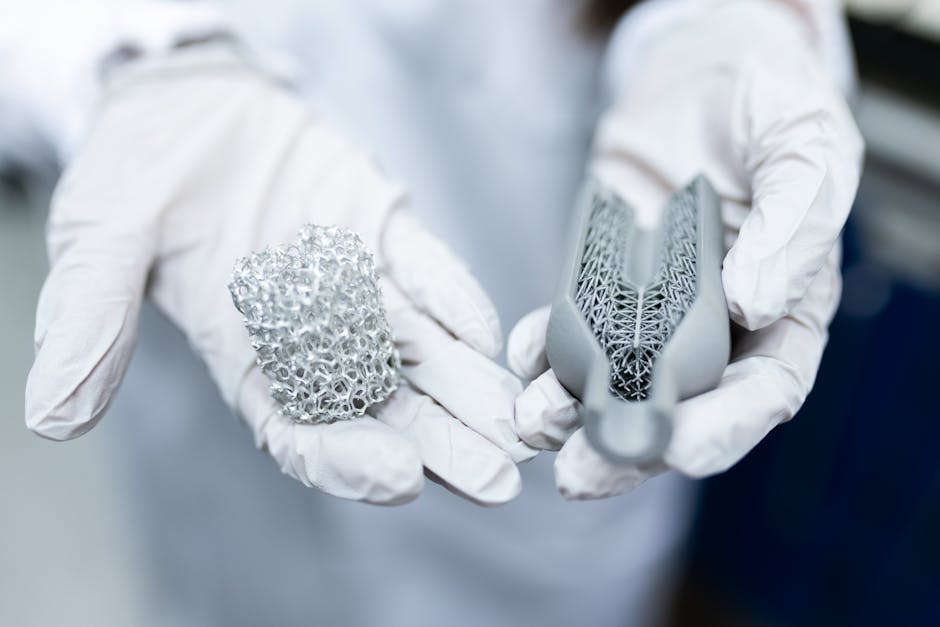
- Post-processing bottlenecks: Printing the part is often the fast part. Removing support structures, sintering, heat treatment, and surface finishing still require significant manual labor and specialized equipment. The industry hasn’t fully solved this automation gap.
- Workforce skills gap: Operating and maintaining industrial AM systems requires a hybrid skill set — part mechanical engineer, part materials scientist, part software operator. That profile is genuinely scarce in the labor market right now.
- Certification timelines: In aerospace and medical, qualifying a new manufacturing process with regulatory bodies (FAA, FDA, EASA) can take 3–7 years. Many companies have been doing the groundwork since 2020–2022, and we’re starting to see those certifications land now in 2026 — but it remains a slow lane for safety-critical applications.
- Material cost at scale: High-performance metal powders are still expensive. For commodity parts, traditional CNC machining or casting often wins on cost per unit above certain volumes.
Realistic Alternatives: If You’re Not Ready for Full Industrial AM
Here’s where I want to think practically with you. Not every manufacturer needs to overhaul their floor for additive manufacturing. There are genuinely smart intermediate paths:
Hybrid manufacturing: Combining CNC machining with additive deposition (think DMG MORI’s Lasertec series) lets you add material selectively to machined blanks. You get the precision of subtractive and the geometric freedom of additive without committing fully to either. It’s a genuinely underrated middle path for shops already invested in CNC infrastructure.
AM as a service (AMaaS): Companies like Xometry, Protolabs, and regional print bureaus have scaled dramatically. For manufacturers who need AM capabilities but can’t justify the capital expenditure of in-house systems (typically $250K–$2M+ for industrial metal printers), outsourcing to qualified bureaus is strategically sound — and increasingly, these bureaus carry the material certifications you need for aerospace or medical applications.
Start with tooling, not end parts: If you’re a traditional manufacturer curious about AM, the lowest-risk, highest-ROI entry point is almost always custom jigs, fixtures, and soft tooling. The qualification burden is low, the lead time savings are immediate and measurable, and it builds organizational familiarity with the workflow before you’re betting production on it.
The factory floor of 2026 isn’t the science fiction version of 3D printing we were promised a decade ago — but it’s something arguably more interesting: a genuinely mature, increasingly indispensable manufacturing tool that rewards thoughtful integration over wholesale replacement. The question isn’t whether industrial AM belongs in your production strategy. It’s figuring out the right door to walk through first.
Editor’s Comment : What fascinates me most about industrial 3D printing in 2026 isn’t any single technology breakthrough — it’s the quiet normalization. The plants doing the most interesting work aren’t announcing press releases about it anymore. They’re just shipping parts. That’s how you know a technology has truly arrived.
태그: [‘industrial 3D printing 2026’, ‘additive manufacturing trends’, ‘metal 3D printing’, ‘manufacturing technology 2026’, ‘binder jetting production’, ‘AM as a service’, ‘smart factory innovation’]
Leave a Reply