Picture this: a turbine blade component is being 3D-printed in a facility outside Stuttgart, Germany. As each layer of titanium powder fuses together, a parallel version of that exact blade — down to the molecular stress points — lives inside a cloud-based simulation environment. The moment a microscopic deviation appears in the physical build, the digital twin flags it, adjusts the laser parameters in real time, and logs the correction for future runs. No human intervened. No scrap was generated. That’s not science fiction anymore — that’s what additive manufacturing integrated with digital twins looks like in a mature smart factory in 2026.
If you’ve been following the evolution of Industry 4.0 (the broad movement toward data-driven, interconnected manufacturing), you’ll know that additive manufacturing — commonly called 3D printing at an industrial scale — and digital twin technology have each been growing independently for years. But 2026 is proving to be the inflection point where these two technologies aren’t just coexisting: they’re deeply, strategically linked. Let’s think through what that actually means and why it matters whether you’re an engineer, an investor, or simply a curious observer of where the world is heading.
What Exactly Is the Integration We’re Talking About?
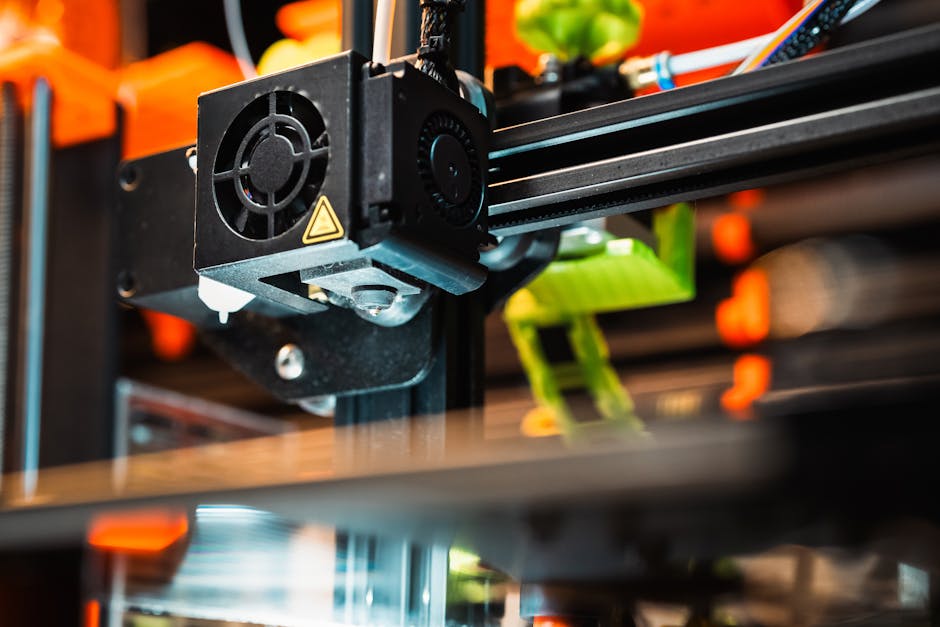
Let’s unpack the key terms before we go further. Additive manufacturing (AM) builds objects layer by layer from digital designs — metals, polymers, ceramics, composites. Unlike traditional subtractive methods (which cut away material), AM creates near-net-shape parts with minimal waste. Digital twins are virtual replicas of physical assets, processes, or systems that receive real-time data and can simulate future states or behaviors. A smart factory is a connected manufacturing environment where machines, systems, and people exchange data continuously to optimize production.
When these three elements converge, you get something genuinely transformative: a manufacturing ecosystem where every print job is monitored, predicted, corrected, and documented by its virtual counterpart — before, during, and after production. Think of it as giving your factory a nervous system with a photographic memory.
The Numbers Behind the Revolution
Let’s ground this with some data, because the scale of adoption is stunning. According to the Additive Manufacturing Global Market Report 2026, the global AM market is on track to surpass $38.5 billion USD by the end of this year, with industrial-grade metal printing growing at a CAGR of over 22%. Meanwhile, the digital twin market — valued at roughly $26 billion in 2025 — is projected to hit $34 billion by late 2026, driven heavily by manufacturing sector demand.
Here’s the part that should grab your attention: a 2025 Deloitte study found that factories deploying digital twins alongside AM processes reported:
- Up to 40% reduction in build failure rates through real-time parameter correction
- 25–30% faster product development cycles compared to traditional prototyping pipelines
- A 15–20% decrease in material waste, since digital simulation identifies inefficiencies before a single gram of powder is melted
- Predictive maintenance accuracy exceeding 87% for AM equipment, reducing costly unplanned downtime
- Traceability compliance costs reduced by nearly 35%, critical for regulated industries like aerospace and medical devices
These aren’t incremental improvements — they’re structural shifts in how manufacturers think about risk, quality, and speed. And the integration is making AM economically viable for mid-volume production runs, not just one-off prototypes, which is a massive market expansion.
How the Integration Actually Works — The Technical Loop
Here’s how to visualize the feedback loop without getting lost in jargon. The process typically involves five interconnected layers:
- Design & Simulation Layer: Engineers create a part design in CAD software. Before printing, the digital twin simulates thermal gradients, residual stresses, and potential deformation — often using physics-based finite element analysis (FEA). This step alone can eliminate 60–70% of potential build failures.
- In-Process Monitoring Layer: Sensors embedded in AM machines (laser powder bed fusion systems, for example) capture data on melt pool temperatures, layer thickness, and atmospheric conditions thousands of times per second. This data streams into the digital twin in real time.
- Anomaly Detection & Correction Layer: AI and machine learning algorithms within the digital twin compare live data against the ideal simulation. Deviations trigger automatic parameter adjustments — laser power, scan speed, beam focus — mid-build.
- Post-Build Analysis Layer: After printing, CT scan data and surface metrology results are fed back into the twin, enriching its predictive model for future runs.
- Closed-Loop Learning Layer: Over time, the digital twin becomes increasingly accurate, learning from every build. This is sometimes called a “living model” — and it’s the secret sauce for manufacturers running high-mix, low-volume production.
Real-World Examples That Show This Isn’t Just Hype
Let’s look at what’s actually happening on factory floors around the world, because proof points matter.
Siemens Energy (Germany/Global): Siemens Energy has been operating what it calls a “closed-loop additive manufacturing cell” at its Berlin facility since mid-2024, expanded significantly in 2025. Their digital twin platform — built on Siemens’ own Xcelerator suite — monitors gas turbine component printing and uses in-situ monitoring data to update part qualification records automatically. The result: qualification time for new turbine parts dropped from 18 months to under 7 months.
Hyundai Motor Group (South Korea): Hyundai’s Ulsan smart factory integration, which began linking its AM pilot line with a factory-wide digital twin in early 2025, is now demonstrating real-time design iteration for EV battery housing brackets. Their team reported a 32% reduction in the design-to-validated-prototype cycle, allowing engineers in Seoul to modify and resimulate components that are being printed in Ulsan without halting production.
GE Aerospace (USA): GE Aerospace’s additive manufacturing centers — particularly in Cincinnati — have been running digital twin-coupled print operations for jet engine components for several years, but their 2026 upgrade introduced edge computing nodes directly on the print floor. This reduces the data latency between the physical machine and digital twin from seconds to milliseconds, enabling corrections during ultra-fine feature printing where even a 0.1-second delay could propagate a defect.
EOS & Dassault Systèmes Partnership (Global): In a landmark 2025 partnership, EOS (a leading industrial 3D printing OEM) and Dassault Systèmes integrated EOS’s monitoring software directly with the 3DEXPERIENCE platform’s digital twin capabilities. This means manufacturers who buy EOS machines can now get digital twin connectivity essentially out of the box — democratizing access that was previously limited to enterprise-level custom deployments.
Industries Leading the Charge — and Why
Not every sector is adopting this at the same pace. Here’s where the integration is deepest and why:
- Aerospace & Defense: Regulatory traceability requirements (every component needs a verifiable production history) make digital twin logging invaluable. AM enables complex geometries impossible with traditional machining. The combination is almost mandatory for certification in 2026.
- Medical Devices & Implants: Patient-specific implants printed in titanium or PEEK need absolute dimensional accuracy. Digital twins catch sub-millimeter deviations that could cause post-surgical complications. Regulatory bodies in the EU and FDA in the US are now beginning to accept digital twin process records as part of quality submissions.
- Energy (Turbines & Oil/Gas): High-temperature, high-stress components need both geometric complexity and material integrity. Real-time digital twin monitoring catches porosity and microstructural issues that only show up mid-build.
- Automotive (EV Transition): As EV platforms demand lighter, more complex structural components, AM’s design freedom paired with digital twin validation is accelerating part consolidation — replacing 10 stamped parts with 1 printed assembly, for instance.
- Consumer Electronics: Still early-stage, but companies are exploring AM + digital twin for tooling and jig production, reducing tooling lead times from weeks to days.
The Honest Challenges — Because No Revolution Is Frictionless
Here’s where I want to reason through the realistic picture with you, rather than just cheerleading. There are genuine barriers that manufacturers — especially small and mid-sized ones — face:
- Data infrastructure costs: Running a meaningful digital twin requires substantial compute power, data storage, and connectivity. Edge computing helps, but upfront investment remains significant.
- Talent gap: Operating at this intersection requires people who understand AM process physics, data science, and systems integration simultaneously. That skillset is rare and expensive in 2026’s labor market.
- Interoperability challenges: Different AM machine vendors, different simulation software, different IoT platforms — getting them to speak a common data language is still a significant systems integration project in most facilities.
- Model validation: A digital twin is only as good as the physics models inside it. Calibrating those models accurately for new materials or new geometries still requires significant experimental validation work upfront.
- Cybersecurity exposure: A connected factory is an attack surface. As AM + digital twin systems hold valuable IP (design files, process parameters), they become high-value targets.
Realistic Alternatives and Entry Points for Different Readers
If you’re thinking “this all sounds compelling but we’re nowhere near full smart factory integration,” that’s completely valid — and there are staged entry points worth considering:
- Start with process monitoring only: You don’t need a full digital twin from day one. Deploying in-process monitoring sensors on existing AM machines and analyzing historical data is a meaningful first step that generates ROI and builds toward twin connectivity.
- Use simulation-only digital twins initially: Pre-build simulation (thermal, structural) using existing CAD data can dramatically reduce failure rates without requiring real-time data infrastructure. This is accessible to most engineering teams using software like Autodesk Fusion, Ansys Additive Print, or Netfabb today.
- Leverage OEM-integrated solutions: The EOS-Dassault partnership mentioned above is one example of increasingly plug-and-play options. Rather than custom-building an integration, look for AM machine vendors that offer native digital thread connectivity.
- Partner with a digital twin service provider: For manufacturers who lack in-house data science expertise, companies like PTC (Vuforia + ThingWorx), Siemens (Xcelerator), and Ansys are offering managed digital twin services that reduce the technical burden significantly.
- Pilot on a non-critical production line first: Pick one AM application — tooling, fixtures, spare parts — and run a digital twin pilot there before scaling to primary production components.
The key insight here is that the integration doesn’t have to happen all at once. Every step toward connecting your physical AM process with its digital counterpart generates data, insight, and competitive advantage — even if you’re not running a fully autonomous, self-correcting production cell on day one.
Where Are We Headed? A Look at the Next 24 Months
By 2027–2028, analysts expect several developments that will accelerate this integration further: standardized digital thread protocols (think of it as a universal language for AM process data), generative AI being embedded directly into digital twin environments to propose design modifications mid-print, and multi-material AM systems that use real-time compositional analysis to adjust material blending on the fly. The factory of the near future doesn’t just execute designs — it actively co-creates them.
The companies building deep competency in this integration now are, frankly, creating a competitive moat that will be very difficult to close later. The learning embedded in a mature digital twin — years of build data, failure modes, material behavior — is not easily replicated by a competitor who starts two years later.
Editor’s Comment: What excites me most about this convergence isn’t the technology itself — it’s what it does to the economics of complexity. Historically, manufacturing something complex was expensive and risky precisely because complexity meant more opportunities for things to go wrong. Digital twins + AM flips that equation: complexity becomes manageable, predictable, even optimizable. That’s a genuinely profound shift. If you’re in any manufacturing-adjacent role and haven’t started exploring what even a basic digital thread would look like for your AM operations, 2026 is the year that waiting starts to have a real cost.
태그: [‘additive manufacturing digital twin’, ‘smart factory 2026’, ‘industrial 3D printing integration’, ‘digital twin manufacturing’, ‘Industry 4.0 smart factory’, ‘additive manufacturing automation’, ‘digital thread manufacturing’]
Leave a Reply