Picture this: it’s 2019, and an engineer at a major aerospace firm is staring at a titanium bracket that took 14 weeks to machine from a solid billet — and they’ve just been told the design needs to change. Fast forward to today in 2026, and that same engineer is watching a revised part emerge from a powder bed fusion printer in under 48 hours, ready for a digital quality certificate. That’s not a dream scenario anymore. It’s Tuesday at dozens of facilities worldwide.
Additive manufacturing (AM) — more commonly known as 3D printing in industrial circles — has genuinely matured into a production-grade technology for aerospace components. But let’s be honest: the hype cycle hit this space hard, and plenty of teams have been burned by jumping in without understanding the quality validation piece. So today, let’s think through this together — what’s actually working, where the numbers live, and how you can realistically approach AM if you’re in this space.
Why Aerospace and Additive Manufacturing Are Such a Natural Fit
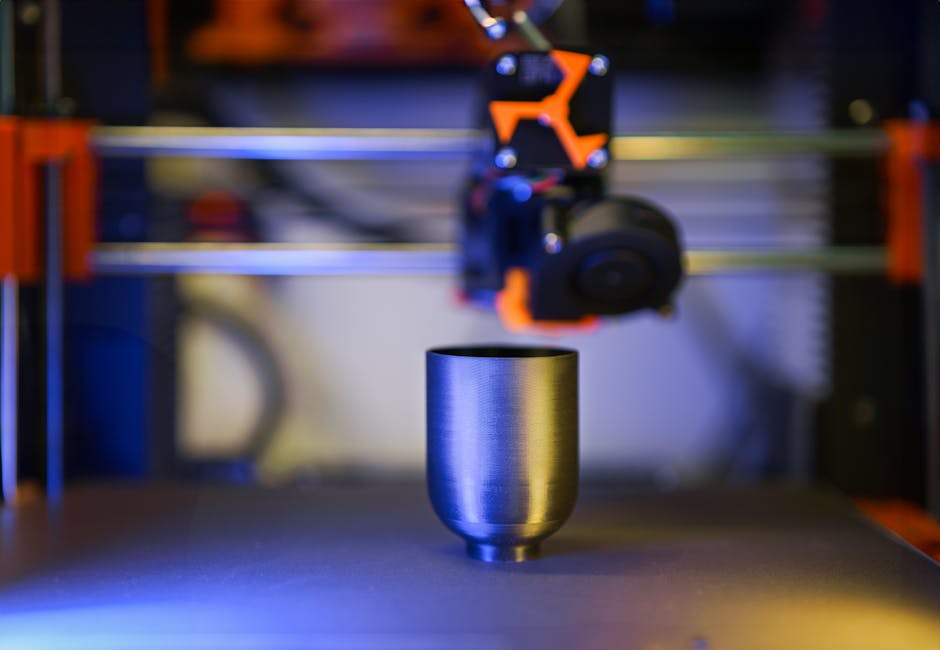
Aerospace has always been the industry where the phrase “every gram matters” is literal, not metaphorical. Reducing weight by even a few kilograms on a commercial aircraft can save hundreds of thousands of dollars in fuel over a decade of service life. AM — specifically techniques like Selective Laser Melting (SLM) and Electron Beam Melting (EBM) — enables what engineers call topology optimization: designing a part to have material only exactly where structural loads demand it, resulting in organic-looking geometries that are mechanically superior yet dramatically lighter than their machined equivalents.
According to industry data compiled through early 2026, the global aerospace AM market is valued at approximately $4.8 billion USD, up from roughly $2.1 billion in 2021. That’s not just bracket prototypes — we’re talking certified flight hardware. GE Aviation’s LEAP engine fuel nozzle, produced via direct metal laser sintering (DMLS), remains the flagship success story: one printed part replaced an assembly of 20 separate welded components, reducing weight by 25% and increasing durability by a factor of five. By 2026, GE and its joint ventures have produced over 150,000 of these nozzles cumulatively.
Key Material Families Dominating Aerospace AM in 2026
- Titanium alloys (Ti-6Al-4V): The workhorse for structural components — brackets, hinges, and duct supports. Excellent strength-to-weight ratio and corrosion resistance. EBM processes are preferred for large titanium parts due to reduced residual stress.
- Nickel superalloys (Inconel 718, 625): Essential for high-temperature applications like turbine components, combustion chambers, and exhaust structures. These materials would be nightmarishly difficult to machine traditionally.
- Aluminum alloys (AlSi10Mg, Scalmalloy): Increasingly used for non-structural interior components and brackets where cost efficiency matters. Scalmalloy, developed by Airbus’s APWorks subsidiary, has become a go-to for ultra-light structural applications.
- High-performance polymers (PEEK, ULTEM 9085): Primarily for interior cabin components and non-structural ducting, certified under FAR/CS 25 flammability standards.
- Refractory metals (Tungsten, Molybdenum): Niche but growing — used in thermal protection and radiation shielding for next-generation spacecraft.
Real-World Application Cases: Domestic and International Examples
Let’s look at who’s actually doing this at scale and what the results look like.
Boeing (USA) — 787 Dreamliner Titanium Parts: Boeing has been certifying AM titanium components for the 787 since the early 2020s. By 2026, the company reports over 60,000 AM parts flying across its commercial and defense fleet. One notable case is a titanium door hinge fitting that was previously a 32-piece assembly. The printed version is a single monolithic component, 41% lighter, with lead times cut from 22 weeks to under 3 weeks. The cost savings per aircraft over a production run are estimated at over $2 million USD when amortized.
Airbus (Europe) — Bionic Partition and Cabin Structures: Airbus’s partnership with Autodesk produced the now-famous “bionic partition” — an A320 cabin divider designed using generative algorithms and printed via SLM. It’s 45% lighter than the conventional version. More recently, Airbus’s A350 program has integrated AM brackets into primary structure with full EASA certification, a milestone that took years of qualification work but is now a repeatable process.
Korea Aerospace Industries (KAI) — KF-21 Boramae Fighter Program: On the domestic front in South Korea, KAI has been quietly but steadily integrating AM into the KF-21 Boramae fighter development program. By 2026, KAI has validated AM processes for non-critical structural brackets and hydraulic manifolds, using SLM-produced Inconel 718 parts. Their quality validation pipeline — developed in collaboration with the Korea Research Institute of Standards and Science (KRISS) — uses a combination of CT scanning and digital twin comparison to certify each part batch.
SpaceX (USA) — Raptor Engine Components: SpaceX has arguably pushed the most aggressive AM adoption in rocketry. The Raptor engine, powering Starship, uses dozens of AM-produced components including turbopump housings and injector manifolds. SpaceX’s philosophy of in-house qualification — rather than waiting for external certification bodies — has been controversial but effective, enabling iteration cycles impossible in traditional aerospace supply chains.
Safran (France) — Landing Gear and Nacelle Systems: Safran has deployed AM across multiple product lines. Their AM-produced nacelle components for the CFM RISE program (targeting 20% fuel reduction by the late 2020s) represent some of the most complex thermally-loaded printed parts yet certified in commercial aviation.
The Quality Validation Challenge: Where Most Teams Stumble
Here’s the part most glossy brochures skip over — AM quality validation in aerospace is genuinely complex, and getting it wrong is catastrophic. Let’s break down the current best-practice framework as it stands in 2026.
The core issue is that AM parts don’t fail the way machined parts fail. Porosity (tiny internal voids), residual stress from rapid thermal cycling, and anisotropic material properties (strength varying by print direction) are failure modes that require different inspection approaches entirely.
Non-Destructive Testing (NDT) methods now standard in aerospace AM:
- Industrial CT Scanning: The gold standard. Micro-CT at 5-10 micron resolution can detect internal porosity, delamination, and geometric deviations in complex geometries that X-ray simply can’t reach. Cost per scan has dropped significantly — in 2026, automated CT lines for AM batch inspection are commercially available from providers like Zeiss and Nikon Metrology.
- Computed Tomography + Digital Twin Comparison: The really exciting development of the last two years. A digital twin of the “ideal” part is generated from the design CAD, and CT data of the actual printed part is algorithmically compared against it. Deviations above tolerance thresholds trigger automated rejection flags. This is now an NADCAP-recognized process for qualifying AM suppliers.
- Acoustic Resonance Testing (ART): A faster, cheaper complement to CT — essentially using the vibrational “fingerprint” of a part to detect structural anomalies. Think of it as listening to a wine glass to hear if it’s cracked, but for turbine blades.
- In-Process Monitoring: The frontier right now. High-speed cameras and thermal imaging embedded inside the build chamber can flag layer-by-layer anomalies during printing, potentially catching problems before you’ve even finished a build. Companies like Sigma Labs and Additive Assurance have systems commercially deployed in aerospace AM cells.
From a standards perspective, the landscape has matured considerably. AS9100 Rev D (the aerospace quality management standard) now includes specific AM process control requirements. SAE’s AMS7000 series specifically addresses AM metal materials and processes. In Europe, EASA’s CM-S-010 guidance on AM continues to be updated, with the 2025 revision adding specific requirements for in-process monitoring data retention.
Realistic Alternatives and Entry Points for Different Teams
Not every organization is GE or SpaceX. So let’s be practical — if you’re approaching AM for aerospace components in 2026, here’s how to think about your entry point based on where you actually are:
If you’re a Tier-2/Tier-3 supplier just starting out: Don’t start with flight-critical structure. Begin with tooling, jigs, and fixtures — these have lower certification burdens and let your team build process familiarity. Many successful AM programs started by replacing $50,000 machined assembly jigs with $3,000 printed equivalents. The ROI is immediate and visible, building internal confidence.
If you’re a mid-size manufacturer with some AM experience: Target non-structural cabin components (Class 1 parts under FAA order 8110.49). The flammability certification path is well-established, and the design freedom AM enables for complex duct routing and bracket consolidation in cabins is immediately valuable.
If you’re an R&D team at an OEM: Invest now in in-process monitoring infrastructure. The regulatory trajectory is clearly moving toward mandating process data retention for certified AM parts. Getting ahead of this puts you in a vastly better qualification position in two to three years.
One thing I’d strongly caution against: treating AM as a drop-in replacement for machining without redesigning the part. The phrase is overused but true — design for additive manufacturing (DfAM) is a real discipline. A part optimized for machining printed as-is often performs worse and costs more than just machining it. The value unlocks when you redesign for AM’s unique capabilities: internal channels, topology optimization, part consolidation.
Editor’s Comment : What genuinely excites me about aerospace AM in 2026 isn’t the headline numbers — it’s the quiet maturation of the quality validation ecosystem. Five years ago, the bottleneck to deployment wasn’t the printing technology itself; it was the inability to certifiably prove the part met spec. That bottleneck is dissolving rapidly, and the teams that will win the next decade are those investing as seriously in their inspection and digital twin infrastructure as in their printers. The machines are commoditizing. The certified, data-driven process around them? That’s the real competitive moat.
태그: [‘aerospace additive manufacturing 2026’, ‘3D printed aerospace components’, ‘AM quality validation aerospace’, ‘SLM EBM titanium aerospace parts’, ‘aerospace NDT CT scanning’, ‘NADCAP additive manufacturing’, ‘topology optimization aerospace’]
Leave a Reply