A buddy of mine spent nearly $18,000 installing a rooftop solar array last spring, convinced he’d slash his electricity bill to near zero. Three months later, he called me frustrated — his panels were generating barely 60% of what the spec sheet promised. Sound familiar? This story is more common than the solar industry likes to admit, and it pushed me deep into the real numbers behind solar panel efficiency and output. Let’s dig into what actually determines how much power you get — and what can quietly sabotage your investment.
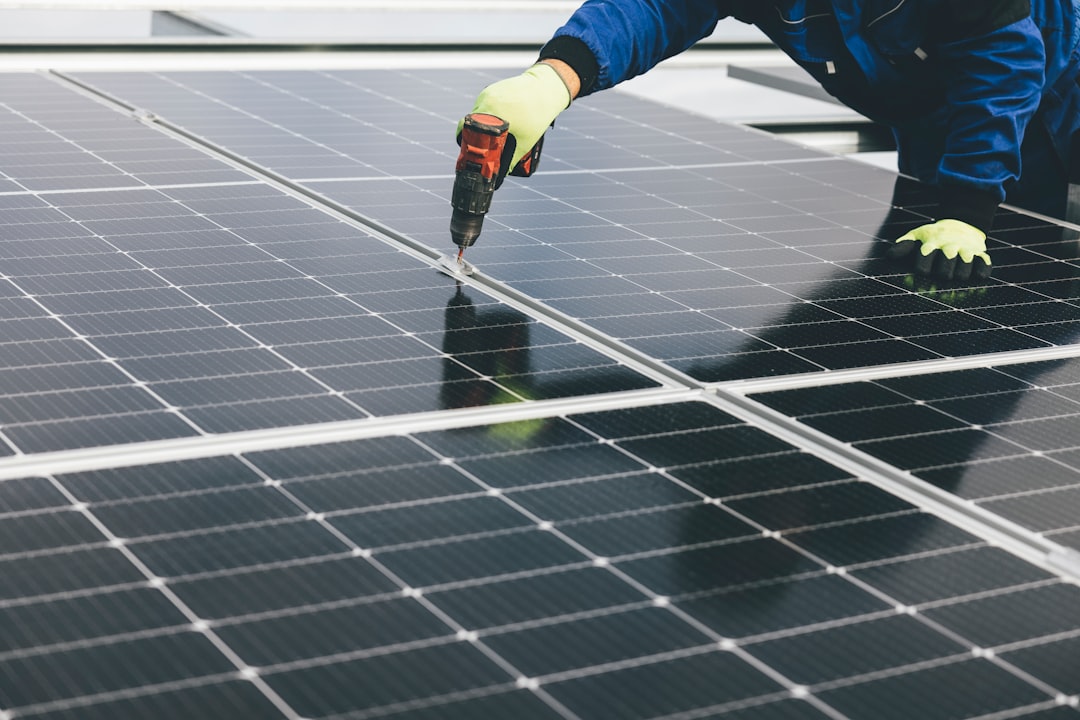
What ‘Efficiency’ Actually Means on That Spec Sheet
When a manufacturer says a panel is “22% efficient,” that number is measured under Standard Test Conditions (STC): 1,000 W/m² irradiance, 25°C cell temperature, and 1.5 air mass. Real-world conditions almost never match STC. The more honest metric is PVOUT (photovoltaic power output), which factors in your actual location’s solar irradiance data from tools like the Global Solar Atlas.
- Monocrystalline PERC panels: Typical real-world efficiency 18–21%, e.g., LG NeON R at 22.1% STC drops to ~18.5% on a hot summer afternoon.
- TOPCon panels (2025 mainstream): Jinko Tiger Neo and LONGi Hi-MO 6 hitting 22–23% STC; real-world ~19–21% — currently the sweet spot for cost vs. performance.
- Heterojunction (HJT) panels: Panasonic EverVolt and REC Alpha hitting up to 23.6% STC; lower temperature coefficient (~0.25%/°C) means they hold efficiency better in heat.
- Bifacial panels: Can add 5–15% extra yield from rear-side albedo reflection — but only if mounted with sufficient ground clearance (ideally >0.5m) and a light-colored surface beneath.
The Hidden Output Killers: Temperature, Shading, and Mismatch
Here’s the cause-effect relationship that stung my friend: his panels were installed flush against a dark roof, and summer cell temperatures hit 65–70°C. The temperature coefficient on his panels was -0.35%/°C. That means at 65°C (40°C above STC), he was losing 14% of rated output just from heat. At a 400W panel rating, that’s already down to ~344W before any other losses.
Then there’s shading. With traditional string inverter systems, a single shaded cell in a string can drop the entire string’s output by 30–70% — this is the “Christmas light” problem. The fix is either microinverters (Enphase IQ8 series) or DC power optimizers (SolarEdge S440), which isolate each panel. In 2025, microinverters have dropped in cost enough that for most residential installs under 15kW, they’re often worth the ~$0.15–0.20/W premium.
Mismatch loss — when panels in a string have slightly different outputs due to manufacturing variance or partial soiling — can silently steal another 1–3% annually. Regular thermal imaging inspections (services like DroneBase or local PV inspection firms) can catch hotspots and mismatch early.
Real Output Benchmarks: What to Expect by Region in 2025
Using PVGIS and NREL PVWatts data, here’s what a standard 6kW residential system (22 x 275W panels — older spec, or 15 x 400W modern) realistically produces annually:
- Phoenix, AZ (high irradiance, hot): ~9,200–9,800 kWh/year — heat losses partially offset the excellent sun hours (~5.8 peak sun hours/day).
- Seattle, WA (low irradiance): ~6,200–6,800 kWh/year — lower heat loss actually helps panel performance; the limiting factor is simply fewer sun hours (~3.5/day).
- Chicago, IL (moderate): ~7,400–8,000 kWh/year with proper south-facing tilt of 35–40°.
- Germany (Freiburg, one of Europe’s sunniest): ~6,500–7,200 kWh/year — comparable to the US Midwest, confirming Germany’s solar success relies more on policy than geography.
The industry rule of thumb — 1 kW of installed capacity generates 1,100–1,800 kWh/year depending on location — is a useful sanity check when a sales rep gives you overly optimistic projections.
Degradation: The Slow Leak in Your 25-Year Warranty
Most premium panels carry a “linear power output warranty” guaranteeing no more than 0.5–0.7% degradation per year, down to 80–87% of rated output at year 25. But a 2023 NREL study tracking 50,000+ panels found real-world median degradation of 0.5%/year for monocrystalline and 0.8%/year for older polycrystalline — meaning your 400W panel is realistically a 370W panel by year 15 under best conditions. Budget this into your 20-year ROI calculations, not the rosy straight-line projections most installers hand you.
Inverter Efficiency and System-Level Losses You Can’t Ignore
Panel efficiency gets all the press, but your inverter’s CEC efficiency rating matters enormously. A string inverter with 96% CEC efficiency vs. one at 98% sounds trivial — but on a 10kW system over 25 years, that 2% gap represents roughly 4,000–5,000 kWh lost, or $600–800 at average US electricity prices. Top performers in 2025: SMA Sunny Boy (97.6% CEC), Fronius Primo (97.7%), and Enphase IQ8+ at 97.6% per microinverter.
Full system losses (wiring resistance, soiling, inverter clipping if undersized, temperature) typically run 14–23% of theoretical output. PVWatts defaults to 14% system loss, which is optimistic for a real install. I’d model at 18–20% for a realistic projection.
If Your Situation Is A vs. B: Matching Technology to Your Needs
- If your roof is unshaded and south-facing: TOPCon panels + standard string inverter = best $/W value in 2025. Target installers quoting $2.50–$3.20/W installed.
- If you have partial shading from trees or chimneys: Spend the extra $300–600 on Enphase microinverters or SolarEdge optimizers. The yield gain pays back in 2–4 years.
- If you’re in a hot climate (Arizona, Texas, Florida): Prioritize low temperature coefficient — HJT panels like REC Alpha or Panasonic justify their ~15% price premium.
- If you want battery storage too: Consider SolarEdge Home Battery (48V, 9.7kWh) or the Tesla Powerwall 3, which now integrates inverter + battery in a single unit and simplifies installation significantly.
- If budget is tight: A well-installed system with tier-1 TOPCon panels and a quality string inverter will outperform a premium panel brand with a cheap inverter and sloppy wiring every single time.
Practical Steps Before You Sign Any Install Contract
Run your address through NREL’s PVWatts Calculator yourself — it’s free and takes 10 minutes. If the installer’s projected output is more than 10% above PVWatts, push back and ask them to justify the delta. Also request the system’s Performance Ratio (PR) target — a well-designed system should hit PR 0.75–0.82. Anything above 0.85 being promised is a red flag.
Get at least three quotes and compare not just price but the specific panel model, inverter model, and warranty terms. The ITC (Investment Tax Credit) remains at 30% through 2032 under the Inflation Reduction Act — so crunch your post-credit cost carefully.
Honestly, the solar pitch almost always sounds better than reality — but that doesn’t mean solar isn’t worth it. It absolutely can be, if you go in with realistic output expectations, choose the right technology for your specific roof and climate, and don’t let an aggressive sales rep paper over the physics. Run the numbers yourself, insist on a PR guarantee in your contract, and you’ll be in a much stronger position than my friend was. The sun isn’t going anywhere — but your return on investment depends entirely on the details.
📚 관련된 다른 글도 읽어 보세요
- Why I Almost Gave Up on Airbnb Hosting — Honest 2025 Guide to Making It Actually Work
- Why I Almost Missed the Best Deal — Honest Meesho Seller Guide 2025
- Why I Almost Gave Up on Dividend Investing — Real Talk About Dividend Stocks in 2025
태그: solar panel efficiency, solar output 2025, TOPCon panels, residential solar installation, microinverters vs string inverters, PVGIS solar calculator, solar ROI
Leave a Reply