A neighbor of mine spent nearly $18,000 on a rooftop solar installation last spring, only to discover three months later that her energy bills had barely budged. The culprit? A shading issue that nobody flagged during the sales pitch, combined with an undersized inverter that was throttling output on sunny afternoons. She called me frustrated, and honestly, her experience mirrors what I hear constantly in the solar community — the gap between the glossy brochure and what actually happens on your roof is enormous.
That conversation sent me down a deep rabbit hole of solar panel research, installer interviews, and a lot of number-crunching. What I found is worth sharing, because 2025 is genuinely one of the best years to go solar — but only if you understand the real mechanics before you sign anything.
The Math That Actually Matters Before You Buy
Let’s start with the numbers people gloss over. The average U.S. household consumes roughly 10,500 kWh per year, according to the EIA’s 2024 data. A standard 400W monocrystalline panel in a moderate-sun region (think 4.5 peak sun hours/day) generates about 585 kWh annually. That means a typical home needs somewhere between 15 and 20 panels to reach near-full offset — before you factor in roof angle, orientation, and shading.
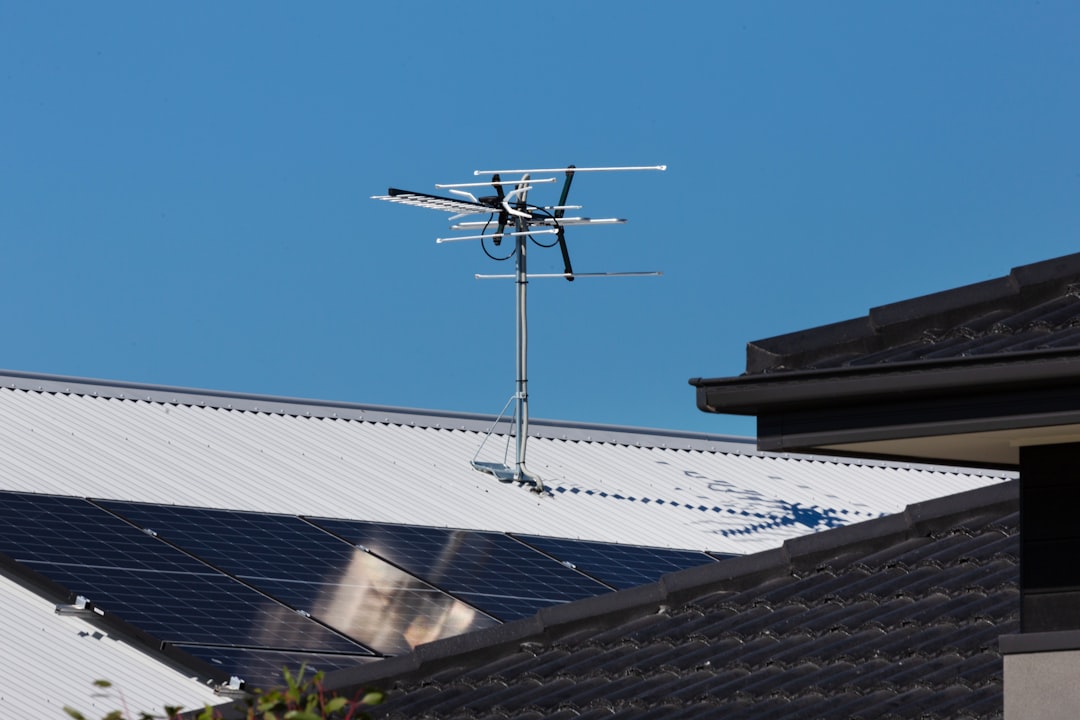
Here’s where my neighbor went wrong: her installer calculated peak output assuming zero shading, but two oak trees on the west side of her property were casting shadows on panels 14 and 15 from around 3 PM onward. With a string inverter (where all panels underperform if one underperforms), her entire array was being dragged down every afternoon. The fix — switching to microinverters or power optimizers — would cost an additional $1,200 to $2,000, which nobody mentioned upfront.
- Monocrystalline panels: 19–23% efficiency; best for limited roof space; Tier 1 brands include REC, Panasonic HIT, and Qcells in 2025
- Polycrystalline panels: 15–17% efficiency; lower cost per watt; better for wide, unshaded roofs
- String inverters: Cheapest option (~$1,000–$2,500); vulnerable to shade loss; single point of failure
- Microinverters (Enphase IQ8 series): Panel-level optimization; +15–25% output in partial shade; cost premium of $0.20–$0.40/W
- Power optimizers (SolarEdge): Middle-ground solution; individual MPPT per panel; monitoring dashboard included
- Battery storage (Tesla Powerwall 3, Enphase IQ Battery 5P): Adds $8,000–$15,000 but essential if your utility has eliminated net metering
The 2025 Incentive Landscape — What’s Real and What’s Expiring
The federal Investment Tax Credit (ITC) is still sitting at 30% through 2032, which is genuinely significant. On a $20,000 system, that’s $6,000 directly off your federal tax liability — not a deduction, but a credit. The catch: you need sufficient tax liability to absorb it. If your federal tax bill is typically $2,000/year, you’ll carry the credit forward over multiple years, which many homeowners don’t realize.
State-level incentives are where it gets complicated in 2025. California’s NEM 3.0 (Net Energy Metering) dramatically reduced the compensation rate for exported solar energy — down roughly 75% from NEM 2.0 rates in some cases. This fundamentally changes the economics: under NEM 3.0, solar ROI is strongly tied to self-consumption and battery storage rather than grid export. Meanwhile, states like Texas, Florida, and the Carolinas still have relatively favorable net metering, making straightforward grid-tied systems more viable there.
The Massachusetts SMART program, New York’s Value of Distributed Energy Resources (VDER) tariff, and New Jersey’s Transition Incentive Program all have capacity limits that can fill up — so timing matters. Databases like the DSIRE (dsireusa.org) are updated regularly and are my go-to reference for state-by-state incentive verification.
Installer Red Flags I Learned to Spot
After talking with about a dozen installers on behalf of friends and readers, a few warning patterns keep coming up. High-pressure timelines (“this price is only good through Friday”) are almost always negotiable — solar incentives don’t expire weekly. An installer who can’t produce a shading analysis using tools like PVWatts, Aurora Solar, or Solargraf is genuinely cutting corners. And any quote that doesn’t show you a 25-year projected cash flow model — including degradation rates (typically 0.5–0.7% per year for quality panels) and escalating utility rates — is incomplete.
The National Renewable Energy Laboratory (NREL) published benchmarking data showing the average installed cost in the U.S. sat around $2.95/W in early 2025 for residential systems. If you’re getting quotes above $4.00/W without a compelling reason (like a complex roof or premium equipment), you’re likely overpaying. EnergySage’s marketplace is genuinely useful here — getting 3–5 quotes through their platform typically brings costs down 10–20% compared to one-off installer contacts.
Real-World Case Studies Worth Knowing
A case study from the Rocky Mountain Institute in late 2024 tracked 200 households across six states post-installation. Homes that added battery storage alongside solar saw a 34% reduction in grid dependence even in NEM 3.0 states — and crucially, their payback periods were only 1.8 years longer than non-battery systems when factoring in time-of-use rate arbitrage. The Powerwall 3’s ability to function as a whole-home backup (up to 11.5 kW continuous output) is a meaningful upgrade from prior generations.
On the international side, Germany’s Energiewende (energy transition) data is instructive. Average German residential solar installations in 2024–2025 are seeing 12–14 year payback periods despite higher labor costs, largely because electricity prices there run €0.30–€0.40/kWh — about 2.5x the U.S. average. The lesson: your local electricity rate is the single biggest variable in your personal ROI calculation. If you’re paying $0.10/kWh in the Pacific Northwest with cheap hydro power, solar math looks very different than paying $0.28/kWh in New England.
So What Should You Actually Do in 2025?
If you’re seriously considering solar this year, here’s the practical decision tree I’ve worked out:
- If your roof is less than 10 years old and south/west-facing with minimal shading: Proceed with a standard monocrystalline + microinverter setup; get 4+ quotes via EnergySage
- If you have significant shading or a complex multi-plane roof: Prioritize microinverters (Enphase IQ8) or SolarEdge optimizers and don’t accept a string inverter quote without pushback
- If you’re in a NEM 3.0 state (primarily California): Battery storage is nearly mandatory for favorable economics; size the battery around your evening load, not maximum export
- If your roof needs replacement within 5 years: Coordinate with roofing — removing and reinstalling panels typically costs $1,500–$3,500 and erases 2–3 years of savings
- If you rent or have an unsuitable roof: Community solar subscriptions (available in 20+ states) let you benefit from solar economics without installation; check programs via EnergySage or your utility’s website
The technology itself has genuinely matured — panel efficiency continues climbing, inverter reliability is excellent, and monitoring software has made troubleshooting far easier than five years ago. The challenges in 2025 are mostly navigational: understanding your specific utility policy, choosing the right installer, and matching equipment to your actual usage profile rather than a generic estimate.
💬 My Take: Don’t let one bad story — or one aggressive sales pitch — push you to a hasty yes or a hasty no. Solar in 2025 is one of the most solid home investments available for the right property, but “right” is doing a lot of work in that sentence. Spend two weekends doing your own due diligence, run your numbers through PVWatts (pvwatts.nrel.gov — it’s free), and get competing quotes before you commit. The 30% federal credit isn’t going anywhere, and the panels will still be there next month.
📚 관련된 다른 글도 읽어 보세요
- Why I Almost Missed the Best Deal — Honest Meesho Seller Guide 2025
- 2026년 기준 전기차 진짜 유지비 — 사기 전에 제발 이것만 확인하세요
- 구청 방문 전에 읽어야 함 — 2026년 기준 전입신고 한 번에 끝내는 실전 가이드
태그: []
Leave a Reply