A few years ago, I visited a small aerospace components workshop in Toulouse, France. The engineer there showed me a titanium bracket — intricate, latticed, almost organic-looking — that had been printed overnight. He told me it would have taken six weeks to machine traditionally. That moment stuck with me. Fast forward to 2026, and what was once a niche curiosity is now a cornerstone of industrial production across the globe. Metal additive manufacturing (metal AM) isn’t just a buzzword anymore — it’s the backbone of how some of the world’s most demanding industries are solving their toughest engineering challenges.
So let’s think through this together: what’s actually happening out there, who’s using it, and — critically — what does this mean for you, whether you’re an engineer, a business owner, or simply someone fascinated by how things are made?
The Numbers Don’t Lie: Where the Metal AM Market Stands in 2026
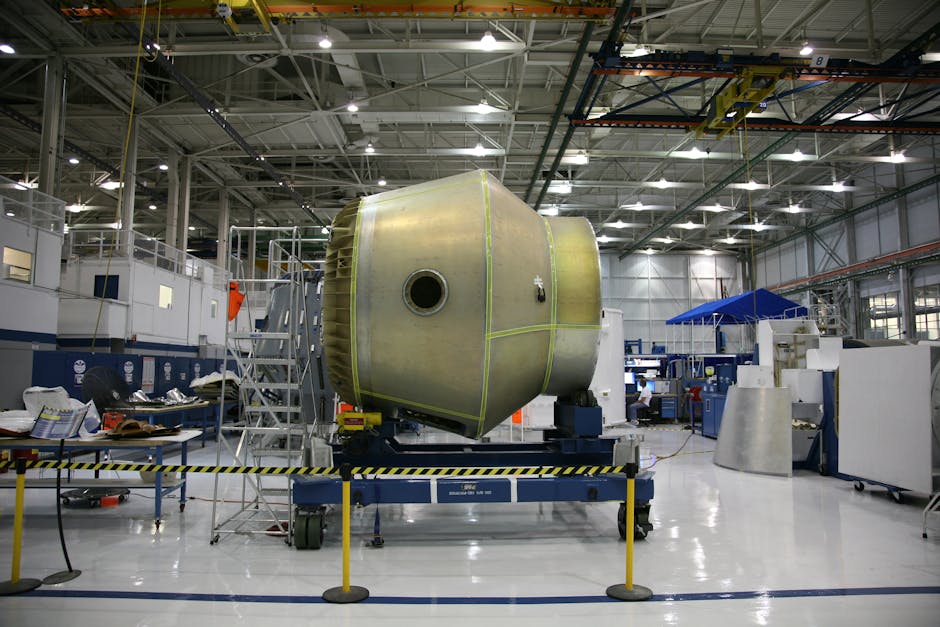
The global metal additive manufacturing market was valued at approximately $8.4 billion in 2026, with compound annual growth rates hovering around 20–22% over the past three years. That’s not slow, steady growth — that’s acceleration. According to data from MarketsandMarkets and Wohlers Associates’ 2026 report, the aerospace and defense sector accounts for the largest share at around 28%, followed by medical devices at 22%, and automotive at 18%.
What’s driving this? A few interconnected forces:
- Material maturity: By 2026, the range of printable metals has expanded dramatically — Inconel, titanium alloys (Ti-6Al-4V), stainless steel, copper, and even refractory metals like tungsten are now commercially printable with high repeatability.
- Speed improvements: Newer systems using laser powder bed fusion (LPBF) and directed energy deposition (DED) have cut build times by 40–60% compared to 2021 benchmarks.
- Regulatory maturation: The FDA, FAA, and EU aerospace bodies have finalized clearer certification pathways for AM-produced components, removing a major bottleneck for industries like medical implants and flight-critical parts.
- Sustainability pressure: Metal AM typically generates 60–80% less material waste compared to subtractive machining — a compelling argument in an era of tightening ESG requirements.
- Cost curve shifts: Industrial metal printers that cost $1.5M in 2020 now have comparable capability machines at $400K–600K, putting the technology within reach of mid-tier manufacturers.
Aerospace & Defense: The Pioneer That’s Still Leading
It’s almost impossible to talk about metal AM without starting in aerospace. GE Aerospace (formerly GE Aviation) has been producing its LEAP engine fuel nozzles via LPBF for years, but in 2026, the story has evolved significantly. Their new CFM RISE engine program incorporates over 100 additively manufactured metal components, a figure that would have seemed ambitious just five years ago. The benefit? A single consolidated AM part can replace an assembly of 20+ traditionally machined pieces, reducing weight and potential failure points simultaneously.
Airbus, through its subsidiary Materialise collaboration, has now certified metal AM structural brackets for in-service A320neo aircraft. These aren’t prototype parts — they’re flying every day. Meanwhile, on the defense side, Lockheed Martin and Raytheon have both publicly disclosed using metal AM for rapid prototyping of hypersonic vehicle components, where the extreme thermal tolerances of materials like C/SiC and refractory metal alloys make traditional manufacturing nearly impossible.
Medical Devices: Personalization at Scale
Here’s where things get genuinely exciting from a human impact perspective. The medical device industry in 2026 is leveraging metal AM to do something that was essentially science fiction a decade ago: patient-specific implants produced in 24–48 hours.
Stryker and Zimmer Biomet both now offer orthopedic implants — hip cups, spinal cages, and knee components — with lattice-structured surfaces printed in titanium. These lattice structures mimic the porosity of natural bone, encouraging osseointegration (the process where bone grows into the implant). Clinical studies published in the Journal of Orthopaedic Research in early 2026 showed osseointegration rates 30% higher in lattice-structured AM implants compared to traditional plasma-sprayed surfaces.
South Korea’s Medyssey and T&R Biofab have been particularly notable in the Asia-Pacific region, developing patient-customized craniofacial reconstruction implants using LPBF-printed titanium that are now in routine clinical use across major university hospitals in Seoul, Singapore, and Tokyo.
Automotive: From Racing Tracks to Factory Floors
Formula 1 teams have used metal AM for years, but 2026 marks a real inflection point for mass-market automotive applications. BMW Group’s Landshut plant in Germany now uses binder jetting technology (specifically Desktop Metal’s Production System architecture) to produce aluminum hydraulic fittings and bracket components at near-injection-molding cycle times — but without the $200K+ tooling investment. This makes small-to-medium production runs economically viable for the first time.
In the EV space, thermal management has become a key battlefield. Companies like Divergent Technologies (Los Angeles) are building entire EV chassis nodes using metal AM, reducing vehicle weight by up to 40% on specific structural assemblies. Their approach — essentially treating the car’s structure as an optimizable topology problem — only becomes possible through additive manufacturing.
Hyundai Motor Group has partnered with its subsidiary HD Hyundai on metal AM applications for robotics and heavy equipment, using wire arc additive manufacturing (WAAM) to produce large structural components for construction machinery — parts that previously required forging dies costing millions of dollars.
Energy Sector: The Quiet Disruptor
Oil & gas and renewable energy sectors aren’t as glamorous as aerospace, but they represent one of the fastest-growing application areas for metal AM in 2026. The logic is straightforward: energy infrastructure involves highly custom, low-volume, high-value components that are exactly what metal AM excels at.
Siemens Energy has been printing gas turbine burner tips and heat exchanger components since 2020, but their 2026 milestone involves full-scale hydrogen combustion turbine components printed in nickel superalloys. These parts must withstand combustion temperatures exceeding 1,400°C — tolerances that require both the material sophistication and geometric precision that only AM can reliably deliver.
In the nuclear energy renaissance of the mid-2020s, several small modular reactor (SMR) developers — including NuScale and TerraPower — have incorporated metal AM into their supply chains specifically for reactor pressure vessel components, where lead times from traditional forging routes can stretch to 4–7 years.
What Should You Actually Do With This Information?
Here’s where I want to be realistic rather than just enthusiastic, because not every situation calls for metal AM — and recognizing that is half the battle.
When metal AM makes strong sense:
- You need geometric complexity that subtractive machining can’t achieve (internal cooling channels, organic structures)
- Your production volumes are low-to-medium (typically under 10,000 units per year for most applications)
- Material waste from machining is a significant cost or sustainability concern
- Speed-to-first-part is critical (prototype validation, emergency replacement parts)
- Personalization or patient-specific customization is required
Realistic alternatives when metal AM isn’t the right fit:
- High-volume simple geometries: Investment casting or CNC machining remains more cost-effective for parts above ~50,000 units/year with straightforward designs.
- Very large structural components: WAAM (Wire Arc Additive Manufacturing) is improving but for truly massive forgings, traditional hot forging still dominates on cost.
- Tight-budget prototyping: Polymer AM (standard FDM or SLA) with metal-like properties for fit-check prototypes can defer metal AM costs until design is finalized.
- Hybrid approach: Many manufacturers in 2026 are finding the sweet spot by using metal AM for the complex nodes and interfaces, then joining conventionally machined tubes or plates to them — getting the best of both worlds.
The honest truth is that metal AM is not a universal solution — it’s a precision tool. The most successful adopters in 2026 are those who’ve taken time to map their part portfolio against AM’s genuine strengths, rather than printing everything just because they can.
The technology has matured enough that the question is no longer “can we print this?” — it’s “should we print this, and what value does it unlock if we do?” That’s a much more interesting conversation, and frankly, a more profitable one.
Whether you’re a startup exploring contract manufacturing, an engineer evaluating your supply chain resilience, or a curious reader trying to understand where modern manufacturing is headed — the metal AM story in 2026 is one worth following closely. The parts being made today would have seemed impossible a decade ago. The ones being designed right now for 2028 and beyond? That’s where things get really interesting.
Editor’s Comment : What strikes me most about metal additive manufacturing’s trajectory in 2026 isn’t the technology itself — it’s the shift in mindset it demands. Designers are finally being freed from “design for manufacturability” constraints that have shaped engineering for a century. But with that freedom comes responsibility: the engineers and companies who will win aren’t those chasing novelty, they’re the ones asking the smarter question — “what problem does this actually solve better than anything else?” Start there, and the technology takes care of the rest.
태그: [‘metal additive manufacturing 2026’, ‘industrial 3D printing applications’, ‘aerospace metal AM’, ‘medical implants additive manufacturing’, ‘LPBF technology’, ‘manufacturing innovation 2026’, ‘metal 3D printing industry’]
Leave a Reply