Picture this: a mid-sized automotive parts supplier in Busan, South Korea, was spending roughly $240,000 annually on tooling replacements alone. Traditional injection molds, CNC fixtures, jigs — all costly, all time-consuming to replace. Then in late 2024, they piloted an in-house 3D printing cell integrated into their smart factory floor. By mid-2026, that tooling cost had dropped by 67%. Not a typo. Sixty-seven percent.
That story isn’t an anomaly anymore — it’s becoming the template. So let’s dig into why 3D printing and smart factory integration is such a powerful cost-reduction combo, and what the real numbers look like across industries.
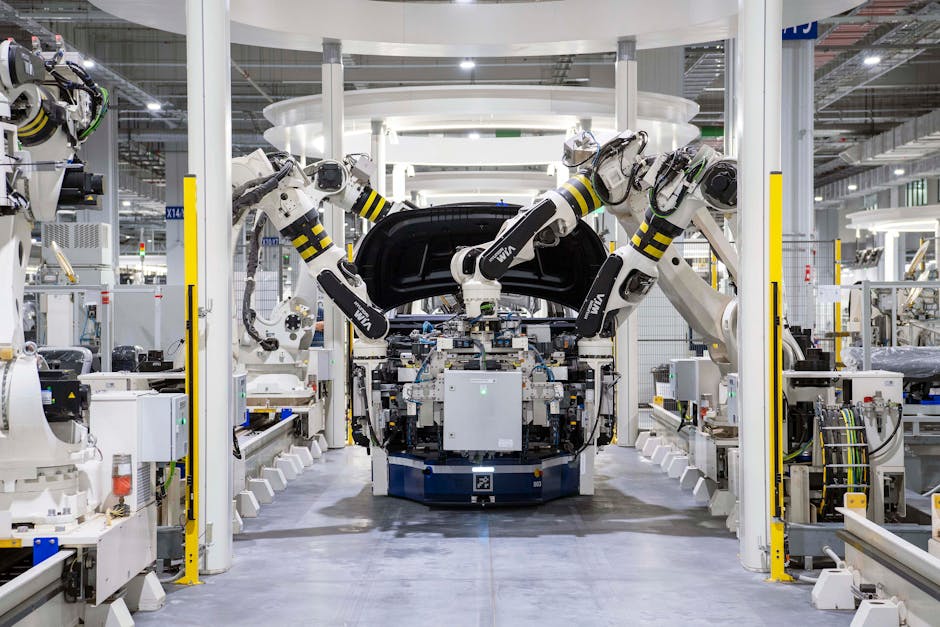
Why the Marriage of 3D Printing and Smart Factories Actually Works
Smart factories (often called Industry 4.0 environments) run on real-time data, IoT sensors, and automated decision-making. The problem traditionally was that physical production — especially tooling and prototyping — couldn’t keep pace with digital agility. You could optimize a process digitally in hours, but re-tooling the physical line took weeks.
3D printing closes that gap almost entirely. Here’s the fundamental logic:
- On-demand part production: Instead of maintaining large inventories of spare parts, factories can print exactly what they need, when they need it. Siemens’ Amberg plant reported a 90% reduction in spare parts inventory costs after integrating additive manufacturing into their smart production ecosystem in 2025.
- Rapid tooling iteration: Design changes that previously required 4–6 weeks of retooling now take 24–72 hours with industrial FDM or SLA printers. This dramatically reduces downtime costs.
- Waste reduction via topology optimization: AI-driven design software (like Autodesk Fusion or nTopology) creates geometries that use only the material structurally necessary — often cutting material usage by 30–50% compared to subtractive manufacturing.
- Labor reallocation: Automated print farms integrated with MES (Manufacturing Execution Systems) require minimal human supervision, freeing skilled workers for higher-value tasks.
- Localized supply chains: With distributed 3D printing nodes, companies reduce logistics costs and lead times — especially critical post-2022 supply chain disruptions that are still being felt in 2026.
Breaking Down the Cost Numbers — What the Data Says in 2026
Let’s be honest: broad claims about “cost savings” mean nothing without context. So here’s what credible 2025–2026 industry data actually shows:
According to the Wohlers Report 2026, companies that fully integrate additive manufacturing into smart factory workflows see an average of 35–55% reduction in total part cost for low-to-medium volume production runs (under 10,000 units). For high-mix, low-volume (HMLV) manufacturing — think aerospace components or medical devices — savings can reach 70%+ when factoring in tooling elimination.
A 2025 McKinsey analysis found that smart factories deploying 3D printing for maintenance, repair, and operations (MRO) cut unplanned downtime costs by an average of 28%, simply because critical replacement parts could be printed on-site within hours rather than waiting days for suppliers.
Material costs, however, are still a legitimate concern. Industrial-grade metal powders (titanium, Inconel) remain expensive at $300–600/kg. But polymer and composite filaments for tooling fixtures? Those run $15–80/kg — economically competitive with traditional manufacturing at smaller volumes.
Real-World Smart Factory Case Studies: Domestic and International
Let’s look at what’s actually happening on factory floors globally as of early 2026:
🇰🇷 South Korea — Hyundai Motor’s Ulsan Plant: Hyundai deployed a distributed 3D printing network across its Ulsan assembly complex starting in 2023, with full integration completed in Q1 2025. The result? Over 1,200 unique jigs and fixtures now printed in-house rather than outsourced. Annual savings: approximately ₩4.8 billion (~$3.5M USD). More importantly, fixture changeover time dropped from an average of 11 days to under 36 hours — a game-changer for model changeovers.
🇩🇪 Germany — Volkswagen’s Wolfsburg Innovation Hub: VW has been running one of Europe’s most sophisticated additive manufacturing smart factory integrations. By 2026, they’re printing over 100,000 parts annually across 10 European plants, with a reported 45% cost reduction in prototype development cycles. Their integration with SAP’s digital twin system means every printed part has full traceability data — critical for quality assurance.
🇺🇸 USA — GE Aerospace’s Greenville Facility: GE has long been a pioneer here (their 3D-printed LEAP engine fuel nozzles are famous), but their 2025–2026 push into smart factory MRO applications is where things get interesting. By printing legacy engine components on-demand, they’ve reduced parts procurement lead times by 60% and cut associated inventory carrying costs by $18M annually across their North American service network.
🇯🇵 Japan — Mitsubishi Electric’s Nagoya Works: Focusing on electronics manufacturing — not the obvious sector for 3D printing — Mitsubishi integrated polymer 3D printing for custom assembly fixtures and cable management components. Their smart factory AI system automatically generates print files when new product configurations are detected. Result: fixture procurement costs down 58%, design-to-production time reduced from 3 weeks to 4 days.
The Realistic Challenges Nobody Talks About Enough
Here’s where I want to have an honest conversation, because too many articles skip this part. 3D printing integration isn’t a plug-and-play miracle:
- Post-processing costs are real: Metal 3D printed parts often require heat treatment, HIP (Hot Isostatic Pressing), and surface finishing — adding 20–40% to part cost. Factor this in before celebrating raw print costs.
- Workforce upskilling gap: Operating industrial AM systems and the associated CAD/topology optimization software requires significant training investment. In South Korea, the average upskilling cost per engineer is estimated at ₩8–12 million in 2026.
- Quality certification timelines: In regulated industries (aerospace, medical), getting 3D printed parts certified can take 2–4 years. This delays ROI significantly.
- Material qualification: Not every part can simply be redesigned for additive manufacturing. Material substitution requires rigorous testing, especially for structural applications.
Realistic Alternatives: Not Ready for Full Integration? Start Here
If full smart factory 3D printing integration feels overwhelming (or unbudgeted) for your operation, here are genuinely practical entry points:
- Tooling-first approach: Start by printing only jigs, fixtures, and assembly aids — not production parts. ROI is faster, risk is lower, and certification requirements are minimal. Most factories recoup investment within 12–18 months this way.
- 3D printing-as-a-service (3DPaaS): Companies like Protolabs, Xometry, and Korean firm 3DCERA offer on-demand printing services with smart logistics integration. No capital investment, no learning curve — just print when you need it.
- Hybrid manufacturing cells: Rather than replacing CNC machining, combine it with 3D printing in a hybrid cell. Print near-net-shape parts, then machine to final tolerance. This captures material savings while maintaining precision.
- Pilot with a specific bottleneck: Identify your single most expensive or time-consuming tooling challenge and solve only that with 3D printing first. Prove ROI internally before scaling.
The factories winning in 2026 aren’t necessarily the ones with the most 3D printers — they’re the ones that strategically identified where additive manufacturing creates asymmetric value and deployed it there first.
The convergence of AI-driven design, real-time factory data, and additive manufacturing is genuinely reshaping what’s possible in modern production. And the cost curves are still moving in the right direction — industrial resin and polymer costs have dropped approximately 22% since 2023, and multi-material printing capabilities are expanding rapidly.
Whether you’re running a 10-person machine shop or a 2,000-person smart factory, the question isn’t really whether to integrate 3D printing — it’s where to start for maximum impact with minimum risk.
Editor’s Comment : The most underrated aspect of this whole conversation? It’s not the technology — it’s the organizational readiness. I’ve seen companies with top-tier industrial 3D printers sitting underutilized because nobody redesigned workflows to take advantage of them. Before you invest in hardware, invest in a genuine process audit. Find your bottlenecks, map your tooling costs, and let the data tell you where printing belongs in your factory. The machines are ready. The real question is whether your processes are.
태그: [‘3D printing smart factory’, ‘additive manufacturing cost reduction’, ‘Industry 4.0 manufacturing 2026’, ‘smart factory automation’, ‘3D printing ROI manufacturing’, ‘advanced manufacturing technology’, ‘digital manufacturing transformation’]
Leave a Reply