Picture this: a factory floor in 2026 where a single engineer oversees a network of machines that design, print, and assemble components — all without a single traditional mold or manual press. It sounds like something out of a sci-fi novel, but this is the operating reality for dozens of manufacturers who made the leap into smart factory 3D printing automation. I remember chatting with a production manager at an aerospace supplier last year who told me, “We cut our tooling lead time from 14 weeks to 4 days. I genuinely didn’t believe it until I watched it happen.” That kind of shift isn’t just operational — it’s philosophical.
So today, let’s think through what’s actually happening on the ground, what the data tells us, and — crucially — what realistic adoption paths look like for businesses of all sizes.
Why 3D Printing + Smart Factory Automation Is a Match Made in Manufacturing Heaven
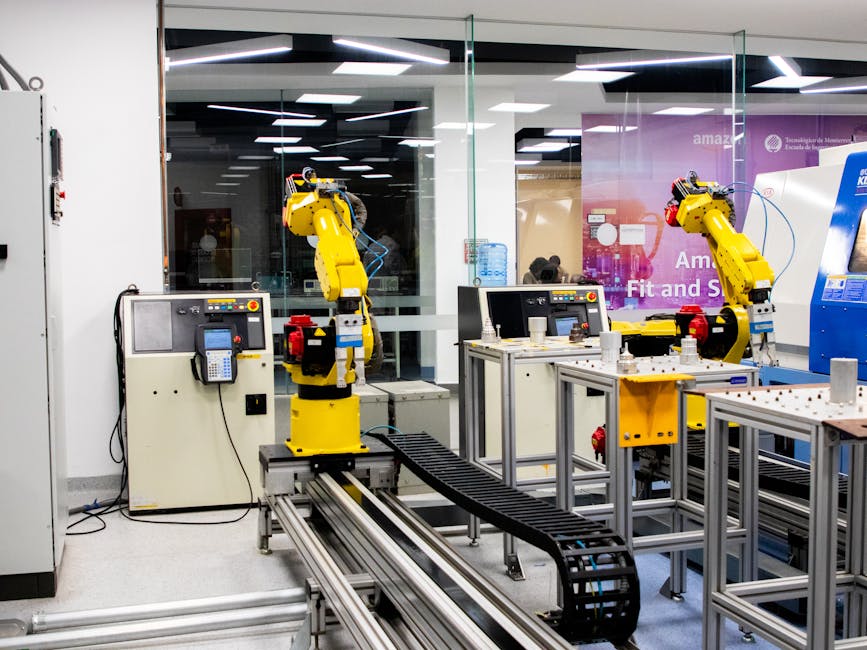
At its core, a smart factory is a highly digitized, interconnected production facility that uses technologies like IoT sensors, AI-driven analytics, and robotics to self-optimize. When you layer in additive manufacturing (AM) — the technical term for 3D printing — you introduce a production method that is inherently flexible, low-waste, and geometry-agnostic. Traditional subtractive manufacturing carves away material; additive manufacturing builds up only what’s needed.
The synergy here is powerful. Smart factory infrastructure feeds real-time data (temperature tolerances, stress test results, demand forecasts) directly into AM systems, which can then dynamically adjust print parameters or switch between product variants without retooling. This is sometimes called closed-loop manufacturing — a system where feedback constantly refines the output.
The Numbers Behind the Transformation
Let’s ground this in data, because the trends in 2026 are genuinely striking:
- Global AM market size reached approximately $32.5 billion in 2025 and is projected to exceed $41 billion by end of 2026, according to Wohlers Associates’ latest annual report.
- A McKinsey Global Institute analysis found that factories integrating 3D printing into automated production lines reported a 25–40% reduction in production costs for complex components over a 3-year adoption window.
- The average tooling lead time for injection-molded parts historically sits at 8–16 weeks. Smart factories using AM-integrated automation have compressed this to 3–7 days for functional prototypes and short-run production.
- Scrap material reduction is another headline number: AM processes in optimized smart factory settings generate up to 70% less waste compared to CNC machining for equivalent parts.
- Labor productivity in AM-enabled smart factories has shown a 15–22% uplift in throughput per worker, largely because human roles shift from manual operation to oversight, quality control, and process design.
These aren’t aspirational figures anymore — they’re being reported by companies that have moved past pilot programs into full-scale integration.
Real-World Case Studies: From Korea to Germany to the U.S.
Let’s look at some concrete examples, because theory only takes us so far.
🇰🇷 South Korea — Hyundai Motor’s Asan Plant Integration
Hyundai’s Asan facility has been a benchmark case in the Korean smart factory conversation. Since 2024, the plant has incorporated polymer and metal AM stations directly into its body parts testing workflow. Rather than outsourcing jig and fixture production, in-house 3D printing cells connected to the plant’s MES (Manufacturing Execution System) now produce custom assembly aids on demand. The result? A reported 31% reduction in fixture procurement costs and a measurable drop in line changeover time. Hyundai has publicly stated this model is being templated across two additional Korean plants through 2026.
🇩🇪 Germany — Siemens’ Erlangen Energy Hub
Siemens has long been a poster child for Industry 4.0, but their Erlangen facility took things further by integrating autonomous AM cells — essentially 3D printing robots that receive print jobs, load materials, run quality checks via in-process scanning, and flag exceptions without human input. By 2025, they reported that over 1,200 unique spare parts for turbine systems were being produced entirely on-demand through this system, eliminating legacy inventory warehousing for those SKUs. The cost saving from reduced inventory carrying alone was cited at approximately €4.2 million annually.
🇺🇸 United States — GE Aerospace’s Additive Works Division
GE Aerospace has arguably the most mature AM-to-production pipeline in the world. Their facility in Auburn, Alabama produces FAA-certified fuel nozzle tips using direct metal laser sintering (DMLS). What makes it smart factory-relevant is the integration layer: every printed component is tracked via embedded QR data, measured by in-line CT scanners, and the results are fed back into the AI model that governs print parameters. This self-correcting system has reduced the rejection rate for these nozzles from approximately 3.5% (in 2022) to under 0.8% by early 2026.
What Technologies Are Driving This Integration in 2026?
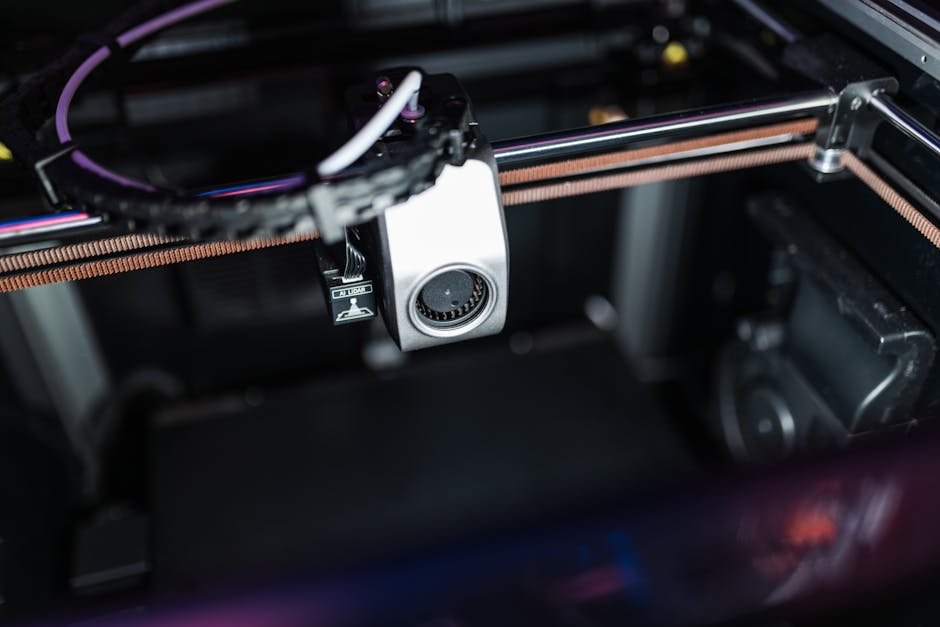
If you’re trying to understand what’s under the hood, here are the key enabling technologies working in concert:
- Digital Twin Platforms: Virtual replicas of physical production processes allow engineers to simulate AM outcomes before printing begins, dramatically reducing failed runs.
- AI-Powered Print Parameter Optimization: Machine learning models trained on thousands of print jobs can predict optimal layer thickness, support structures, and infill patterns for new geometries.
- Multi-material AM Systems: 2026 has seen commercial viability of printers that switch between materials mid-print, enabling functionally graded components (e.g., rigid core with flexible outer layer) in a single pass.
- In-Process Metrology: Embedded sensors and laser profilometers scan each printed layer in real time, catching deviations before they compound — this is critical for ISO/AS9100 compliance in aerospace and medical sectors.
- Cloud-Connected MES Integration: AM cells that talk directly to the factory’s Manufacturing Execution System can be dynamically reprioritized based on live production demand, rather than running fixed job queues.
Realistic Alternatives: Not Every Company Needs a GE-Scale Setup
Here’s where I want to slow down and be honest with you, because a lot of coverage on this topic makes it sound like full smart factory 3D printing integration is an all-or-nothing proposition. It isn’t.
If you’re running a mid-sized manufacturing operation or even a smaller contract shop, there are entry points that deliver real ROI without a multi-million-dollar overhaul:
- Step 1 — Tooling and Fixtures First: Start by 3D printing your own jigs, fixtures, and assembly aids internally. This is the lowest-risk, highest-speed ROI path. You don’t need AM in your main production line — just a desktop or industrial printer in your tooling room connected to your CAD system.
- Step 2 — Spare Parts On-Demand: Instead of maintaining a physical inventory of slow-moving spare parts, companies like Spare Parts 3D (a Singapore-based startup now operating in 14 countries) offer digital inventory platforms where qualified part files are stored and printed only when ordered. The capex is minimal if you partner rather than own.
- Step 3 — Pilot Cell Approach: Carve out one production cell — even a single product line — and run a 6-month pilot integrating AM with your existing ERP/MES. Measure lead time, scrap rate, and cost. Let the data make the case for expansion.
- Step 4 — Partner with AM Bureaus: If internal capital is constrained, outsourcing production runs to AM service bureaus (like Xometry, Materialise, or regional Korean/German equivalents) while you build internal expertise is entirely valid. This is a bridge, not a compromise.
The point is: the smart factory 3D printing journey doesn’t require you to leap from zero to Siemens Erlangen. It requires you to take the next logical step from wherever you are today.
Challenges Worth Acknowledging Honestly
I’d be doing you a disservice if I only shared the wins. The adoption challenges are real:
- Workforce reskilling is consistently cited as the #1 barrier. Operating AM in a smart factory context requires fluency in CAD, materials science, and data analytics — skillsets that traditional machinists and technicians need time and investment to develop.
- Material certification remains a bottleneck in regulated industries. While aerospace and medical AM is growing fast, the qualification timeline for new materials under FAA, FDA, or ISO frameworks can still run 18–36 months.
- Cybersecurity exposure increases as factory systems become more connected. A digital thread that runs from design file to print job to quality record is incredibly powerful — and an equally powerful attack surface if not properly secured.
None of these are reasons to avoid the path. They’re reasons to plan for them deliberately.
The manufacturing landscape in 2026 has made one thing unmistakably clear: the companies gaining competitive advantage aren’t necessarily the ones with the biggest budgets. They’re the ones willing to think systematically about where automation, digital integration, and additive manufacturing intersect with their specific operational pain points. That’s a thinking exercise available to any company, regardless of scale.
Editor’s Comment : If I had to pick the single most important mindset shift for manufacturers exploring this space, it would be this — stop thinking of 3D printing as a prototyping tool and start thinking of it as a production strategy. The companies featured in these case studies didn’t just buy printers; they redesigned their information architecture around additive manufacturing. That’s the actual competitive moat. The printer is just the last step in a much more interesting digital journey.
📚 관련된 다른 글도 읽어 보세요
- 3D 프린팅으로 제조 비용 절감? 2026년 스마트팩토리 실제 적용 사례 총정리
- Raspberry Pi 5 Home Lab Projects You Should Try in 2026: From Beginner Builds to Advanced Setups
- Additive Manufacturing Meets Digital Twins: How Smart Factories Are Rewriting the Rules of Production in 2026
태그: [‘smart factory automation’, ‘3D printing manufacturing 2026’, ‘additive manufacturing case study’, ‘Industry 4.0 integration’, ‘digital twin manufacturing’, ‘smart factory technology’, ‘AM production automation’]
Leave a Reply