Picture this: it’s late 2025, and a small medical device startup in Seoul just received their first batch of prototype parts from three different 3D printing services — one used FDM, one used SLA, and one used SLS. When their lead engineer laid all three samples side by side, the differences were so stark that the team nearly scrapped two of the vendors on the spot. That story isn’t unusual. In 2026, choosing the wrong printing method can cost you not just money, but entire product development cycles. So let’s actually think through this together — what do SLA, SLS, and FDM really mean for precision output, and which one belongs in your workflow?
🔬 What Are We Actually Comparing? A Quick Primer
Before we dive into numbers and trade-offs, let’s level-set on what each method does under the hood:
- FDM (Fused Deposition Modeling): A thermoplastic filament is melted and extruded layer by layer. Think of it as a very precise hot glue gun tracing cross-sections of your design. It’s the most accessible and affordable method.
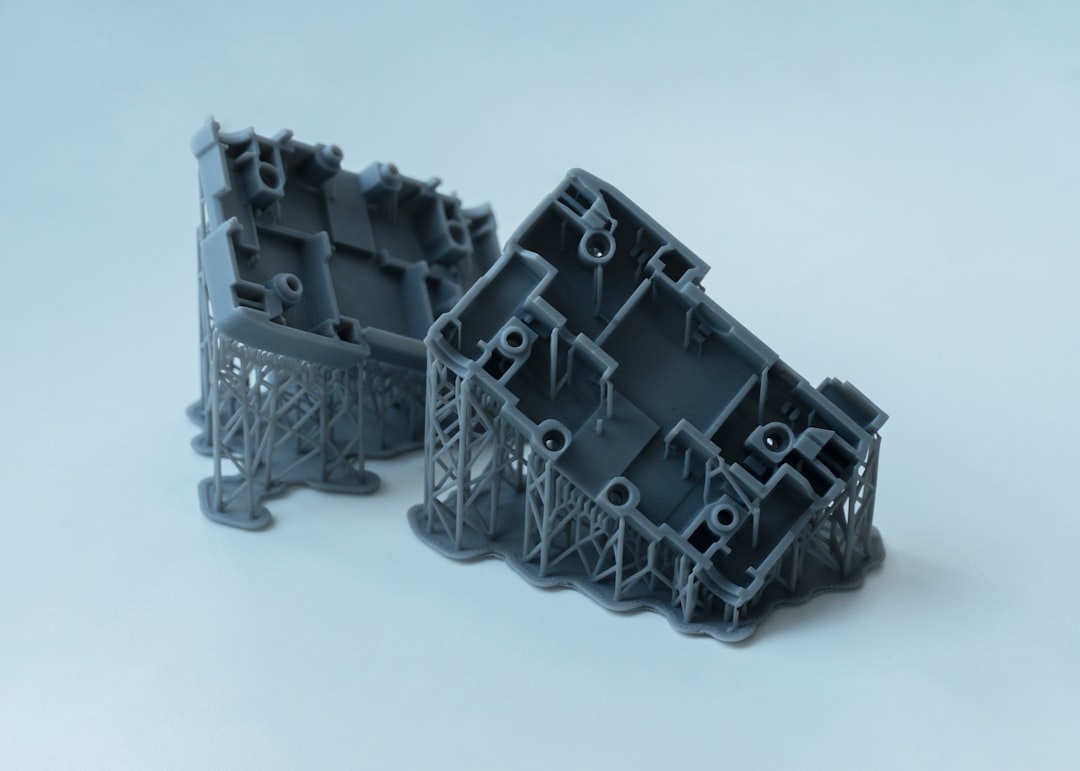
- SLA (Stereolithography Apparatus): A UV laser (or in MSLA, a masked LCD screen) cures liquid photopolymer resin layer by layer. The result is famously smooth surfaces and fine detail — but the resin can be brittle and sensitive to UV over time.
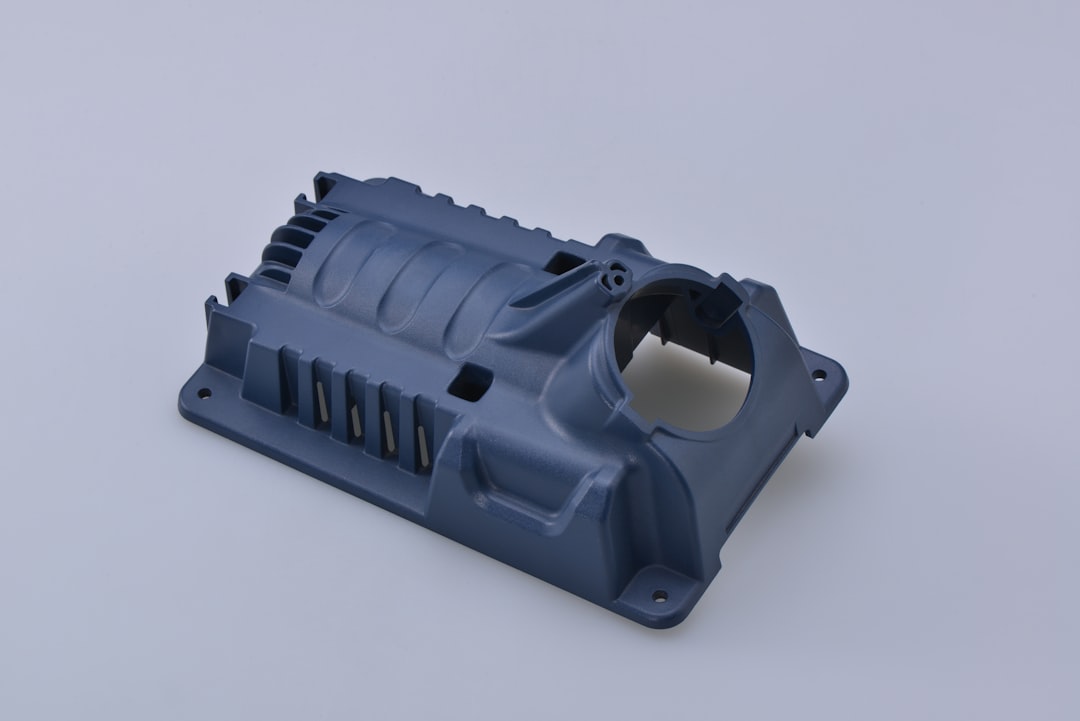
- SLS (Selective Laser Sintering): A high-powered laser fuses powdered material — typically nylon (PA12), but also TPU or metal-composite powders — into solid layers. No support structures needed, and the mechanical properties are genuinely impressive.
Now that we have the vocabulary down, let’s get into the real meat: precision, tolerances, and what the data actually says in 2026.
📐 Dimensional Accuracy & Tolerances — The Numbers Don’t Lie
This is the section most blog posts gloss over with vague language like “very precise” or “somewhat accurate.” Let’s be specific, because precision in manufacturing is measured in microns, not adjectives.
- FDM Typical Tolerance: ±0.2mm to ±0.5mm depending on layer height (commonly 0.1mm–0.3mm) and the quality of the printer. Consumer-grade machines like the Bambu Lab X1E (running strong in 2026) can hit ±0.15mm under ideal conditions. Industrial FDM systems from Stratasys or Markforged narrow this to ±0.1mm, but at a significant cost premium.
- SLA Typical Tolerance: ±0.025mm to ±0.1mm. This is where SLA genuinely shines. Desktop resin printers like the Formlabs Form 4 (released in late 2024, widely adopted by 2026) achieve layer resolutions as fine as 25 microns. For dental models, jewelry molds, and microfluidic device prototypes, this level of detail is transformative.
- SLS Typical Tolerance: ±0.1mm to ±0.3mm. At first glance, SLS looks similar to FDM in tolerance range. But here’s the crucial difference: SLS achieves these tolerances isotropically — meaning the part is equally strong and dimensionally stable in all directions, whereas FDM parts are notably weaker along the Z-axis (layer bonding direction).
What this tells us: if you need microscopic surface detail, SLA wins. If you need functional, load-bearing parts without support structure headaches, SLS is your answer. If you need fast, cheap, and “good enough” for concept validation, FDM delivers.
⚙️ Surface Finish, Post-Processing & Real-World Functionality
Tolerances on paper don’t tell the whole story. Surface finish — measured in Ra (roughness average, in micrometers) — dramatically affects whether a part functions properly in assemblies, especially for snap-fits, bearings, or cosmetic components.
- FDM Ra: Typically 10–30 µm as-printed. Those visible layer lines aren’t just cosmetic — they create stress concentration points and affect aerodynamics. Sanding, vapor smoothing (for ABS/ASA), or epoxy coating can improve this significantly, but add time and labor cost.
- SLA Ra: As low as 0.5–2 µm after IPA washing and UV post-cure. This near-injection-molded finish is why the jewelry and dental industries have almost universally migrated to resin-based printing for master patterns as of 2026.
- SLS Ra: Typically 10–20 µm as-printed, with a characteristic matte, grainy texture from the sintered powder. Bead blasting can bring it to 5–10 µm. The trade-off is that SLS parts often don’t need post-processing to be functional — they just work, right out of the powder bed.
🌍 Real-World Examples: From Seoul Labs to Dutch Design Studios
Theory is great, but let’s look at who’s actually using these methods and why in 2026.
SLA in Dental & Medical (South Korea & Germany): Osstem Implant, one of South Korea’s leading dental implant manufacturers, has integrated SLA printing for producing surgical guides and temporary crowns since 2023. By 2026, their in-house Formlabs-based workflow produces guides with ±0.05mm accuracy — clinically significant when you’re drilling into a jawbone. Similarly, German firm DeguDent uses SLA resin models as master patterns for casting precious metal restorations.
SLS for Functional Aerospace Brackets (Netherlands & USA): Dutch aerospace SME Airborne Advanced Composites uses SLS-printed PA12 brackets as fixture tools in their carbon fiber layup processes. The isotropy and heat resistance (up to ~160°C for standard nylon) make FDM simply unsuitable here. In the US, Boom Supersonic has publicly noted using SLS for wind tunnel test component prototyping.
FDM for Rapid Concept Iteration (Everywhere): Let’s be honest — FDM is the workhorse of every engineering office in 2026. Teams at consumer electronics companies like Samsung’s design labs in Suwon and Dyson’s R&D centers in Singapore use FDM daily for first-pass ergonomic mock-ups and housing concepts. It’s not about precision here — it’s about speed and volume.
💰 Cost Per Part & Scalability — The Realistic Budget Conversation
Here’s where many makers and small businesses make their biggest mistake: optimizing for quality without considering cost-per-part at their actual volume.
- FDM cost per part: Filament costs roughly $15–$50/kg. A medium-complexity part (~100g) costs under $5 in material. Machine time and electricity add perhaps $2–$8. Total: very economical at low volumes.
- SLA cost per part: Engineering resins run $150–$400/liter. That same 100g part (resin density ~1.1g/cm³, so ~90ml) could cost $13–$36 in material alone, before machine time and post-cure equipment costs. Premium functional resins (flexible, ceramic-filled) push this higher.
- SLS cost per part: PA12 powder is typically $50–$100/kg for desktop systems (Formlabs Fuse 1+), but industrial systems from EOS or 3D Systems have higher per-part costs due to overhead. However, SLS allows nesting — packing dozens of parts into a single build volume — which dramatically reduces cost per part at medium volumes. At 50+ parts per batch, SLS often undercuts SLA on a per-unit basis.
✅ So Which Method Is Right for YOU? A Decision Framework
Rather than declaring one “winner,” let’s think through this as a decision tree based on your actual use case:
- Need maximum detail, smooth surfaces, clear or pigmented aesthetics? → Go SLA. Ideal for: dental, jewelry, tabletop miniatures, optical housings, microfluidics.
- Need functional, durable, isotropic parts without supports? → Go SLS. Ideal for: end-use consumer products, automotive fixtures, complex assemblies, flexible TPU components.
- Need speed, low cost, large format, or multi-material capability? → Go FDM. Ideal for: concept models, jigs and fixtures, educational prototypes, large enclosures.
- Budget is very tight AND precision matters moderately? → Start with FDM, validate geometry, then re-print critical interfaces in SLA or outsource final version to SLS through services like Craftcloud, Xometry, or Korea’s own MakerAll platform.
- Scaling to 100+ units with consistent mechanical properties? → SLS almost always wins at this volume threshold, or consider transitioning to injection molding using SLA master patterns.
The honest truth in 2026 is that most professional studios maintain at least two of these methods in-house — typically FDM + SLA — and outsource SLS to service bureaus when the application demands it. That hybrid approach keeps capital costs manageable while covering 90% of use cases.
Editor’s Comment : After years of watching makers, engineers, and designers agonize over this choice, the pattern is clear: the “best” 3D printing method is almost always defined by the specific failure mode you cannot afford. If a rough surface ruins your product, choose SLA. If a delaminated Z-layer ruins your function test, choose SLS. If a two-week outsource lead time ruins your sprint deadline, choose FDM. The technology has matured enough in 2026 that all three methods are genuinely excellent — but only in their right context. Know your constraints first, then choose your tool.
📚 관련된 다른 글도 읽어 보세요
- 3D 프린팅 소재 혁신 2026: 고강도 폴리머와 복합 재료가 바꾸는 제조업의 미래
- Additive Manufacturing in Aerospace: Real-World Applications & Quality Validation in 2026
- 미니 PC 홈서버 DIY 추천 2026 – 전기세 아끼면서 나만의 서버 만드는 법
태그: [‘SLA SLS FDM comparison’, ‘3D printing precision 2026’, ‘stereolithography vs selective laser sintering’, ‘FDM tolerances accuracy’, ‘best 3D printing method for prototypes’, ‘SLS nylon functional parts’, ‘resin printing surface finish’]
Leave a Reply