Picture this: a commercial aircraft is grounded at a remote airport in 2026 because of a cracked titanium bracket — a part that would normally take weeks to source and ship. But instead of waiting, the maintenance crew uploads a certified digital file to an on-site metal 3D printer, and within hours, a flight-ready replacement is in hand. This isn’t science fiction anymore. It’s the direction the aerospace industry is sprinting toward, and the pace of innovation in additive manufacturing (AM) for aerospace components has genuinely shifted into a higher gear this year.
Let’s think through what’s actually happening in this space — the data, the real-world examples, and honestly, what it all means for manufacturers, engineers, and even curious travelers who sit in those flying machines.
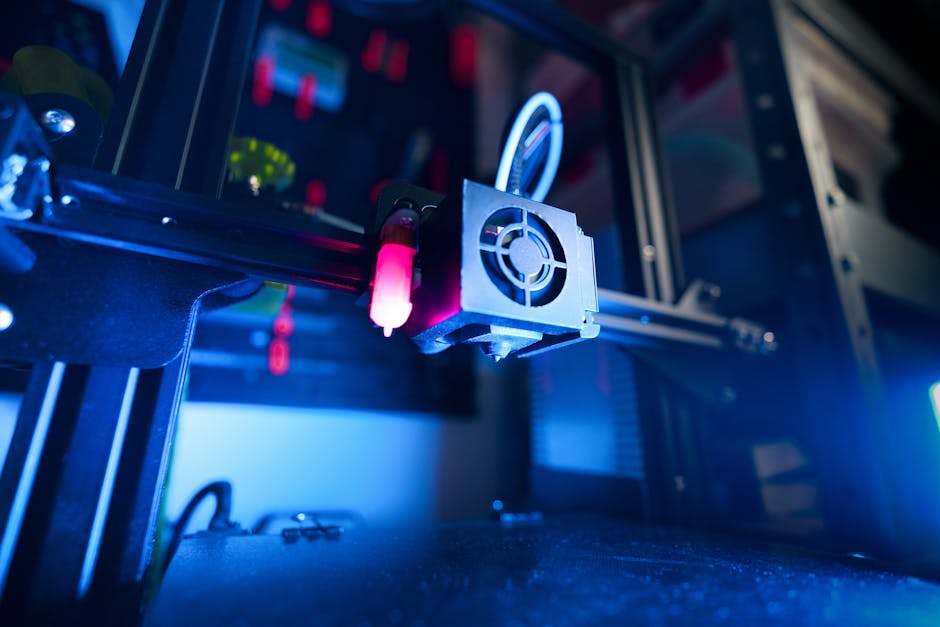
Why Additive Manufacturing Is a Big Deal for Aerospace (With Real Numbers)
Aerospace has always been the ultimate stress test for manufacturing. Parts need to be lighter than air (almost literally), stronger than steel, and certified to tolerances that would make a watchmaker nervous. So when additive manufacturing started creeping into this space, the industry watched with a mixture of excitement and skepticism.
By early 2026, that skepticism has largely been replaced by strategic investment. Here’s what the data tells us:
- Market size surge: The global aerospace AM market is projected to exceed $5.8 billion USD in 2026, up from roughly $3.4 billion in 2022 — a compound annual growth rate hovering around 14%, according to recent aerospace industry analyses.
- Weight reduction wins: GE Aerospace’s LEAP engine fuel nozzle — one of the most famous AM success stories — reduced part count from 20 components to 1, cutting weight by 25% and improving durability by a factor of 5. This benchmark still guides new development programs in 2026.
- Material evolution: Beyond titanium alloys (Ti-6Al-4V remains the workhorse), we’re now seeing certified builds in nickel superalloys like Inconel 718, aluminum-lithium composites, and even ceramic matrix composites (CMCs) entering qualification phases for hot-section turbine components.
- Build speed breakthroughs: Directed Energy Deposition (DED) systems in 2026 are depositing material at rates up to 10 kg/hour for large structural components — a dramatic leap from the sub-1 kg/hour rates typical just five years ago.
- Certification momentum: The FAA and EASA have both expanded their AM-specific airworthiness frameworks in 2025–2026, with over 500 additively manufactured part designs now holding active Part 21 approvals.
What’s particularly interesting is that weight savings translate directly into fuel savings, which translate into emissions reductions — a priority that’s only intensifying under 2026’s tightening aviation sustainability regulations. So additive manufacturing isn’t just a cool tech story; it’s increasingly an environmental compliance story too.
The Technology Landscape: Not One Tool, But an Entire Toolbox
Here’s something worth clarifying for anyone newer to this topic: “additive manufacturing” isn’t a single technology. It’s a family of processes, and different aerospace applications call for different members of that family.
- Selective Laser Melting (SLM) / Laser Powder Bed Fusion (LPBF): The go-to for complex, precision metal parts like fuel nozzles, brackets, and heat exchangers. Excellent resolution, but slower for large parts.
- Directed Energy Deposition (DED): Ideal for large structural components and repair applications. Think wing spars or landing gear components where you’re depositing material onto an existing substrate.
- Binder Jetting: Gaining traction in 2026 for high-volume, medium-complexity parts. Companies like Desktop Metal and ExOne (now part of larger industrial groups) have pushed this into aerospace-adjacent certification territory.
- Continuous Fiber Reinforcement (CFR) composites printing: A rising star for interior components — seat frames, ducting, brackets — where weight matters but metallic strength isn’t required.
Global and Domestic Examples Setting the Pace in 2026
Let’s ground this in what’s actually happening at real companies and programs right now.
🇺🇸 GE Aerospace & Boeing (USA): GE Aerospace’s next-generation open fan engine architecture — part of the CFM RISE program — incorporates AM-produced components extensively, targeting a 20% fuel efficiency improvement over current engines. Boeing’s 777X program continues to expand its AM parts library, with over 300 additively manufactured components per aircraft in 2026 production builds.
🇪🇺 Airbus & Safran (Europe): Airbus has been quietly ambitious. Their “Factory of the Future” initiatives across Toulouse and Hamburg facilities now routinely 3D print titanium structural brackets for the A350 family. Safran’s nacelle components for the LEAP engine use AM-produced acoustic liners that reduce cabin noise measurably — a passenger comfort win hiding inside a manufacturing innovation story.
🇬🇧 Rolls-Royce (UK): Rolls-Royce made headlines in late 2025 when they successfully ground-tested a turbine blade with an AM-produced internal cooling channel architecture so intricate it simply couldn’t have been manufactured any other way. That kind of geometric freedom is the killer app of additive manufacturing.
🇰🇷 Korea Aerospace Industries (KAI) & Hanwha Aerospace (South Korea): South Korea’s aerospace sector has been ramping up AM investment significantly. KAI’s KF-21 Boramae fighter program has incorporated AM-produced hydraulic manifolds and structural inserts, while Hanwha Aerospace is developing domestic LPBF capabilities for turboprop engine components — reducing dependence on imported parts and building sovereign manufacturing capacity.
🇨🇳 COMAC & AVIC (China): China’s C919 regional jet program and the larger CR929 widebody development both incorporate substantial AM component programs. AVIC’s AM research centers are particularly active in large-format titanium printing for military airframe structures.
The Challenges Nobody Loves to Talk About (But We Should)
Alright, let’s be honest with ourselves here — because a realistic picture matters more than a hype reel.
- Certification timelines are still long: Even with expanded FAA/EASA frameworks, getting a new AM part from design to certified flight hardware typically takes 3–7 years. The design freedom is there; the qualification path is still a marathon.
- Post-processing costs: Most aerospace AM parts require significant post-processing — hot isostatic pressing (HIP), heat treatment, CNC finishing, and surface treatment. These costs can eat into the savings that AM theoretically delivers.
- Powder supply chain complexity: High-purity aerospace-grade metal powders are expensive and have a complex supply chain. Contamination control is non-negotiable.
- Skills gap: The specialized expertise to design for AM (not just design and then 3D print) remains scarce. Companies are investing in training pipelines, but it’s a multi-year problem.
Realistic Alternatives and Strategic Considerations
So what does this mean if you’re not a major OEM with a billion-dollar R&D budget? The good news is that AM’s benefits are scaling down to smaller players too — and there are smart ways to engage with this trend at different levels:
- For MRO (Maintenance, Repair & Overhaul) organizations: Focus on AM for obsolete parts and on-demand spares first. The business case is clearest here — no minimum order quantities, no long lead times, digital inventory instead of physical shelves.
- For Tier 2/3 suppliers: Consider hybrid approaches — combining AM for complex internal geometries with conventional machining for critical mating surfaces. This balances design freedom with proven quality assurance.
- For startups and new entrants: AM is genuinely democratizing access to aerospace manufacturing. If you’re designing a UAV, satellite structure, or small propulsion system, the barrier to prototyping and even limited production has never been lower.
- For engineers and designers: Invest time in Design for Additive Manufacturing (DfAM) training now. Topology optimization, lattice structures, and consolidated part design are skills with compound career value in 2026’s aerospace job market.
The underlying logic here is straightforward: additive manufacturing rewards those who design with its constraints and freedoms in mind from the start, not those who retrofit conventional designs onto new machines. The companies winning in 2026 understood this years ago.
We’re watching an industry in genuine transformation — not the overnight disruption that tech hype cycles love to promise, but the steady, methodical kind that reshapes everything it touches. The sky, quite literally, is being rebuilt one layer at a time.
Editor’s Comment : What strikes me most about the aerospace AM story in 2026 isn’t any single technological breakthrough — it’s the compounding effect. Every year that passes, there are more certified designs, more trained engineers, more qualified material specs, and more proven track records in service. The flywheel is spinning. If you’re anywhere near the aerospace or advanced manufacturing space and haven’t mapped out your AM strategy, the window for leisurely observation is genuinely closing. The parts that will fly in 2030’s aircraft are being designed — and printed — right now.
태그: [‘aerospace additive manufacturing 2026’, ‘3D printing aviation components’, ‘metal additive manufacturing aerospace’, ‘aerospace innovation news’, ‘LPBF titanium aerospace’, ‘sustainable aviation manufacturing’, ‘aerospace supply chain technology’]
Leave a Reply