Picture this: It’s 2019, and a small aerospace startup in Munich is staring at a cracked titanium bracket that just failed a stress test — again. Their lead engineer, frustrated after weeks of iteration, half-jokes that they should “just print it out of something tougher.” Fast-forward to 2026, and that’s exactly what teams like theirs are doing. Carbon fiber and ceramic composite 3D printing has moved from experimental lab curiosity to a genuine industrial workhorse, and the implications for everything from your kitchen gadgets to next-gen aircraft are genuinely wild.
So let’s think through this together — what’s actually changed in the material science of additive manufacturing, why does it matter, and how can you (whether you’re a maker, engineer, or just a tech-curious human) realistically engage with these innovations?
The Material Revolution: What Carbon Fiber & Ceramics Bring to the Table
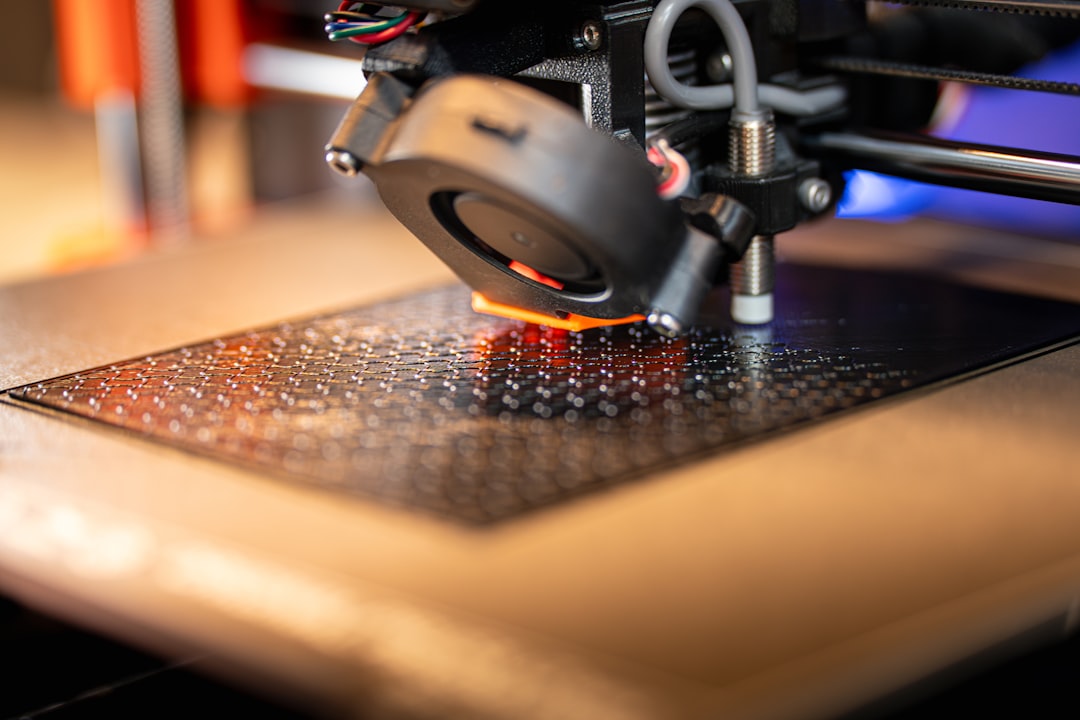
Traditional FDM (Fused Deposition Modeling) printing — the kind most of us know from desktop printers — uses thermoplastics like PLA or ABS. They’re great for prototypes, but they fatigue, warp under heat, and frankly struggle under mechanical stress. Carbon fiber and ceramic composites solve three fundamental problems at once:
- Strength-to-weight ratio: Continuous carbon fiber composites can achieve tensile strengths exceeding 700 MPa — comparable to aluminum alloys — while weighing roughly 40% less. Markforged’s 2026 benchmark report clocked their latest Onyx Pro filament at 6.1x the strength of standard nylon.
- Thermal resistance: Silicon carbide (SiC) ceramic composites now routinely withstand sustained temperatures above 1,400°C, opening doors in turbine components and high-heat industrial tooling.
- Surface precision: Advanced ceramic slurry processes (like those used in Lithoz’s CeraFab Ultra platform) can now achieve layer resolutions down to 25 microns — that’s finer than a human hair.
- Electrical & thermal conductivity tuning: By varying the ratio of carbon fiber to polymer matrix, engineers can dial in conductivity properties for EMI shielding or thermal management applications.
- Corrosion resistance: Ceramic composites are essentially immune to most chemical environments where metals would degrade, making them ideal for chemical processing equipment.
The 2026 Landscape: Where the Tech Actually Stands
Here’s where I want to be honest with you rather than just hyping the future: composite 3D printing is genuinely maturing, but it’s not a plug-and-play revolution yet. Let’s look at the real numbers.
According to SmarTech Analysis’s Q1 2026 report, the global market for composite additive manufacturing materials hit $4.7 billion in 2025 and is projected to reach $7.2 billion by 2028. The fastest-growing segment? Short and continuous carbon fiber reinforced polymers (CFRP) for industrial tooling and automotive jigs. Meanwhile, ceramic AM (additive manufacturing) remains more niche but is growing at a 31% CAGR, driven almost entirely by dental, aerospace, and defense applications.
The key 2026 breakthroughs worth knowing about:
- Hybrid multi-material deposition: Systems from Desktop Metal and Arevo now allow simultaneous deposition of carbon fiber tow and ceramic-filled polymers in a single print job — a first at production scale.
- AI-driven fiber path optimization: Companies like Continuous Composites have integrated generative AI into their toolpath planning, automatically orienting carbon fibers along principal stress lines. This alone reduces material waste by up to 23% compared to traditional layup methods.
- Recyclable thermoset composites: One of the historic criticisms of CFRP — you can’t easily recycle it — is being addressed by startups like Connora Technologies and Toray’s 2026 EcoCarbon line, which use reversible covalent bonds in the resin matrix.
Real-World Applications: From Seoul to Stuttgart
Let me ground this in actual examples, because the use cases are where this gets exciting.
Aerospace (Airbus, Toulouse, France): Airbus’s Filton facility is using ceramic composite AM to produce thermal protection tiles for their next-generation re-entry vehicle program. The parts weigh 34% less than their traditionally machined counterparts, and lead time dropped from 14 weeks to under 3. That’s not a marginal improvement — that’s a supply chain transformation.
Automotive (Hyundai Motor Group, South Korea): Hyundai’s advanced materials R&D center in Namyang has been piloting carbon fiber composite 3D-printed bracket systems for their IONIQ 9 sport variant. The goal isn’t mass production yet — it’s rapid iteration for structural prototypes. But their engineers reported a 60% reduction in prototype cycle time using Markforged continuous fiber systems compared to traditional CNC machining of aluminum.
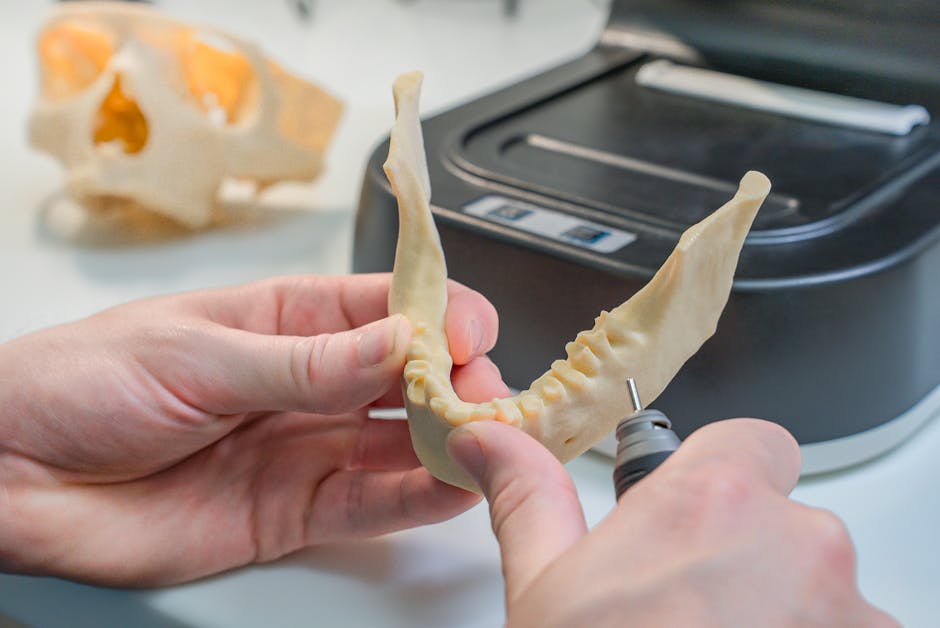
Medical (Straumann Group, Basel, Switzerland): Ceramic AM is arguably most mature in dental applications. Straumann’s 2026 lineup includes zirconia (ZrO₂) crowns and bridges printed via DLP (Digital Light Processing) ceramic slurry. The precision is remarkable — sub-50-micron accuracy — and the biocompatibility of zirconia means no metal allergy concerns for patients.
Consumer/DIY space (Bambu Lab ecosystem, global): This one surprises people. Bambu Lab’s P1S and X1 series printers now officially support short-carbon-fiber filaments from brands like PolyMaker and Fiberon. You’re not printing aerospace brackets in your garage, but you can print functional, high-stiffness mechanical parts for RC vehicles, camera rigs, and workshop jigs. The entry cost? Under $600 for a capable setup in 2026.
The Honest Challenges You Should Know About
Look, I’d be doing you a disservice if I didn’t mention the friction points. Carbon fiber printing is genuinely abrasive — it chews through standard brass nozzles in hours. You’ll want hardened steel or ruby-tipped nozzles (add $30–$80 to your setup cost). Ceramic AM equipment for industrial applications still starts around $150,000 for entry-level production systems, which puts it firmly in the professional/industrial category for now.
Post-processing is also non-trivial for ceramics. After printing, green-state ceramic parts must go through debinding and sintering — a process that takes 12–24 hours and requires specialized kilns. Shrinkage during sintering (typically 15–25%) must be pre-compensated in the digital model. It’s manageable, but it requires expertise.
Realistic Alternatives Based on Your Situation
Here’s where I want to think practically with you, because your path forward really depends on your context:
- If you’re a hobbyist/maker: Start with short-carbon-fiber filaments on a hardened-nozzle-equipped desktop printer. Brands like Fiberon CF-PETG or PolyMaker PolyLite CF give you real stiffness improvements at consumer price points. Don’t jump straight to continuous fiber systems — the learning curve and cost aren’t justified unless you have specific high-load applications.
- If you’re a product designer or small studio: Consider outsourcing your composite AM to service bureaus first. Companies like Xometry, Protolabs, and Materialise all offer carbon fiber and ceramic AM as a service in 2026. Get your design validated before investing in equipment.
- If you’re in manufacturing/engineering: The ROI case for continuous fiber systems is strongest for tooling, fixtures, and low-to-medium volume functional parts. Run a parallel cost analysis against traditional CNC and composite layup for your specific part geometry before committing.
- If you’re in dental or medical: Ceramic DLP systems are genuinely production-ready. The question isn’t whether to adopt, but which platform (Lithoz vs. 3D Systems Figure 4 Ceramic vs. Prodways ProMaker C) best matches your throughput and material requirements.
The through-line here is: match the technology to the application, not the other way around. The excitement around these materials is justified, but the best innovation is the one that actually solves your specific problem efficiently.
We’re at an inflection point in 2026 where carbon fiber and ceramic composite printing has cleared the “impressive demo” phase and is firmly in the “prove the business case” phase. The materials are real, the applications are validated, and the cost curves are bending in the right direction. Whether you’re curious about printing your first stiff mechanical part at home or specifying materials for a next-gen aerospace assembly, there’s a realistic entry point for you.
Editor’s Comment : What strikes me most about this material shift isn’t the headline tensile strength numbers or the thermal resistance specs — it’s the democratization happening in parallel. Five years ago, continuous carbon fiber printing was a six-figure conversation. Today, a motivated maker with a $600 printer and a $40 spool of CF filament is working with materials that would’ve required an industrial R&D lab in 2019. That compression of access is, I think, the real story of 2026’s composite AM revolution. The materials got stronger, yes — but more importantly, they got closer to all of us.
📚 관련된 다른 글도 읽어 보세요
- Used Server Homelab Setup in 2026: Smart Buying Tips That Actually Save You Money
- Mini PC vs DIY Home Server in 2026: Which Setup Actually Makes Sense for You?
- 2026년 미니PC 홈서버 DIY 완벽 비교 리뷰 | 전기세·성능·가성비 총정리
태그: [‘3D printing composites 2026’, ‘carbon fiber additive manufacturing’, ‘ceramic 3D printing technology’, ‘advanced manufacturing materials’, ‘continuous fiber 3D printing’, ‘aerospace 3D printing applications’, ‘composite material innovation’]
Leave a Reply