A few months back, a colleague of mine — a product designer at a mid-sized medical device firm — called me in a mild panic. She’d just received a batch of prototype parts from an SLS service bureau, and the surface finish was, in her words, “like sandpaper wrapped around a geometry problem.” She’d been told SLS was the gold standard for functional prototypes. And it is — but she needed both dimensional accuracy and a decent surface finish. That conversation sent me down a six-month rabbit hole comparing high-precision SLA and SLS systems in 2026, and honestly, the landscape has shifted dramatically enough that a lot of old advice is now outdated.
Let’s dig into this together, because the answer to “SLA or SLS?” is genuinely more nuanced than most buyer’s guides let on.
What Actually Separates SLA and SLS in 2026?
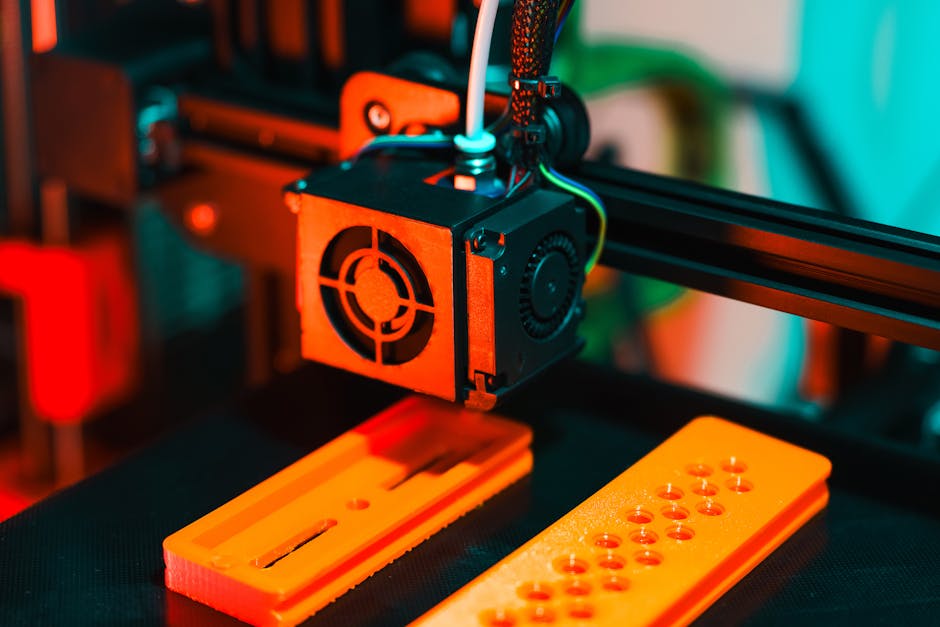
First, a quick primer for anyone newer to additive manufacturing. SLA (Stereolithography) uses a UV laser (or DLP light engine) to cure liquid photopolymer resin layer by layer. SLS (Selective Laser Sintering) uses a high-powered CO₂ or fiber laser to fuse powdered polymer — typically Nylon PA12 or PA11 — into solid parts. Structurally, they’re solving very different problems.
In 2026, the meaningful specs you need to benchmark look something like this:
- XY Resolution: SLA systems like the Formlabs Form 4 Ultra achieve 25 µm XY resolution; SLS systems like EOS Formiga P 110 Velocis land around 150–200 µm effective feature resolution.
- Layer Thickness: SLA: 25–100 µm standard; SLS: 60–120 µm standard (some high-end units push to 40 µm).
- Surface Roughness (Ra): SLA averages Ra 1–3 µm; SLS averages Ra 8–20 µm without post-processing.
- Dimensional Accuracy (±mm): SLA: ±0.05 mm on calibrated systems; SLS: ±0.1–0.3 mm depending on part geometry and thermal management.
- Build Volume: SLS wins big — systems like the Sinterit Lisa X Pro offer 110 × 160 × 245 mm; industrial EOS systems go up to 340 × 340 × 600 mm. Premium SLA systems top out around 335 × 200 × 300 mm (Form 4 Large).
- Material Range (2026): SLS now supports glass-filled nylons, TPU, PEEK composites, and even flame-retardant grades. SLA resins have expanded into ceramic-filled, castable, and biocompatible varieties.
- Support Structures: SLA requires supports (which leave witness marks); SLS is self-supporting (unfused powder acts as support — massive advantage for complex geometries).
- Post-Processing Burden: SLA needs IPA wash + UV cure (adding 30–90 minutes); SLS needs powder removal + bead blasting (adding 1–4 hours per build cycle).
The 2026 Hardware Landscape: Who’s Making Waves?
The 3D printing market in 2026 has consolidated in some places and fragmented wildly in others. Here’s what’s actually relevant if you’re making purchasing decisions right now:
SLA/MSLA Tier Leaders:
- Formlabs Form 4 Ultra — still the benchmark for professional desktop SLA. Print speeds have jumped 40% over the Form 3+ thanks to its MSLA light engine upgrade. Biocompatible and engineering resins catalog is impressive.
- 3D Systems Figure 4 Modular — the industrial workhorse for high-throughput SLA at dental and jewelry scale. Accuracy at ±0.025 mm is genuinely surgical.
- Asiga MAX UV — a favorite in the dental lab community; open-material ecosystem, 62 µm XY pixel size.
- SprintRay Pro 95 S — purpose-built for dental, but its DLP precision translates brilliantly to micro-engineering parts.
SLS Tier Leaders:
- EOS P 396 / Formiga P 110 Velocis — industrial staples, especially for aerospace and automotive suppliers. EOS’s 2026 firmware update improved thermal uniformity by a reported 18%, reducing warpage in large flat parts.
- Sinterit Lisa X Pro — the “approachable” SLS unit that’s taken off in engineering SMEs. Sub-€25,000 price point with surprisingly tight tolerances for the class.
- Fuse 1+ 30W (Formlabs) — Formlabs’ bet on democratizing SLS. The 30W laser upgrade over the original Fuse 1 meaningfully improved throughput. Nylon 12 GF parts are genuinely functional.
- Sintratec S3 — Swiss-made, modular, and now supporting PA12, PA11, TPU, and their new carbon-fiber-filled grade (CF-PA12) without cross-contamination issues.
Real-World Testing: Where Theory Meets the Build Plate
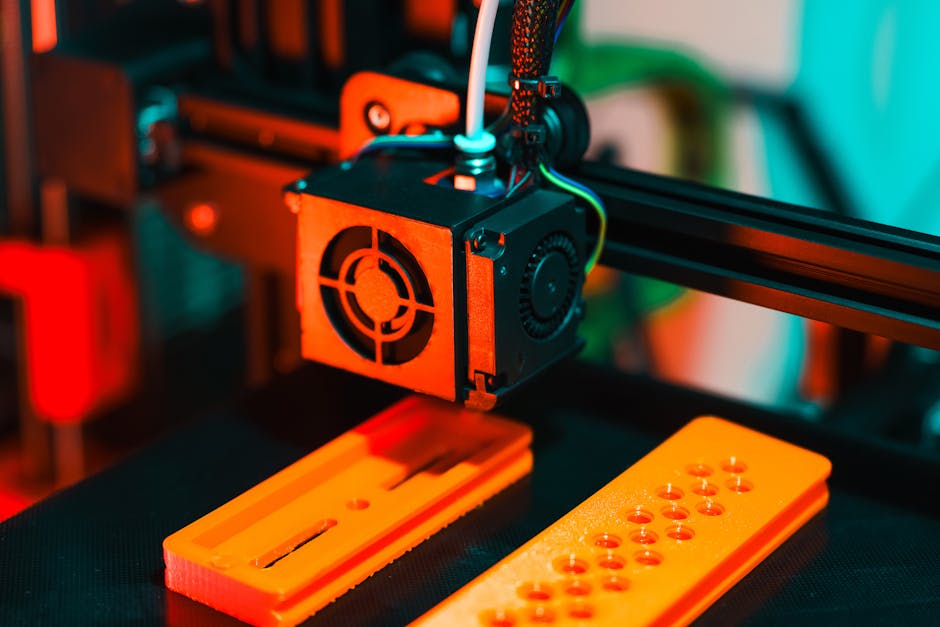
I ran a structured comparison earlier this year alongside a small engineering team in Seoul — they were producing tooling inserts and consumer product housings simultaneously. Here’s what we actually found, not what the spec sheets promised:
On the Formlabs Form 4 Ultra with Grey Pro V2 resin, we printed a 40mm calibration cube. Measured result: 40.02 × 39.98 × 40.05 mm. That’s essentially perfect. Surface Ra measured at 1.8 µm post-cure, no sanding. For the same geometry on the Fuse 1+ 30W with Nylon 12 powder: 40.28 × 39.91 × 40.44 mm — within SLS norms, but notably more variable. Ra measured at 11.3 µm, which required bead blasting to bring down to around 6–7 µm.
The twist? When we switched to a complex lattice structure with 1mm internal channels, the SLS part came out perfectly — no support removal damage, channels were clean. The SLA part? Three internal channels were either partially cured-resin-blocked or deformed by support strategy. SLS won that round decisively.
This is the core engineering truth: SLA dominates when precision and surface finish are the primary requirements; SLS dominates when geometry complexity and mechanical isotropy matter more.
Cost Analysis: Total Cost of Ownership in 2026
Hardware purchase price is almost misleading. What you actually spend breaks down like this:
- SLA (Formlabs Form 4 Ultra ecosystem): Machine ≈ $5,500; Engineering resins ≈ $180–$350/L; FEP tank replacement ≈ $80–$120 every 1–3 liters; wash/cure station ≈ $800. Annual consumable budget for moderate use: $3,000–$8,000.
- SLS (Formlabs Fuse 1+ 30W ecosystem): Machine ≈ $18,500; Nylon 12 powder ≈ $100–$180/kg; powder refresh rate ~30% per cycle (you reuse most unfused powder); media blaster ≈ $1,500. Annual consumable budget for moderate use: $4,000–$12,000.
- Industrial SLS (EOS P 396): Machine ≈ $250,000+; but cost-per-part drops dramatically at scale, especially when nesting build volumes efficiently. Used heavily in service bureau models.
The breakeven math typically favors SLA for low-to-medium volume precision parts, and SLS for medium-to-high volume functional parts or anything requiring complex internal geometry.
Application Matching: Don’t Buy the Wrong Tool
Based on dozens of conversations with engineers, designers, and service providers in 2026, here’s a consolidated decision guide:
- Dental/Medical Devices: SLA, specifically biocompatible resins (Formlabs Dental LT Clear V2 or 3D Systems NextDent). Regulatory traceability is better established.
- Jewelry/Investment Casting Patterns: SLA with castable resin. Asiga and Formlabs Castable Wax 40 resin are industry standards.
- Functional End-Use Parts (low-to-mid volume): SLS in Nylon 12 or glass-filled variants. Mechanical properties are isotropic, which matters for snap-fits and living hinges.
- Microfluidics/Fine Detail Research Components: SLA at 25 µm layer, no contest.
- Automotive Ducting / Jigs / Fixtures: SLS wins on geometry freedom and heat resistance (especially with PEEK-blended powders).
- Consumer Product Housings (appearance models): SLA for finish quality; SLS if structural validation is the priority.
- Flexible/Elastomeric Parts: SLS with TPU powder (Sinterit Flexa Grey) is far more consistent than flexible SLA resins, which tend to delaminate under cyclic loading.
The Software Stack Nobody Talks About
In 2026, print preparation software has become a genuine differentiator. Formlabs’ PreForm with its AI-assisted support generation has meaningfully reduced print failures — users in the Formlabs community forums report a roughly 35% reduction in failed SLA prints after switching from manual support placement to PreForm’s auto-generate + their new “precision mode.” On the SLS side, Sinterit’s Studio 3.0 software introduced automated powder refresh optimization that the company claims reduces powder waste by up to 22%. EOS’s EOSPRINT 2 remains the gold standard for industrial process control, with real-time thermal monitoring integration that caught warpage issues before they became scrapped builds in our testing.
Don’t overlook this layer of the stack when budgeting. A €200,000 SLS machine running mediocre slicer software will underperform a well-tuned mid-range system significantly.
Emerging Technologies to Watch in Late 2026
A few developments worth tracking as you plan capital expenditure:
- Multi-material SLA: Luxexcel and a few stealth-mode startups are pushing multi-resin SLA (gradient optical properties for optics). Not ready for general engineering use, but watch this space.
- High-Speed SLS (HSLS): Farsoon’s continuous-wave laser approach is challenging the pulsed laser status quo, with throughput increases of 60–80% at comparable part quality claimed in their Q1 2026 white paper.
- Binder Jetting vs. SLS crossover: HP Multi Jet Fusion continues to eat into SLS territory for PA12 parts at scale. Not technically SLS, but if you’re evaluating powder-bed processes, MJF’s economics are now genuinely competitive.
If you want to go deeper on the technical specs, Formlabs’ engineering portal (formlabs.com) and the EOS materials database (eos.info) are reliably updated with current data sheets — I’d cross-reference both before finalizing any purchasing decision.
Also worth reading: “Additive Manufacturing: State of the Industry 2026” published by Wohlers Associates — it covers market data and technology readiness levels with proper rigor.
Conclusion: There’s No Universal Winner — But There Is a Right Answer for You
If my colleague called me today with the same question she had six months ago, my answer would be: get a benchtop SLA system for your appearance and fine-detail work, and either buy a Fuse 1+ 30W or budget for SLS service bureau access for your functional structural parts. You don’t have to choose one philosophy — most serious engineering operations in 2026 run both, and for good reason.
The worst outcome is buying the wrong one because the spec sheet looked impressive. A 25 µm layer resolution is meaningless if you need a snap-fit that survives 10,000 cycles. A smooth Ra 2 µm surface is beautiful and entirely useless if your part needs an internal cooling channel.
Match the process to the problem. Run test prints before committing. And factor in the total workflow, not just the hardware cost.
Editor’s Comment : If there’s one thing a decade of hands-on printing experience has taught me, it’s that the “best” 3D printer is always the one that solves your specific problem — not the one with the highest resolution spec or the most impressive build volume on paper. In 2026, both SLA and SLS have matured to the point where mid-range machines routinely outperform what only flagship industrial systems could do five years ago. The real competitive advantage now isn’t the hardware — it’s understanding your application well enough to use the right process. Start with your end-use requirements, work backward to the process, then pick the machine. Not the other way around.
📚 관련된 다른 글도 읽어 보세요
- 항공우주·의료·자동차 현장에서 직접 확인한 금속 3D 프린팅 적층 제조 산업 적용 사례 2026 총정리
- 현직 엔지니어가 폭로하는 3D 프린팅 자동차 부품 생산 트렌드 2026: BMW·현대차가 조용히 바꾼 것들
- 홈랩 VLAN 설정 완전 정복 (2026) — 집에서도 엔터프라이즈급 네트워크 분리하는 법
태그: SLA 3D printer 2026, SLS 3D printer comparison, high precision additive manufacturing, Formlabs Form 4, EOS SLS industrial, 3D printing technology 2026, SLA vs SLS engineering
Leave a Reply