A few months back, I was deep in a conversation with a process engineer friend who works at a tier-one aerospace supplier in Busan. She was venting about a dimensional deviation problem on a titanium bracket — they kept hitting ±0.3mm tolerances when the design spec demanded ±0.05mm. She looked exhausted. “It’s not the machine,” she said, “it’s everything around the machine.” That sentence stuck with me, because it perfectly captures why industrial additive manufacturing precision isn’t just a hardware story. It’s a systems story, and in 2026, the industry is finally starting to tell it properly.
Whether you’re running laser powder bed fusion (LPBF) cells, directing electron beam melting (EBM) lines, or managing a binder jetting operation for automotive lightweighting projects, you’ve probably felt the gap between “theoretical tolerance” on a spec sheet and what actually comes off the build plate. Let’s dig into what real precision improvement looks like — not just the marketing version, but the gritty, data-backed, sometimes-painful real version.
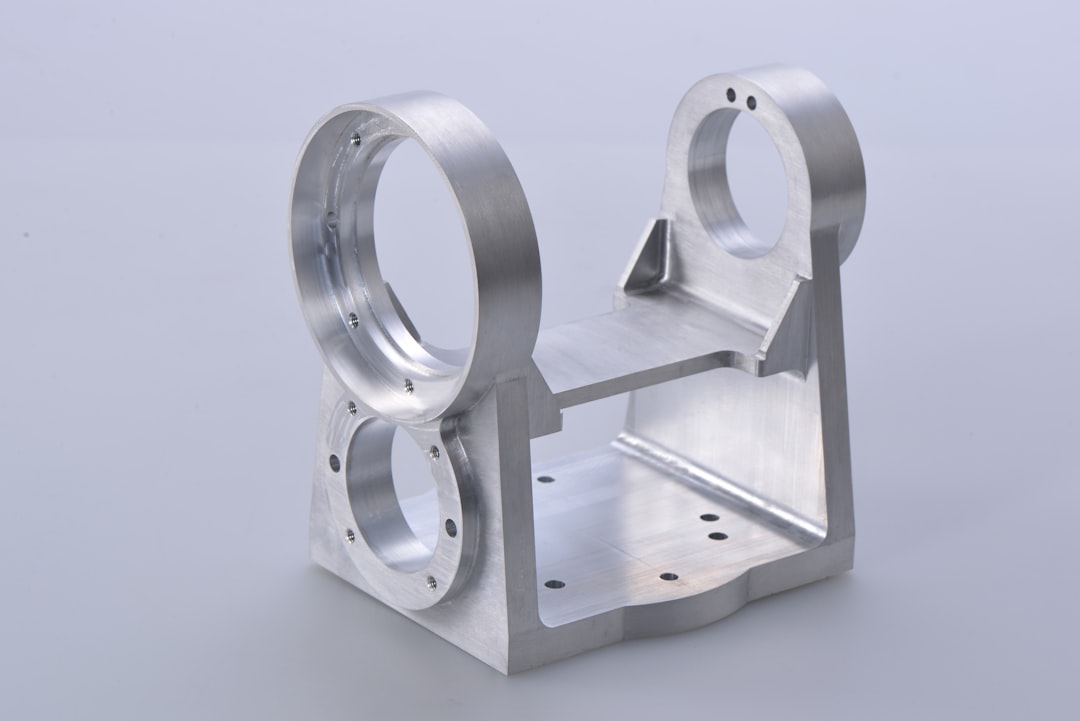
Why Precision in Industrial AM Is Harder Than It Looks
Additive manufacturing sounds deceptively simple: add material layer by layer, get a part. But anyone who’s run a production LPBF machine at scale knows the reality. Thermal gradients, residual stress, scan strategy artifacts, powder morphology variation, and even humidity in the build chamber can all conspire against your dimensional accuracy. Here’s a quick breakdown of what engineers are actually fighting:
- Thermal distortion: Residual stresses during rapid heating and cooling cause warping, especially in thin-walled sections. A 100mm cantilever in 316L stainless can deflect by 0.5–1.2mm if your support strategy and scan pattern aren’t optimized.
- Powder bed inconsistency: Layer thickness variation of even ±5µm across a large build plate (say, 400×400mm) compounds over 1,000+ layers into measurable Z-axis error.
- Melt pool dynamics: Spatter, keyholing, and lack-of-fusion defects aren’t just porosity problems — they introduce local density variations that affect final part geometry.
- Post-process shrinkage: Sintering-based processes like binder jetting see 15–20% volumetric shrinkage, and predicting that accurately requires sophisticated simulation.
- Machine-to-machine variation: Even two identical EOS M 400-4 systems on the same factory floor can produce parts with measurable dimensional differences if calibration protocols aren’t rigorous.
The Numbers That Are Moving the Needle in 2026
Let’s talk data. The AM industry has matured enough that we’re no longer just citing one-off lab results — we have multi-year production data from real facilities.
A 2026 benchmark study published by the Fraunhofer Institute for Laser Technology (ILT) in Aachen analyzed LPBF dimensional accuracy across 14 production facilities over 18 months. The key finding: facilities that implemented in-situ monitoring combined with closed-loop process control saw a 62% reduction in dimensional deviation compared to baseline. Average XY-plane accuracy improved from ±0.08mm to ±0.03mm, and Z-axis accuracy from ±0.12mm to ±0.045mm. Those aren’t incremental gains — that’s production-grade precision approaching CNC milling territory for certain geometries.
Meanwhile, industry analyst firm Wohlers Associates reported in their 2026 State of Additive Manufacturing report that the global industrial AM precision parts market has grown to $18.4 billion, with aerospace and medical sectors driving the sharpest tolerance requirements. The report specifically called out process digitalization — meaning digital twins, real-time sensor fusion, and AI-driven parameter optimization — as the single biggest contributor to precision improvement over the past three years.
Case Study 1: Airbus and the Bracket That Changed Internal Standards
One of the most-cited industrial cases right now is Airbus’s work at their Hamburg APWorks facility. In 2026, they publicly shared data on a structural cabin bracket produced via LPBF in Scalmalloy (their proprietary aluminum-magnesium-scandium alloy). The original CNC machined bracket required 22 separate machining operations. The AM version reduced that to a single build, but early iterations had a ±0.18mm deviation on critical mating surfaces — unacceptable for flight hardware.
The precision breakthrough came from three simultaneous interventions:
- Digital twin integration: They ran thermal-mechanical simulations using ANSYS Additive Suite before committing to a build, predicting distortion hotspots with 89% accuracy.
- In-situ optical tomography: Using a custom-integrated camera system (similar to Sigma Labs’ PrintRite3D technology), they monitored melt pool geometry in real time and flagged layer anomalies automatically.
- Adaptive scan strategy: Instead of a fixed 67° rotation between layers, they implemented a geometry-aware scan pattern that reduced thermal gradient concentration on thin features.
Result: dimensional deviation on mating surfaces dropped to ±0.04mm, and first-article inspection pass rates jumped from 67% to 94%. The bracket is now in low-rate initial production.
Case Study 2: Medical Implants and the Korean Precision Push
Closer to home — and directly relevant to my Busan engineer friend — South Korea has been making serious moves in AM precision for orthopedic implants. Companies like Corentec and BioAlpha have been working with the Korea Institute of Machinery and Materials (KIMM) to tighten tolerances on Ti-6Al-4V bone scaffolds produced via EBM.
The challenge with EBM for porous implant scaffolds is maintaining strut geometry at the 200–500µm scale while keeping porosity in the 65–80% range that bone ingrowth requires. Early production saw strut diameter deviations of ±30µm from nominal — which sounds small but has significant biomechanical implications at this scale.
KIMM’s approach, published in a 2026 paper in the Journal of Materials Processing Technology, involved machine learning-assisted beam current modulation. By training a convolutional neural network on over 40,000 cross-sectional CT scan images of test scaffolds, they built a predictive compensation model that pre-distorts the CAD geometry to account for systematic EBM overmelting. The result: strut diameter accuracy improved to ±8µm, a 73% improvement. This is now being commercialized through a joint venture with Arcam’s Korean distribution partner.
Case Study 3: GE Aerospace’s Binder Jetting Tolerance Stack-Up Solution
Binder jetting is the wild card in the precision conversation. It’s fast and cheap at scale, but that 15–20% sintering shrinkage is notoriously difficult to predict uniformly. GE Aerospace’s Avio Aero division tackled this head-on for turbine nozzle guide vane production at their Brindisi facility in Italy.
They partnered with Desktop Metal (now part of Nano Dimension) to use the X-Series binder jetting system for René 80 nickel superalloy vanes. The initial tolerance challenge: after sintering, complex airfoil profiles showed non-uniform shrinkage of up to ±1.8% variation across the part — translating to ±0.4mm on a 220mm chord vane. For hot section turbine components, that’s a hard reject.
Their solution combined two innovations: (1) a physics-informed shrinkage compensation algorithm that maps predicted sintering gradients onto the green body geometry prior to printing, and (2) a novel fixture design using ceramic setter plates with matching geometry to constrain shrinkage direction. Together, these cut non-uniform shrinkage variation to ±0.3%, reducing dimensional deviation to ±0.06mm on airfoil profiles. That’s within the design tolerance envelope.
The Technology Stack That’s Actually Making Precision Happen
Looking across these cases, a clear technology pattern emerges. Precision improvement in 2026 isn’t coming from one magic bullet — it’s coming from layering these capabilities:
- Process simulation (digital twin): ANSYS Additive, Simufact Additive, Autodesk Netfabb — pre-build distortion prediction is now table stakes for serious production.
- In-situ monitoring: Sigma Labs PrintRite3D, EOS EOSTATE Exposure OT, Nikon SLM’s integrated optical monitoring — real-time melt pool surveillance catches layer defects before they stack into dimensional errors.
- Machine learning for parameter optimization: Closed-loop ML systems that adjust laser power, scan speed, and hatch spacing mid-build based on sensor feedback — this is where the biggest precision leaps are happening right now.
- Post-process metrology automation: GOM ATOS, Zeiss CT scanning integrated into production lines — automated dimensional inspection with feedback loops to upstream process control.
- Powder quality control: Dynamic light scattering analysis, automated flow testing — precision starts with consistent feedstock, something that was often overlooked in early AM production ramp-ups.
What This Means for Shops Running AM Right Now
Here’s the practical reality check: you don’t need to implement everything at once. For most production AM operations, the highest-ROI first step is systematic in-process monitoring combined with rigorous powder characterization. These two interventions alone, based on data from the cases above, can typically reduce dimensional deviation by 30–40% without touching machine parameters.
The second tier — digital twin-based distortion compensation — requires more upfront simulation investment, but the first-article pass rate improvement (often 20–30 percentage points) pays back quickly in reduced scrap and rework costs. For high-value aerospace or medical parts, even a single saved part can cover the simulation software subscription cost for months.
What I’d caution against is chasing tolerance numbers in isolation. My friend in Busan eventually figured out her real problem: her company had invested heavily in a premium LPBF system but was using inconsistent powder batches from three different suppliers with varying particle size distributions. No amount of machine optimization was going to fix that. The precision journey starts upstream, at the material level, not the machine level.
Realistic Alternatives When Full Precision Isn’t Achievable
Not every application needs ±0.03mm. Part of the maturation of industrial AM in 2026 is developing clearer frameworks for tolerance-appropriate process selection:
- For ±0.05mm or tighter: LPBF with full digital twin + in-situ monitoring stack. Budget accordingly — this isn’t the cheap path.
- For ±0.1–0.2mm: Well-calibrated LPBF or directed energy deposition (DED) with standard metrology feedback. Achievable without heroic effort.
- For ±0.3–0.5mm: Binder jetting with shrinkage compensation, or EBM for high-temperature alloys. Still very much functional for structural applications.
- For looser tolerances or surface-dependent precision: Consider hybrid approaches — AM near-net shape followed by targeted CNC finishing of critical surfaces. Often the most pragmatic solution for complex parts with mixed tolerance requirements.
The hybrid approach, in particular, is having a serious renaissance in 2026. Mazak’s VARIAXIS i-300 AM hybrid center and DMG Mori’s LASERTEC series are seeing strong adoption precisely because they let manufacturers chase AM’s design freedom without sacrificing the dimensional certainty of subtractive finishing where it matters most.
Editor’s Comment : Precision in industrial additive manufacturing is genuinely one of the most exciting engineering frontiers of 2026 — not because the problem is new, but because we finally have the sensor fusion, compute power, and process understanding to crack it systematically rather than empirically. If you’re running an AM operation and still treating precision as a machine problem, I’d encourage a hard look at your full process chain: powder, parameters, thermal management, and metrology all need to be speaking the same language. The companies pulling ahead right now are the ones who’ve understood that additive precision is a data systems challenge as much as a physics challenge. The blueprint is there in the cases above — now it’s about execution.
📚 관련된 다른 글도 읽어 보세요
- 공식 문서에 속지 마라: 2026년 홈랩 서버 구축 완전 가이드 – 실제 비용·부품·삽질 기록 총정리
- Aerospace Additive Manufacturing Process Comparison 2026: Which AM Technology Actually Flies?
- Used Server Home Lab Setup Tips 2026: Build a Beast Rack on a Budget
태그: industrial additive manufacturing, AM precision improvement, LPBF dimensional accuracy, metal 3D printing tolerance, additive manufacturing case studies, process monitoring AM, digital twin additive manufacturing
Leave a Reply