Picture this: it’s the late 1980s, and a group of engineers at a Detroit automaker are huddled around a chunky plastic prototype that just came out of a machine roughly the size of a refrigerator. They called it “rapid prototyping,” and back then, nobody seriously imagined that the same underlying technology would one day be stamping out actual production-grade car parts at scale. Fast forward to 2026, and that imagination has become — at least partially — reality. But how far has it actually come? Let’s dig in together and separate the hype from the hardware.
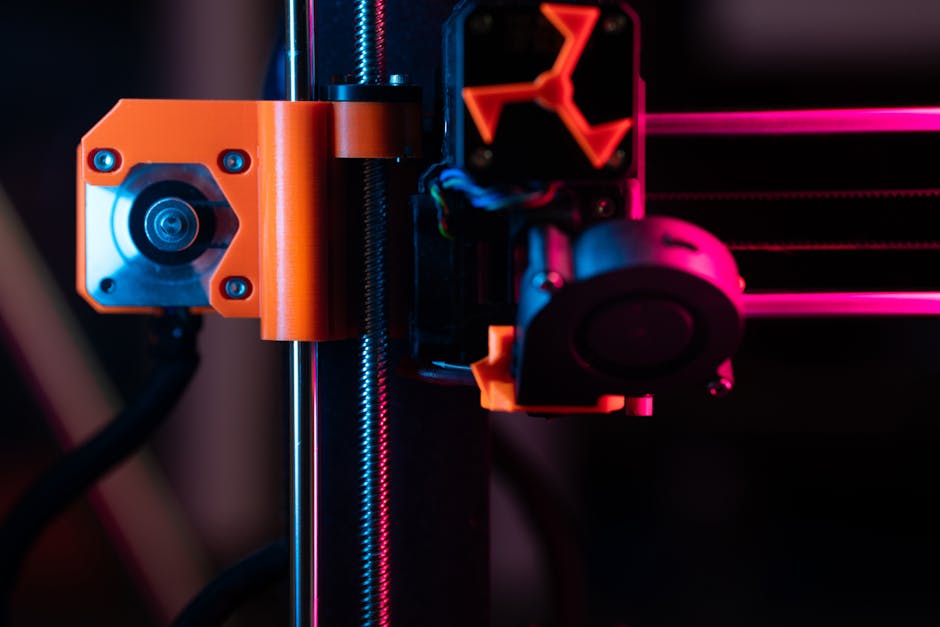
The Numbers Don’t Lie: Where 3D Printing Stands in Auto Manufacturing Today
As of 2026, the global additive manufacturing market specifically for automotive applications is valued at approximately $4.1 billion USD, up from roughly $2.3 billion in 2022 — a compound annual growth rate hovering around 15–17%. That sounds impressive, but here’s the grounding reality: traditional injection molding and stamping still account for well over 90% of physical part production volume in the industry. So 3D printing isn’t replacing conventional manufacturing — at least not yet. It’s carving out very specific, strategic niches.
The key metric to watch isn’t just revenue — it’s part qualification rates. In aerospace, additive manufacturing achieved FAA-certified part production years ago. Automotive OEMs have been slower, but by early 2026, several Tier 1 suppliers have crossed a critical threshold: end-use structural parts (not just jigs, fixtures, or prototypes) now represent about 28% of all automotive additive manufacturing output, compared to just 11% in 2020. That’s a meaningful shift.
Which Parts Are Actually Being 3D Printed at Scale?
Not all parts are created equal when it comes to additive viability. The sweet spot in 2026 falls into a few clear categories:
- Lightweight brackets and mounting hardware: Metal powder bed fusion (PBF) processes like Selective Laser Melting (SLM) are now routinely used for aluminum and titanium brackets, especially in EVs where every gram of weight reduction extends range.
- Heat exchangers and fluid management components: Complex internal geometries — impossible with traditional machining — allow for optimized coolant channels in battery thermal management systems. This is arguably the biggest win for EVs in 2026.
- Customized interior trim and ergonomic components: Luxury brands are using large-format polymer printing to offer personalized dashboard inserts, seat adjustment components, and tactile control panels — often made-to-order.
- Tooling, jigs, and assembly aids: Still the bread-and-butter use case. Factories reduce lead time from weeks to hours by printing custom fixtures on-site.
- Spare and legacy parts: Instead of warehousing obsolete parts, automakers now maintain digital inventories and print on-demand. This is a genuine supply chain revolution for older vehicle models.
- Exhaust and intake manifold components: High-temperature polymer and metal sintering processes now meet OEM durability specs for certain non-combustion-facing engine adjacent parts.
Global and Domestic Case Studies: Who’s Leading the Charge?
Let’s ground this in real examples, because the theory only goes so far.
Volkswagen Group (Germany/International): VW has been running one of the most ambitious additive manufacturing programs in the industry. Their Wolfsburg facility uses HP’s Metal Jet binder jetting technology to produce structural steel components for multiple model lines. By 2026, they’ve reportedly achieved cycle times competitive enough to justify production runs of 50,000+ units annually for select bracket families — a genuine mass-production milestone.
Ford Motor Company (USA): Ford’s Advanced Manufacturing Center in Michigan has scaled up its use of Carbon DLS (Digital Light Synthesis) technology for end-use polymer parts. Particularly notable is their use of additive-manufactured HVAC duct inserts across several F-150 variants — parts that are lighter, more geometrically optimized, and cheaper to produce in mid-volume runs than injection-molded equivalents.
Hyundai-Kia (South Korea): Domestically in Korea, Hyundai’s in-house additive team at the Namyang R&D Center has integrated metal 3D printing into the production prep pipeline for the IONIQ series. While full production-volume stamped parts remain conventional, they’ve implemented a “hybrid tooling” approach where 3D-printed conformal cooling inserts dramatically reduce injection mold cycle times — an indirect but highly cost-effective application.
BYD (China): China’s EV giant has taken a particularly pragmatic route. Rather than printing end-use parts directly, BYD uses large-scale polymer printing to create rapid tooling for low-volume derivative models, cutting tooling investment costs by an estimated 40-60% for niche variants. Smart, scalable, and very 2026 in its pragmatism.
The Honest Bottlenecks You Should Know About
Look, it would be easy to write a breathless piece about how 3D printing is transforming everything — but that wouldn’t be fair to you. There are real, persistent challenges:
- Surface finish and post-processing cost: Most metal printed parts still require significant CNC finishing, heat treatment, and surface treatment — adding time and cost that erodes the economic advantage, especially at high volumes.
- Material qualification time: Automotive OEMs require extensive validation for any production material. Even when a 3D-printable material performs well in testing, the certification runway can stretch 18–36 months.
- Speed vs. volume tradeoff: For truly high-volume parts (think: 500,000+ units per year), injection molding and stamping still win on pure throughput economics. 3D printing’s sweet spot economically sits in the 500–50,000 unit range depending on part complexity.
- Workforce skill gap: Operating and maintaining industrial metal printing systems requires a different skill set than traditional CNC machining. Training pipelines haven’t fully caught up yet.
Realistic Alternatives and Strategic Paths Forward
If you’re an automotive engineer, supplier, or even an enthusiast wondering how to think about this technology practically, here’s how I’d frame your options in 2026:
For OEMs and Tier 1 suppliers: Don’t chase full production replacement of stamped metal parts — not yet. Instead, focus additive manufacturing investment on tooling acceleration, spare parts digitization, and EV-specific thermal and structural components where design freedom genuinely beats conventional methods. The ROI story is most compelling there.
For Tier 2/3 suppliers: Investing in polymer additive capacity (FDM or SLS) for jigs, fixtures, and low-volume custom parts is genuinely accessible now. Industrial-grade systems from vendors like Markforged, Bambu Lab Industrial, or Stratasys Fortus series are within reach and have proven shop-floor durability.
For aftermarket and restoration communities: This is honestly one of the most exciting spaces. The ability to scan, model, and print legacy parts that no longer exist in supply chains is transformative. If you’re working on classic vehicle restoration or specialized builds, a combination of 3D scanning services and FDM/SLA printing gives you capabilities that would have cost tens of thousands of dollars a decade ago.
The trajectory is clear: 3D printing won’t replace the automotive supply chain wholesale, but it’s permanently reshaping which parts get made how, and the companies that understand exactly where additive manufacturing outperforms — rather than just assuming it will take over everything — are the ones winning in 2026.
Editor’s Comment : What genuinely excites me about the state of automotive 3D printing in 2026 isn’t the flashy headline applications — it’s the quiet, unglamorous wins in tooling and spare parts logistics. The real transformation is happening in factory back rooms and digital warehouses, not just on the showroom floor. If you’re evaluating whether to invest in or adopt this technology, chase those unsexy applications first. That’s where your fastest, clearest return on investment is waiting.
태그: [‘3D printing automotive’, ‘additive manufacturing 2026’, ‘mass production 3D parts’, ‘EV manufacturing technology’, ‘automotive supply chain innovation’, ‘metal 3D printing cars’, ‘automotive additive manufacturing trends’]
Leave a Reply