Picture this: it’s the early hours of a launch window at a commercial spaceport, and a small turbopump component has just failed a last-minute inspection. Ten years ago, that would have meant a weeks-long delay while a replacement was machined, certified, and shipped. Today? In some forward-thinking facilities, that part can be printed on-site, post-processed, and cleared for flight within 72 hours. That’s not science fiction — that’s the state of additive manufacturing in aerospace right now, and it’s reshaping the entire supply chain from the ground up.
Let’s think through what’s actually happening here, why it matters more than the headlines suggest, and what it realistically means for engineers, investors, and curious minds alike.
The Numbers Behind the Noise
The global aerospace additive manufacturing market was valued at approximately $3.8 billion in 2025 and is projected to exceed $9.1 billion by 2030, according to multiple industry analyses. But raw market size doesn’t tell the whole story. What’s more telling is the adoption rate inside the product lifecycle itself.
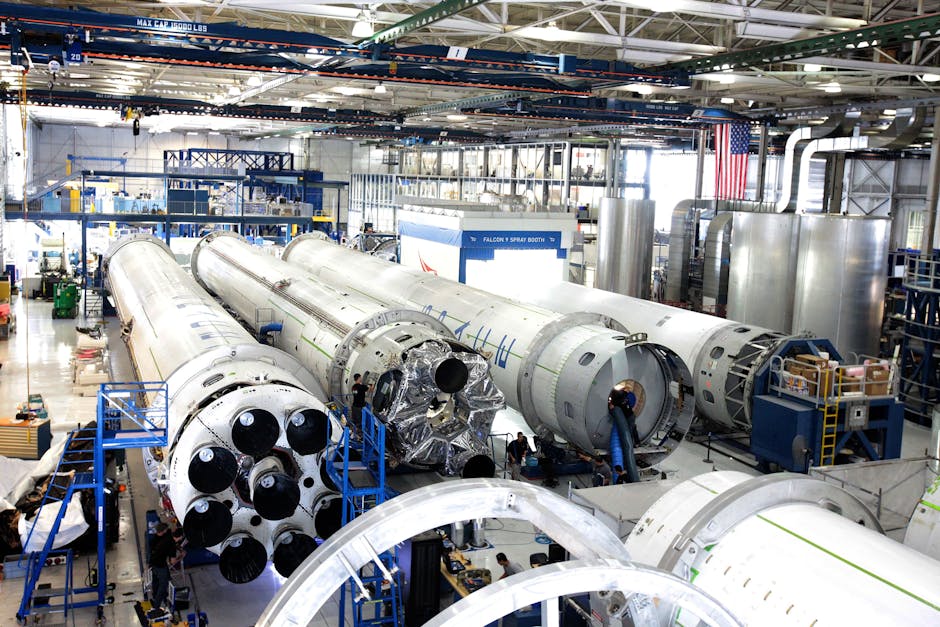
As of early 2026, Boeing reports that over 60,000 3D-printed parts are flying across its commercial fleet — a number that has more than doubled since 2022. Airbus’s A350 XWB program integrates more than 1,000 additive-manufactured components per aircraft. Meanwhile, in the rocket sector, SpaceX’s Merlin and Raptor engines contain a growing share of printed metal alloy parts, including the notoriously complex Inconel turbine housings that would be nearly impossible to manufacture conventionally at the same cost.
Here’s the key insight most people miss: it’s not just about making parts faster. It’s about making parts that couldn’t exist any other way. Topology-optimized lattice structures, internal cooling channels in turbine blades, consolidated assemblies — these are geometrically impossible with traditional subtractive machining. The design freedom unlocked by additive manufacturing is genuinely unprecedented.
The Core Technologies Driving This Shift
Not all 3D printing is created equal. In aerospace, a handful of high-precision processes dominate:
- Selective Laser Melting (SLM) / Laser Powder Bed Fusion (LPBF): The workhorse of metal AM. Ideal for titanium, Inconel, and aluminum alloys. Used extensively for structural brackets, fuel nozzles, and heat exchangers.
- Directed Energy Deposition (DED): Think of it as a CNC machine that builds up material rather than cuts it away. Excellent for repairing existing components — a massive cost saver in MRO (Maintenance, Repair & Overhaul) operations.
- Binder Jetting: Faster and cheaper than LPBF, though traditionally with lower density. New binder jetting systems from companies like Desktop Metal and ExOne are closing the material property gap rapidly as of 2026.
- Continuous Fiber Reinforcement (CFR) for composites: Markforged and similar players are pushing printed carbon-fiber-reinforced polymers into secondary structural applications — interior panels, tooling jigs, and brackets.
Real-World Examples: Who’s Actually Doing This?
Let’s ground this in concrete cases, because the proof really is in the hardware.
GE Aerospace remains the most cited success story, and for good reason. Their LEAP engine fuel nozzle — a single 3D-printed piece that replaced a 20-part welded assembly — is 25% lighter and five times more durable. By 2026, GE has printed well over 100,000 of these nozzles for commercial aviation. It’s become the canonical proof case that AM isn’t a prototype technology.
Relativity Space took the philosophy further, attempting to 3D print an entire rocket with their Terran R program. While their first Terran 1 launch in 2023 had a mixed outcome, the engineering data gathered has been invaluable, and their next-generation processes have influenced how newer launch companies approach metal AM scalability.
In South Korea, Korea Aerospace Industries (KAI) and the Agency for Defense Development (ADD) have been quietly building domestic AM competency for the KF-21 Boramae fighter program. Reports from early 2026 indicate that titanium structural brackets and certain hydraulic manifold components are being additively manufactured domestically, reducing reliance on foreign supply chains — a strategic as much as an engineering decision.
Safran in France has integrated 3D-printed titanium parts into nacelle and landing gear components for the A320neo family, specifically leveraging the weight reduction advantages to contribute to fuel efficiency targets that regulators are tightening year by year.
The Honest Challenges (Because There Are Real Ones)
It would be dishonest not to address the friction points. Aerospace certification is notoriously conservative — and for very good reason. The FAA and EASA qualification pathways for additively manufactured flight-critical parts are still being standardized. AS9100 and ASTM F42 standards have matured considerably, but each new material-process-application combination essentially requires its own validation campaign, which can take years and millions of dollars.
There’s also the post-processing paradox: AM parts often require extensive heat treatment, HIP (Hot Isostatic Pressing), surface finishing, and NDT (Non-Destructive Testing), which erodes some of the cost and time advantages for high-volume production. AM truly shines in low-to-medium volume, high-complexity applications — trying to print 10,000 identical simple brackets is still often uneconomical compared to casting or forging.
Realistic Alternatives and Strategic Thinking for 2026
If you’re an engineer, procurement lead, or startup founder navigating this space, here’s a more nuanced framework than “AM everything”:
- Use AM where geometry wins: Internal channels, weight-optimized structures, and consolidated assemblies are where you’ll find undeniable ROI.
- Consider hybrid manufacturing: Combining DED with CNC finishing gives you the near-net-shape benefits of AM with the precision surface finish that flight hardware demands.
- Don’t neglect the digital thread: The real long-term value of AM in aerospace is inseparable from digital twins, generative design software, and in-process monitoring. Investing in AM hardware without the software ecosystem is leaving major value on the table.
- MRO is an underrated entry point: For companies not ready to tackle new-build certification, using AM for tooling, fixtures, and component repair offers a lower-risk way to build organizational competency.
- Watch binder jetting closely: If current R&D trajectories hold, binder jetting’s cost-per-part economics could disrupt investment cases built around LPBF within the next three to five years.
The aerospace industry has always been defined by the tension between pushing the boundaries of what’s physically possible and the non-negotiable demands of safety. What makes 3D printing so fascinating in this context is that it doesn’t just tilt that equation — it redraws it. The parts that are now easiest to make safely are also the parts that perform best. That’s a rare and genuinely exciting convergence.
We’re not at the end of this story. We’re probably around the end of chapter two.
Editor’s Comment : The aerospace AM conversation in 2026 has matured beyond “can we do this?” into “how do we scale this responsibly?” That’s a healthy sign. For anyone entering this field — whether as an engineer, investor, or policy maker — the most important skill isn’t understanding the printers themselves, but understanding the certification frameworks and supply chain implications that will determine who actually captures the value. The technology is ready. The ecosystem is catching up.
태그: [‘3D printing aerospace’, ‘additive manufacturing 2026’, ‘aerospace parts manufacturing’, ‘metal AM aviation’, ‘GE aerospace fuel nozzle’, ‘aerospace supply chain innovation’, ‘LPBF aerospace components’]
Leave a Reply