A few years back, a friend of mine who runs a small aerospace components workshop called me in a mild panic. He’d just signed a contract requiring titanium brackets with internal cooling channels — the kind of geometry that would make any traditional machinist sweat. His question was simple: “Should I just buy a metal 3D printer?” My answer took about two hours, three cups of coffee, and a whiteboard covered in acronyms. That conversation is basically what inspired this deep dive.
Metal additive manufacturing (AM) has exploded from a niche R&D curiosity into a genuine production workhorse. But here’s the thing — it’s not one technology. It’s a whole family of processes, each with its own quirks, costs, and sweet spots. In 2026, we’re seeing sharper segmentation than ever before, so let’s think through this together carefully.
The Big Players: A Process-by-Process Breakdown
Let’s walk through the major metal AM processes that are actually seeing real commercial traction right now, not just lab demos.
1. Laser Powder Bed Fusion (L-PBF)
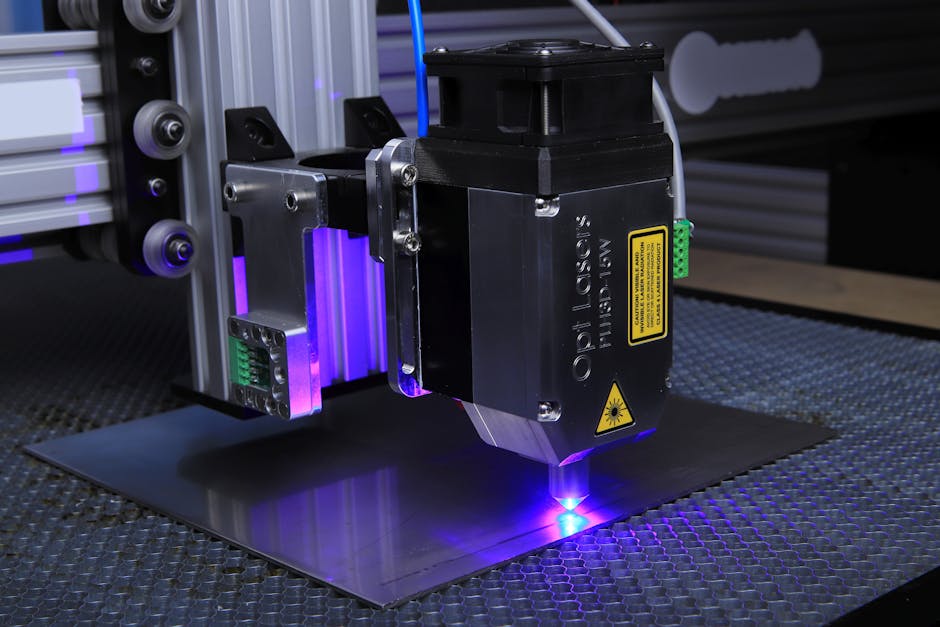
Still the gold standard for precision. L-PBF (sometimes called SLM or DMLS depending on the machine vendor) melts fine metal powder layer by layer using a focused laser. The resolution is exceptional — we’re talking feature sizes down to ~80–100 microns — which makes it the go-to for dental implants, turbine blades, and complex aerospace brackets.
- Materials: Ti-6Al-4V, Inconel 625/718, AlSi10Mg, 316L stainless steel, cobalt-chrome
- Build envelope (2026 leaders): Up to 800 × 400 × 500 mm on flagship systems (e.g., EOS M 400-4, Trumpf TruPrint 5000)
- Surface finish (as-built): Ra 6–15 µm — typically requires post-processing
- Typical cost per kg: $200–$600 depending on material and complexity
- Best for: High-complexity, low-to-medium volume, safety-critical parts
The catch? Support structures are non-negotiable for overhangs, and removing them from internal channels is a genuine headache. Also, residual stress is a real concern — proper thermal management during printing and post-build stress relief are non-negotiable steps.
2. Directed Energy Deposition (DED)
Think of DED as “metal welding on steroids with a robotic arm.” It deposits material (either powder or wire) directly onto a substrate using a laser, electron beam, or plasma arc. The build rates are dramatically higher than L-PBF, but the resolution is lower.
- Sub-variants: Laser DED (powder-fed), Wire Arc Additive Manufacturing (WAAM), Electron Beam DED
- Build rates: WAAM can deposit 2–10 kg/hour — game-changing for large structural parts
- Part size: Potentially meters-scale (think ship propellers, wing spars)
- Best for: Large near-net-shape parts, repair of high-value components, multi-material structures
WAAM in particular has been getting serious traction in 2026 for naval and heavy industry. Cranfield University’s WAAM3D spinout, for instance, has been delivering large titanium aerospace frames for European clients with lead times cut by over 60% compared to forging routes.
3. Binder Jetting (BJT)
This one is the dark horse that’s really grown up in 2026. A printhead deposits a liquid binder onto metal powder — no melting during printing. The green part then gets sintered in a furnace. Desktop Metal, ExOne (now owned by Desktop Metal), and HP’s Metal Jet S100 are key players.
- Speed advantage: Up to 100× faster than L-PBF for medium-complexity parts
- Cost per part: Dramatically lower at volume — HP’s Metal Jet claims sub-$1/cm³ at scale
- Shrinkage: ~15–20% sintering shrinkage must be compensated in design — this is the skill gap to watch
- Best for: High-volume production of small-to-medium steel, stainless, and copper parts
GKN Powder Metallurgy and Volkswagen have been running binder jetting lines for structural automotive components since 2024, and by 2026 the yield rates have matured considerably. If you’re making thousands of the same part under ~30 cm in each dimension, binder jetting deserves serious consideration.
4. Material Extrusion for Metals (MEX / FFF-Metal)
This is the most accessible entry point — essentially metal-loaded filament printed like FDM plastic, then debound and sintered. Markforged Metal X and Desktop Metal Studio System are the familiar names here.
- Upfront cost: $100K–$200K range (vs. $500K–$2M for L-PBF)
- Material options: 17-4 PH stainless, H13 tool steel, Inconel 625, pure copper
- Accuracy: Lower than L-PBF; expect ±0.2–0.5 mm on typical features
- Best for: Prototyping, small batch tooling, in-house R&D without a cleanroom
5. Electron Beam Powder Bed Fusion (EB-PBF)
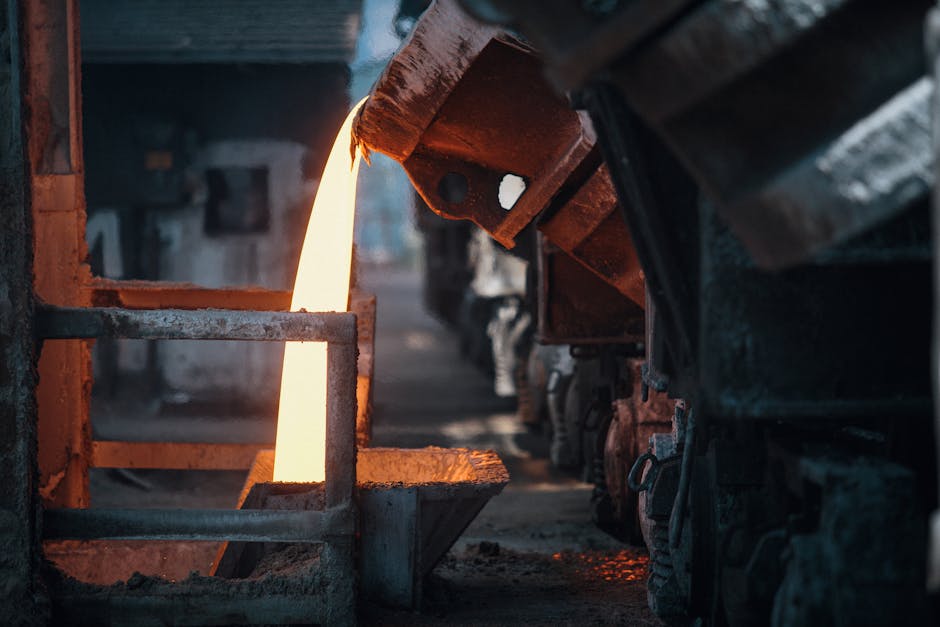
GE Additive’s Arcam EBM line and the newer Freemelt ONE represent this category. By using an electron beam instead of a laser in a vacuum environment, EB-PBF achieves lower residual stress and can process reactive metals like titanium and niobium more safely. The tradeoff is a rougher surface finish and a higher minimum powder layer thickness. For orthopedic implants with intentional porosity (for osseointegration), it’s arguably unmatched.
Real-World Examples: Who’s Doing What in 2026?
Let’s ground this in some actual use cases, because specs on paper only tell half the story.
South Korea — Hanwha Aerospace: Hanwha has been scaling L-PBF for turbofan combustor components using Inconel 718. By integrating in-situ monitoring (melt pool analytics via photodiode arrays), they’ve pushed first-pass yield rates above 94% — a figure that would have seemed ambitious just three years ago.
Germany — Siemens Energy: Their Berlin facility is using DED for gas turbine blade repair. Instead of scrapping a $40,000 blade with a worn tip, they’re DED-depositing new material and re-machining. ROI is reportedly under 18 months per repair cell.
USA — SpaceX (Starship supply chain): While SpaceX famously uses in-house processes, their tier-1 suppliers have adopted binder jetting heavily for brazed heat exchanger plates — the speed and cost fit perfectly for parts that aren’t load-bearing but are geometrically complex.
Japan — Mitsubishi Heavy Industries: MHI published results in late 2025 showing WAAM-built titanium structural frames for next-generation aircraft achieving equivalent fatigue life to forged parts after HIP (Hot Isostatic Pressing) treatment. The lead time went from 26 weeks (forging route) to 9 weeks.
The Decision Matrix: Thinking It Through Realistically
Here’s how I’d suggest thinking about process selection — not as a rigid flowchart, but as a set of honest questions to ask yourself:
- Volume: Under 50 parts/year → L-PBF or DED. Over 500 parts/year → Binder jetting or MEX seriously compete.
- Part size: Larger than 500 mm in any direction → DED (especially WAAM) is often the only practical AM route.
- Tolerance requirements: Tighter than ±0.05 mm → L-PBF with post-machining, or reconsider AM entirely.
- Material: Reactive metals (Ti, Nb) → EB-PBF or DED in inert atmosphere. Tool steels at scale → MEX or binder jetting.
- In-house vs. outsourced: If you’re printing fewer than 200 builds/year, service bureaus like Materialise, Protolabs, or Stratasys Direct likely beat ownership economics.
What’s New in 2026 That Changes the Calculus
A few developments this year genuinely shift the decision landscape:
Multi-laser L-PBF has gone mainstream: 4- and 8-laser systems are no longer exotic. EOS, Trumpf, and Nikon SLM Solutions all offer multi-beam platforms under $1.5M, making L-PBF build rates competitive with DED for medium-sized parts.
AI-assisted process parameter optimization: Tools like Sigma Labs PrintRite3D and Ansys Additive Suite have matured to where new alloy qualification that used to take 18 months can be compressed to 3–4 months. This matters enormously if you’re working with proprietary alloy chemistries.
Copper and precious metal AM: Green laser L-PBF (using 515 nm wavelength instead of 1064 nm IR) has finally made high-density copper parts reliable. This is opening doors in EV motor windings and thermal management components.
Realistic Alternatives to Metal AM (Yes, Really)
Let me be the voice that says it plainly: metal AM isn’t always the answer. If your part has simple geometry, tolerances tighter than ±0.025 mm, or you need 10,000+ units per year, conventional manufacturing routes — CNC machining from billet, investment casting, or metal injection molding (MIM) — may still win on cost and reliability. MIM in particular deserves more credit; for small, complex steel parts at high volume, it’s devastatingly cost-effective compared to any AM process.
The smart move in 2026 is a hybrid strategy: use AM for the portions of your assembly that genuinely benefit from geometric freedom or consolidated part count, and conventional manufacturing for everything else. Design for the process, not the other way around.
Editor’s Comment : If I had to leave you with one thought, it’s this — the question is never “should I use metal AM?” The right question is “which specific process, for which specific part, at which specific volume, justifies the investment?” Spend time with that question before you spend money on equipment. The technology in 2026 is genuinely mature enough to deliver on its promises, but only when it’s matched to the right problem. And if you’re still not sure? Call a service bureau first. A few real builds will teach you more than any spec sheet ever could.
태그: [‘metal additive manufacturing 2026’, ‘laser powder bed fusion comparison’, ‘binder jetting metal 3D printing’, ‘WAAM wire arc additive manufacturing’, ‘DED directed energy deposition’, ‘metal AM process selection guide’, ‘industrial 3D printing review 2026’]
Leave a Reply