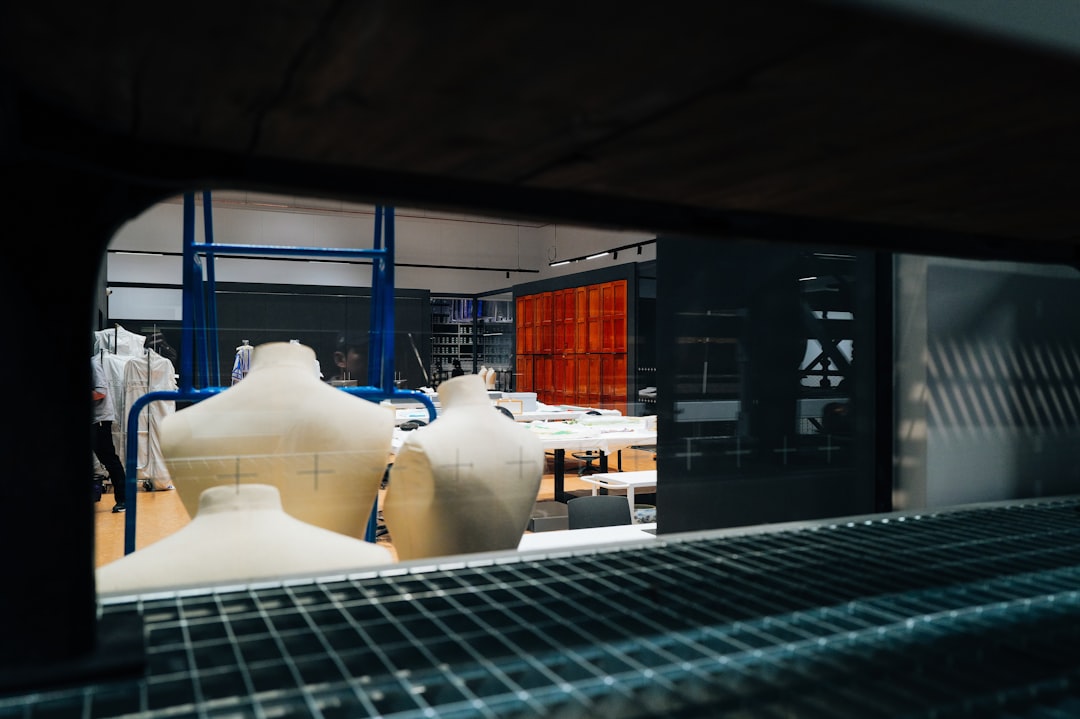
A few months ago, I was on a factory floor in southeastern Michigan watching a tier-1 automotive supplier run a bank of 12 HP Multi Jet Fusion printers side by side. The plant manager turned to me and said something I haven’t been able to shake: “We’re not replacing injection molding. We’re replacing the parts that injection molding can’t afford to make.” That single observation cracked open a question I’d been circling for years — is additive manufacturing (AM) genuinely ready for mass production, or are we still stuck in the same “it’s almost there” loop we’ve been hearing since the early 2010s?
Let’s dig in honestly, engineer-to-engineer, because the hype is thick and the nuance is thinner than a 50-micron layer line.
What “Mass Production” Actually Means for AM
First, let’s define the battlefield. Traditional mass production means consistently making the same part, at low per-unit cost, in volumes of tens of thousands to millions. Injection molding can hit cycle times under 30 seconds per part with tooling amortized over millions of shots. CNC machining offers tight tolerances but suffers on complex geometries. Where does AM sit in 2026?
The honest answer: AM is competitive at roughly 100–10,000 units depending on part complexity, material, and geometry. Beyond that, the economics still favor conventional manufacturing in most cases — but that window is widening fast. According to Wohlers Associates’ 2026 State of the Industry report, the global AM market hit $28.4 billion USD in 2025, with production-grade applications (as opposed to prototyping) now representing 47% of revenue — up from just 28% in 2021. That’s not a plateau; that’s acceleration.
The Three Walls AM Still Has to Climb
I’ve debugged enough AM production lines to know that enthusiasm doesn’t fix warping. Here are the real bottlenecks:
- Throughput vs. tolerance trade-off: Most powder bed fusion systems (SLS, SLM, DMLS) build at 20–50 cm³/hour effective throughput. For a palm-sized structural bracket, you’re looking at 4–8 hours per build cycle, including warm-up and cooldown. That’s brutal compared to a 45-second injection molding shot.
- Post-processing labor: Support removal, surface finishing, HIP (Hot Isostatic Pressing) for metal parts, and dyeing for polymer parts often add 30–60% to total part cost. This is the hidden killer of AM economics at scale, and it’s underreported in marketing materials.
- Material certification lag: In aerospace and medical, a new AM material can take 3–5 years to receive full regulatory certification. Even in 2026, the material library for certified production use is narrower than most engineers expect when they first spec a project.
- Repeatability across machines: Machine-to-machine variation within the same model from the same vendor remains a QA headache. I’ve personally seen ±8% density variation between two nominally identical EOS M 290 systems running the same parameter set. You need statistical process control frameworks borrowed from Six Sigma to manage this properly.
- Software stack maturity: Nesting algorithms, real-time layer monitoring, and MES integration are improving rapidly but still require dedicated AM software engineers — a skillset that’s expensive and rare.
Where the Math Actually Works: Real Industry Cases
Don’t let the challenges above scare you off. There are sectors where AM mass production is not just viable — it’s already happening at scale.
Footwear: Adidas’ partnership with Carbon (using Digital Light Synthesis) has produced over 1 million midsoles since the program launched. In 2026, their Futurecraft 4D line continues to iterate with under-24-hour build-to-ship cycles for customized lattice structures that injection molding literally cannot replicate geometrically. The key enabler? Carbon’s subscription hardware model, which shifted capex risk to the vendor.
Dental: Align Technology’s Invisalign manufacturing is perhaps the purest AM mass production success story on Earth. Over 17 million unique aligner sets were produced in 2025 using SLA/DLP technology — each one a one-of-one, which is where AM has an inherent structural advantage: mass customization at scale.
Aerospace: GE Aerospace’s LEAP engine fuel nozzle — arguably the most famous AM production part — has crossed 130,000 units produced as of early 2026. The part consolidates 20 components into 1, reduces weight by 25%, and has 5× the durability of its cast predecessor. This is textbook AM design philosophy done right.
Defense/Space: Rocket Lab’s Rutherford engine uses Electron Beam Melting (EBM) for most primary components. Relativity Space’s Terran-R continues development with their Stargate printers capable of depositing metal at 1kg/hour — orders of magnitude faster than powder bed methods.
The 2026 Technology Inflection Points Worth Watching
A few developments are genuinely shifting the calculus this year:
- Binder Jetting maturation: Desktop Metal’s Production System P-50 and ExOne platforms are hitting 100× the throughput of laser powder bed fusion at significantly lower per-part cost for medium-complexity metal parts. This is the technology most likely to break the 10,000-unit ceiling for metals.
- In-situ process monitoring: Companies like Sigma Additive Solutions (now part of Divergent) and Meltio are embedding real-time melt pool analytics using machine vision and pyrometry. This is finally making layer-by-layer quality assurance practical — meaning fewer destructive tests and faster part qualification.
- Multi-material printing: Stratasys’ J850 and competing systems can now print functional assemblies with embedded elastomers, rigid structures, and even conductive traces in a single build. For electronics housings and wearables, this could collapse supply chains dramatically.
- AI-driven topology optimization: Autodesk Fusion 360, nTop (formerly nTopology), and Ansys Discovery are integrating generative design workflows that automatically design parts to exploit AM’s geometric freedom while respecting build constraints. Parts designed this way are genuinely unmakeable by conventional means.
Realistic Alternatives When Full AM Mass Production Isn’t the Answer
Here’s where I’d push back on the binary framing. “Can AM do mass production?” is often the wrong question. A better question is: where in your supply chain does AM provide asymmetric value?
Consider a hybrid manufacturing strategy: use injection molding or die casting for the high-volume, low-complexity commodity components, and reserve AM for the geometrically complex, low-volume, high-value parts in the same assembly. This is exactly what BMW’s Additive Manufacturing Campus in Munich has been doing since 2020 — they crossed 300,000 AM-produced parts per year in 2025, not by replacing their stamping lines, but by surgically inserting AM where it wins on geometry or lead time.
Another underrated angle: tooling and jigs. Making production fixtures, end-of-arm tooling for robots, and assembly jigs via AM can slash lead times from 6 weeks to 3 days. This doesn’t show up in “AM parts produced” statistics, but the ROI can be enormous and immediate.
The Honest Verdict: Where We Actually Stand in 2026
AM for mass production is real — but it’s selectively real. It dominates in mass customization (dental, hearing aids, footwear), complex consolidation (aerospace), and on-demand low-volume production (spare parts, defense logistics). It’s emerging competitively in 1,000–50,000 unit ranges for metal parts via binder jetting. It’s still losing on pure commodity volume economics against injection molding and stamping for most plastics and sheet metal.
The factory manager in Michigan was right. The game isn’t AM vs. traditional manufacturing. It’s about finding the parts that traditional manufacturing “can’t afford to make” — whether that’s because of geometric complexity, low volume, supply chain fragility, or the need for patient-specific customization. In those niches, AM isn’t just viable; it’s already winning.
Editor’s Comment : If you’re evaluating AM for your production line, start with a ruthless complexity-volume analysis before touching a machine. Build a 2×2 matrix: part complexity on one axis, annual volume on the other. The top-left quadrant (high complexity, lower volume) is where AM will almost certainly beat the incumbents on total cost of ownership today, in 2026. The rest is a roadmap, not a current reality — and knowing that distinction might be the most valuable engineering judgment you make this year.
📚 관련된 다른 글도 읽어 보세요
- 삽질 3번 하고 깨달은 중고 서버 홈랩 세팅 비용 2026: Dell R730 vs HPE DL380 실구매 가격 총정리
- Build Your Own Home Lab Security Camera System in 2026: The Engineer’s No-BS Guide
- 현직 엔지니어가 폭로하는 3D 프린팅 자동차 부품 생산 트렌드 2026: BMW·현대차가 조용히 바꾼 것들
태그: additive manufacturing mass production, 3D printing scalability 2026, industrial additive manufacturing, AM vs injection molding, binder jetting production, metal 3D printing at scale, additive manufacturing economics
Leave a Reply