A friend of mine — let’s call him Dave — spent six months researching solar panels, got three quotes, signed a contract, and then called me in a panic two weeks before installation. ‘They’re telling me I need a new roof first,’ he said. ‘Nobody mentioned that.’ That one conversation is basically why I started digging deep into this topic. Home solar is one of those investments where the gap between marketing brochures and lived reality is enormous, and I want to walk you through what that gap actually looks like in 2026.
The Real Cost Picture: What the Brochures Skip
Let’s talk numbers first, because this is where most beginner guides go soft. As of 2026, the average installed cost for a residential solar system in the US sits around $2.80–$3.20 per watt, after the federal Investment Tax Credit (ITC) at 30% is applied. A typical 8 kW system — enough for a ~2,000 sq ft home with moderate energy use — lands somewhere between $16,000 and $20,000 out of pocket after the federal credit.
But here’s the part Dave’s installer glossed over:
- Roof condition: If your roof is older than 10–12 years, installers often recommend replacement before panel mounting. That’s an extra $8,000–$15,000 depending on material and pitch.
- Panel degradation rate: Quality panels degrade at roughly 0.5% per year. That means after 25 years, a panel rated at 400W is producing around 350W. Budget your payback period accordingly.
- Inverter lifespan: String inverters typically last 10–15 years. Microinverters (like those from Enphase) claim 25-year warranties but carry a 20–30% cost premium upfront.
- Net metering policy risk: Several states — including California with its NEM 3.0 rule — have already reduced buyback rates. Your 10-year ROI projection assumes a policy that may not survive 10 years.
- HOA and permitting delays: In some suburban areas, permit approval adds 4–10 weeks to your timeline, and HOAs can legally delay installations in certain states.
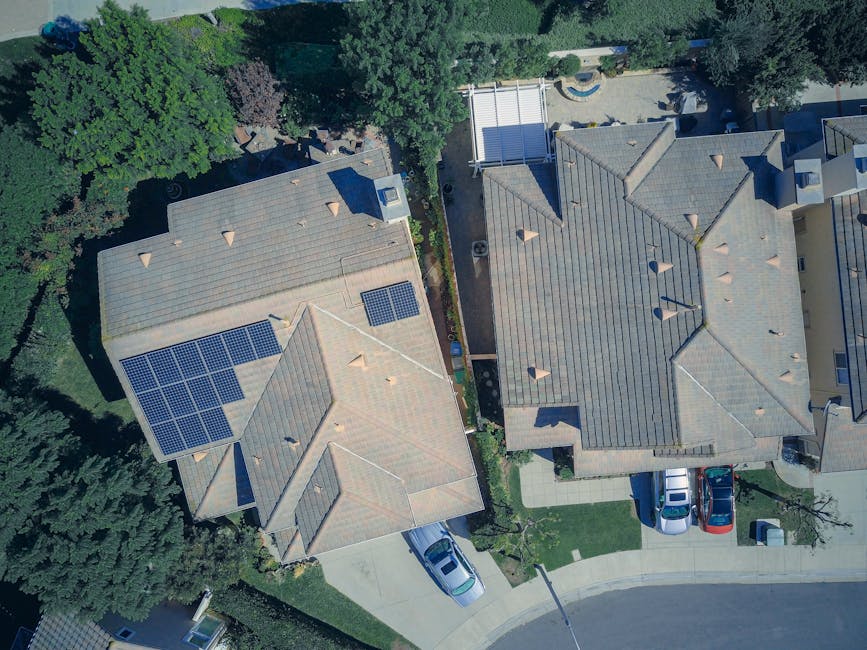
Monocrystalline vs. Bifacial vs. TOPCon: What’s Actually Worth It in 2026
The panel market has shifted noticeably in the last two years. Traditional PERC monocrystalline panels — your standard workhorse — are still widely installed, but TOPCon (Tunnel Oxide Passivated Contact) technology has moved from commercial rooftops into the residential market with efficiency ratings now hitting 22–23.5%. Brands like Jinko Solar (JKS on NYSE), LONGi, and REC Group are all shipping TOPCon residential lines in 2026.
Bifacial panels, which capture reflected light from the rear surface, are genuinely useful if your roof is light-colored or if you’re doing a ground-mount installation — they can add 5–15% additional yield in the right conditions. On a dark shingle roof with no albedo effect, you’re basically paying for a feature you can’t use.
Here’s a rough comparison to ground your expectations:
- Standard PERC Mono (e.g., Canadian Solar HiKu6): ~20–21% efficiency, $0.28–$0.35/W module cost, widely available
- TOPCon (e.g., Jinko Tiger Neo): ~22–23.5% efficiency, $0.32–$0.40/W, lower temperature coefficient = better hot-day performance
- HJT (Heterojunction, e.g., REC Alpha Pure-R): ~22–24% efficiency, $0.45–$0.55/W, best low-light performance but premium pricing
- Bifacial variants: Add ~$0.03–$0.06/W; worthwhile only in specific mounting scenarios
The Inverter Decision Is More Important Than the Panel Brand
This surprises people. Your inverter is the brain of the system, and choosing wrong here is the most common expensive mistake I see. Three main paths:
1. String Inverters (e.g., SMA Sunny Boy, Fronius Primo): One central inverter handles the whole array. Cheapest option, but one shaded panel drags down the whole string. Good for unshaded, simple roofs. Expect to replace it once during a 25-year system life.
2. Microinverters (e.g., Enphase IQ8 series): One inverter per panel. Shading one panel doesn’t affect others. Grid-forming capability in the IQ8 means some backup function even without a battery (a genuine 2026 differentiator). Cost premium: roughly $800–$1,500 more for an 8 kW system.
3. Power Optimizers + String Inverter (e.g., SolarEdge HD-Wave): A middle path. Optimizers at each panel reduce shading losses; a single inverter keeps costs lower than full microinverters. The DC-optimized architecture also provides panel-level monitoring. SolarEdge (SEDG on NASDAQ) had some turbulence in 2024 but has stabilized its residential product line.
My personal take: if your roof has any shading from trees, dormers, or chimneys — even part of the day — go microinverters. The math works out over 10 years. Clean, unshaded south-facing roof? String inverter saves you real money.
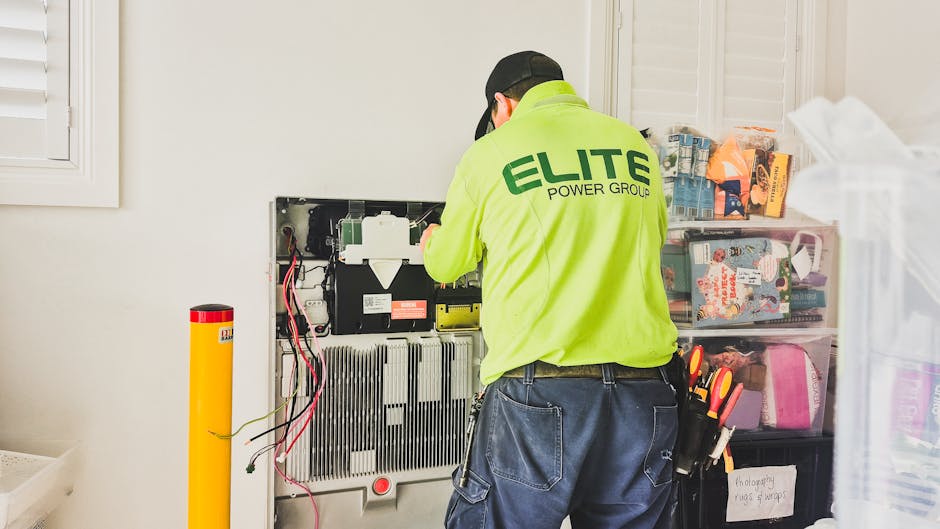
Battery Storage: The 2026 Reality Check
Everyone wants to talk batteries. Here’s the honest picture: adding a Tesla Powerwall 3 (13.5 kWh usable) runs approximately $11,500–$13,000 installed in 2026, depending on your region. The Franklin WH5000 and Enphase IQ Battery 5P are competitive alternatives worth quoting.
Where batteries actually make financial sense:
- You’re in a time-of-use (TOU) rate market (California, Hawaii, parts of Texas) where you can arbitrage peak pricing
- You have frequent grid outages and need backup power
- Net metering has been reduced in your state (making self-consumption more valuable than export)
Where batteries are still a tough ROI case: stable net metering states where you export at near-retail rates. In those markets, payback on a battery alone can stretch to 12–15 years, which is longer than some battery warranties.
Getting Quotes Without Getting Played
Use platforms like EnergySage (energysage.com) to get multiple competing quotes — their marketplace model genuinely creates downward price pressure. The average EnergySage user saves about 20% versus going direct to a single installer. Always get at least three quotes. Check NABCEP certification for installers. Ask specifically: ‘What happens if you go out of business?’ — installer warranty coverage disappears if the company folds, so verify workmanship warranty is backed by a third-party insurer.
If a Full System Isn’t Right Yet — Real Alternatives
If your roof needs work, you’re renting, or the upfront cost doesn’t pencil out, you have real options in 2026:
- Community solar subscriptions (available in 20+ states): Subscribe to a share of an off-site solar farm, get credits on your bill. No installation, no roof required. Typically saves 5–15% on electricity costs.
- Solar loans with zero down: Many credit unions and GreenSky/Mosaic financial products offer 0% promo periods — just read the fine print on what happens after the promo window.
- Lease/PPA: You pay nothing upfront; a third party owns the panels. Savings are smaller (typically 10–20% on electricity), and it complicates home sales. Avoid if you plan to sell within 5 years.
Bottom line from my corner: Solar in 2026 is a genuinely good investment for the right home — south-facing roof, 10+ years of planned ownership, states with reasonable net metering, and a credit score that gets you a good loan rate. But it’s not magic. Run your own numbers using NREL’s PVWatts calculator (pvwatts.nrel.gov) before you talk to a single salesperson. Know your break-even point. And if the numbers don’t work right now, community solar is a real, underrated alternative that most people ignore entirely.
📚 관련된 다른 글도 읽어 보세요
- 비싼 줄만 알았는데 — 2026년 기준 가성비 쩌는 싱글몰트 위스키 Top 3, 직접 열어봤습니다
- 싸구려 사면 두 번 산다 — 2026년 기준 미니멀리스트가 실제로 쓰는 가성비 캐리어 TOP 3
- Why I Almost Gave Up on Roofing — A Real 2025 Guide to Getting It Right
태그: home solar panels, solar installation guide, solar panel cost 2026, best solar inverter, solar battery storage, residential solar ROI, EnergySage review
Leave a Reply