A neighbor of mine spent the better part of last spring convinced that rooftop solar panels were going to slash his electricity bill in half within the first month. He bought into the sales pitch, signed the contract, and three weeks later found himself staring at an inverter throwing an E032 fault code every time clouds rolled in. The system wasn’t producing anywhere near the quoted output, and the installer’s support line had a 48-hour response window. Sound familiar? Solar panels are genuinely one of the best long-term investments a homeowner can make — but the gap between marketing brochures and real-world installation is wide enough to swallow your savings whole if you’re not careful.
Let’s walk through what actually matters in 2025, from picking the right panel wattage to avoiding the installation mistakes that cost real money and real time.
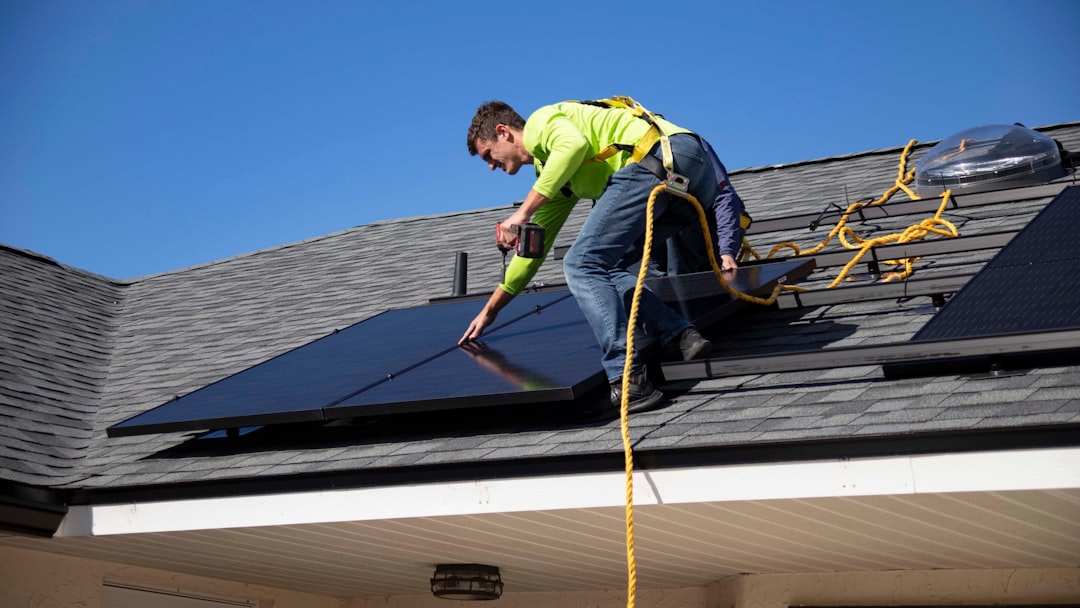
What the Quoted Numbers Actually Mean (And Don’t Mean)
Most residential solar quotes you’ll see in 2025 are built around a peak sun hours (PSH) model. The math looks clean on paper: a 400W panel × 5 PSH = 2 kWh per day per panel. String together 10 panels and you’re theoretically looking at 20 kWh/day, roughly enough for a 2,000 sq ft home in a moderate climate.
Here’s where reality diverges. Real-world system efficiency sits between 75–85% once you account for:
- Inverter conversion losses — typically 3–5% for string inverters, closer to 2% for microinverters like Enphase IQ8 series
- Temperature coefficient degradation — most monocrystalline panels lose about 0.3–0.4% output per °C above 25°C (STC). On a 40°C roof in July, that’s a 6–9% hit right there
- Wiring and connection resistance losses — poorly crimped MC4 connectors alone can cause 1–3% losses per junction
- Shading from chimneys, vents, or neighboring trees — even partial shading on a single cell in a series string can drop an entire string’s output by 30–50% without module-level power electronics (MLPEs)
- Soiling and dust accumulation — studies from NREL show 1.5–6% annual loss depending on your region and cleaning frequency
So that clean 20 kWh/day estimate? Realistically, budget for 15–17 kWh/day and you’ll be closer to truth.
Panel Types in 2025: The Market Has Shifted More Than You Think
The panel landscape has changed significantly. TOPCon (Tunnel Oxide Passivated Contact) panels now dominate the premium residential segment, with brands like Jinko Solar’s Tiger Neo, LONGi Hi-MO 6, and REC Alpha Pure-R pushing efficiencies to 22–23.6% in production modules — not lab conditions.
Meanwhile, the older PERC (Passivated Emitter and Rear Cell) panels are still widely available and meaningfully cheaper, often $0.25–0.35/W less at the wholesale level. If your roof space is not constrained, a PERC-based system at 20–21% efficiency might actually deliver better cost-per-kWh than a premium TOPCon build.
- TOPCon panels: Best for limited roof space, high-temperature climates, and long-term output stability (lower degradation ~0.4%/year vs PERC’s ~0.5–0.55%/year)
- PERC panels: Best for budget-conscious installs with adequate roof real estate; widely supported by local installers
- Bifacial panels: Worth considering on ground mounts or flat roofs with reflective surfaces — can add 5–15% gain from rear-side albedo
- HJT (Heterojunction): Highest efficiency ceiling (Panasonic EverVolt hits 22.2%), excellent low-light performance, but price premium remains significant in 2025
Inverter Choice Is Where Most People Overpay or Under-spec
Your inverter is the brain of the system, and choosing wrong here is expensive to fix post-installation. The three main paths in 2025:
String inverters (SMA Sunny Boy, Fronius Primo) remain the most cost-effective for unshaded, south-facing roofs. Expect $0.10–0.15/W installed cost for the inverter component alone. The key failure mode: a single shaded or underperforming panel tanks the whole string. If your roof has any shading between 9am–3pm, this is a real concern, not a theoretical one.
Microinverters (Enphase IQ8A, IQ8M) solve the shading problem at a per-panel level and add panel-level monitoring, which is genuinely useful for diagnosing problems. The IQ8 series also introduced grid-forming capability — meaning they can operate during grid outages when paired with a battery. Cost premium: roughly $0.08–0.12/W more than a comparable string system. Worth it if you have shading, complex roof angles, or plan to add storage later.
DC optimizers + string inverter (SolarEdge HD-Wave with P401 optimizers) offer a middle path — per-panel optimization with a centralized inverter. SolarEdge’s HD-Wave carries an efficiency rating of 99.2% under ideal conditions. The knock: you’re dependent on both the optimizer and inverter staying healthy. The E032 fault code I mentioned in the intro? Classic SolarEdge inverter communication dropout — usually caused by the SafeDC jumper being improperly seated during install.
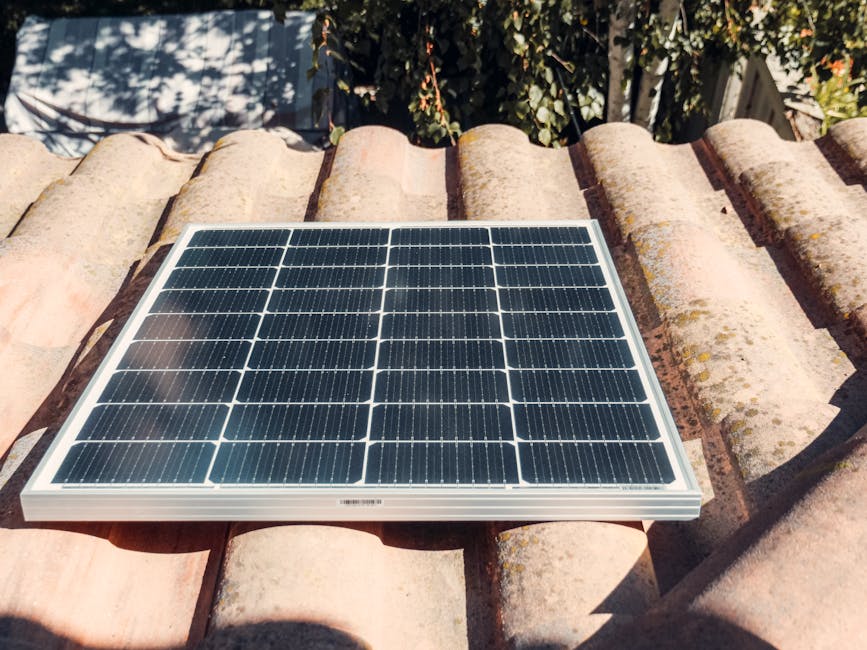
The Permitting and Grid Interconnection Reality Nobody Warns You About
Here’s the part that actually delayed my neighbor’s system by six weeks: utility interconnection approval. In most US states in 2025, systems under 10 kW are governed by simplified interconnection rules, but utilities still have 30–90 day review windows under most state tariffs. California’s NEM 3.0 (now the standard for new systems) changed the export compensation structure dramatically — you’re now getting paid avoided cost rates (~$0.02–0.05/kWh) for exported power rather than retail rates, which fundamentally changes the ROI calculus toward self-consumption + storage rather than pure grid export.
In contrast, states like Texas (under ERCOT) and Florida maintain relatively installer-friendly interconnection timelines averaging 15–25 business days for residential under 10 kW.
Key documents you need to have ready before any contractor breaks ground:
- Utility interconnection application (filed by your installer, but you should track the status)
- Local building department permit — structural and electrical, often separate applications
- HOA approval if applicable (check CC&Rs; most states now have solar access laws limiting HOA veto power)
- Updated homeowner’s insurance — most insurers require notification; a handful require a rider
Real-World ROI in 2025: The Numbers With Honesty Attached
A typical 8 kW residential system in the continental US in 2025 runs $22,000–$28,000 before incentives. After the federal Investment Tax Credit (ITC) at 30%, you’re at $15,400–$19,600 net. Add any state-level incentives (Massachusetts SMART program, New York NY-Sun, etc.) and that number can drop further.
At an average US residential electricity rate of $0.16/kWh (national average, though coastal markets run $0.22–0.35/kWh), an 8 kW system producing ~10,000 kWh/year saves roughly $1,600/year — giving a simple payback of 9.6–12 years at average rates, or as low as 6–7 years in high-rate markets like California, Hawaii, or Massachusetts.
That math assumes the system performs as rated. Factor in a realistic 15–20% underperformance buffer (from the losses we discussed earlier) and you’re adding 1–2 years to payback. Still a solid investment over a 25-year panel warranty period, but the “pay for itself in 5 years” line you’ll hear from some salespeople is not grounded in 2025 reality for most markets.
Choosing an Installer: The Questions That Actually Filter Out Bad Actors
NABCEP (North American Board of Certified Energy Practitioners) certification is the baseline credential to ask for — specifically the PV Installation Professional (PVIP) designation. Beyond that, here are the questions worth asking every installer you interview:
- “Can you show me the last three systems you installed on Google Satellite and give me real production data from their monitoring apps?”
- “What’s your average interconnection approval timeline with [my utility]?” — They should know this cold.
- “What inverter would you spec for my roof, and why that model specifically?”
- “Who actually does the physical install — your W2 employees or subcontractors?”
- “What’s the workmanship warranty period and what does it specifically cover?” — Industry standard is 10 years; anything less is a red flag.
National companies like Sunrun and SunPower (now reorganized under Complete Solaria) offer the security of scale but often at a 15–20% price premium over regional installers with equivalent credentials. For most homeowners, a vetted local installer with NABCEP certification and verifiable references will outperform a national brand on both price and responsiveness post-install.
Battery Storage: Add Now or Plan for Later?
The Tesla Powerwall 3 (13.5 kWh usable, integrated inverter) and Enphase IQ Battery 5P (5 kWh per unit, stackable) lead the residential market in 2025. Adding storage at the time of solar installation is typically $3,000–$5,000 cheaper than retrofitting it later due to shared permitting and wiring costs.
If your utility has time-of-use (TOU) rates or if you’re in a market with NEM 3.0-style low export compensation, battery storage moves from “nice to have” to genuinely necessary for a good ROI. If you’re in a net metering market with retail-rate export compensation and reliable grid power, adding battery storage extends your payback by 3–5 years and may not pencil out purely on economics — though the resilience value is real and hard to quantify for individuals.
My honest take: solar panels in 2025 are a mature, proven technology — but they reward informed buyers and punish passive ones. The difference between a system that performs at 95% of spec for 25 years and one that underperforms by 20% from day one often comes down to installer selection, inverter choice, and understanding your specific utility’s compensation rules before you sign anything. Get those three things right, and the numbers genuinely work in your favor.
💬 Have you already gotten quotes for a rooftop system, or are you still in the early research phase? Drop your roof size and location in the comments — happy to help you think through what setup would actually make sense for your situation.
📚 관련된 다른 글도 읽어 보세요
- 비싼 거 사면 무조건 좋다고? 2026년 기준 가성비 쩌는 싱글몰트 위스키 Top 3
- Why I Almost Missed My Trip — The {year} Route Locals Actually Use for Keyword Travel
- Why My Solar Setup Backfired — The Real 2025 Guide to Solar Panel Efficiency and Output
태그: solar panels 2025, rooftop solar installation, residential solar ROI, solar inverter comparison, home solar guide, solar panel types, solar battery storage
Leave a Reply