Picture this: a surgeon in Seoul holds a patient-specific bone implant, printed overnight from a titanium alloy blend, with surface tolerances measured in microns. Meanwhile, a boutique sneaker brand in Portland is churning out fully customized midsoles on demand — no inventory, no waste. Both scenarios? Happening right now, in 2026. Precision 3D printing has quietly crossed the threshold from impressive prototype tool to mission-critical manufacturing backbone, and the pace of change this year is genuinely breathtaking.
So let’s think through what’s actually driving this shift, what the numbers say, and — most importantly — what it means for you, whether you’re a hobbyist, a small business owner, or a decision-maker at a mid-size manufacturer.
📊 The 2026 Market Snapshot: Bigger, Faster, More Precise
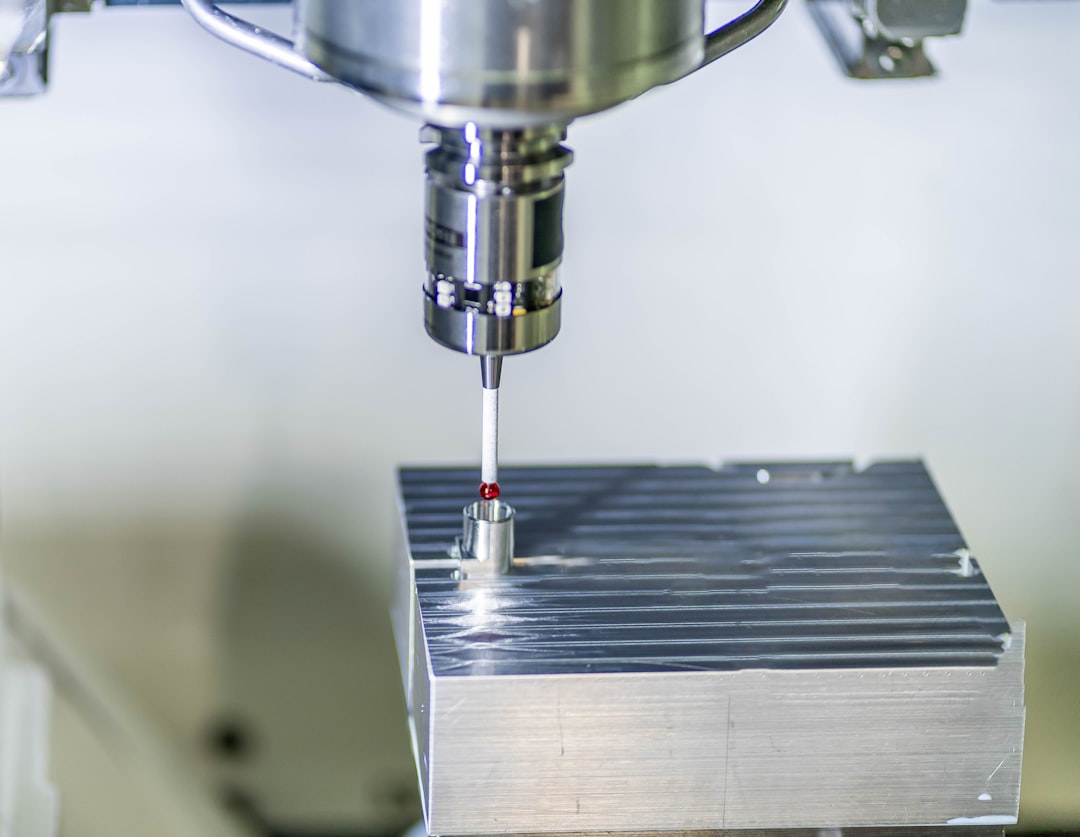
The global additive manufacturing market crossed the $35 billion mark in early 2026, according to industry tracking from Wohlers Associates and SmarTech Analysis. What’s notable isn’t just the size — it’s the composition. Industrial-grade precision printing now accounts for roughly 58% of total market revenue, up from around 44% just three years ago. The hobbyist FDM (Fused Deposition Modeling) segment, while still growing in unit sales, is shrinking as a share of overall value.
Why does that distinction matter? Because it tells us where the real technological energy is being invested. Precision printing — think SLA (Stereolithography), SLS (Selective Laser Sintering), DMLS (Direct Metal Laser Sintering), and Multi Jet Fusion — is attracting aerospace contracts, medical device approvals, and serious R&D capital. The resolution bar keeps getting raised: sub-10-micron layer resolution is now commercially available, and some lab-grade systems are pushing into the 1–2 micron territory.
🔬 Key Technology Trends Reshaping Precision Printing in 2026
Let’s break down the specific innovations that are making headlines and, more importantly, making real differences on factory floors and design studios:
- Continuous Liquid Interface Production (CLIP) 2.0: Carbon3D’s second-generation CLIP technology dramatically reduces print time for resin-based parts while maintaining tolerances under 25 microns. In 2026, this is being deployed in dental labs across Europe and North America at scale.
- Multi-Material Metal Printing: Systems from Desktop Metal and Markforged now allow gradient material transitions — imagine a part that’s stainless steel at its structural core but grades into a copper alloy at thermal contact zones. This was a research curiosity in 2023; it’s a purchasable product line today.
- AI-Driven Topology Optimization: Software platforms like nTopology and Autodesk Fusion’s generative design suite now integrate directly with printer firmware. The AI doesn’t just design the part — it adjusts print parameters layer-by-layer in real time based on thermal feedback sensors.
- Bioprinting Goes Clinical: 2026 marks the first year that FDA-cleared, patient-matched bioprinted cartilage scaffolds are available through a commercial surgical pathway in the United States. Korean biotech firm T&R Biofab and US-based Organogenesis are both active in this space.
- Sustainable Feedstocks: Recycled carbon fiber filaments and bio-derived resin systems have matured significantly. BASF’s Forward AM division reports that their recycled polyamide powders now meet the same mechanical specs as virgin material for SLS applications — a genuine game-changer for circular manufacturing.
- In-Process Metrology: Embedded laser scanning and CT-equivalent acoustic sensors now allow printers to verify dimensional accuracy while printing, catching errors before they become expensive scrapped parts. This is particularly critical for aerospace AS9100 and medical ISO 13485 compliance.
🌍 Real-World Examples: From Seoul to Stuttgart
The technology is one thing — seeing where it’s landing in practice is where it gets really interesting. Let’s look at a few cases from 2026 that illustrate the breadth of precision 3D printing’s reach.
South Korea — Samsung Electro-Mechanics has integrated DMLS-based precision printing into its PCB substrate prototyping pipeline. Where traditional CNC machining and chemical etching took 3–5 days for a new substrate prototype, their 2026 workflow delivers functional test pieces in under 18 hours. The precision requirement here is brutal — we’re talking about features as small as 80 microns on ceramic substrates. They’re hitting it consistently.
Germany — Airbus Filton Division announced in January 2026 that over 2,400 flight-certified titanium components across its A320neo family are now produced via DMLS rather than traditional forging. The weight savings average 15–22% per component, and the supply chain flexibility during material shortages (a lesson painfully learned in 2022–2024) has been invaluable.
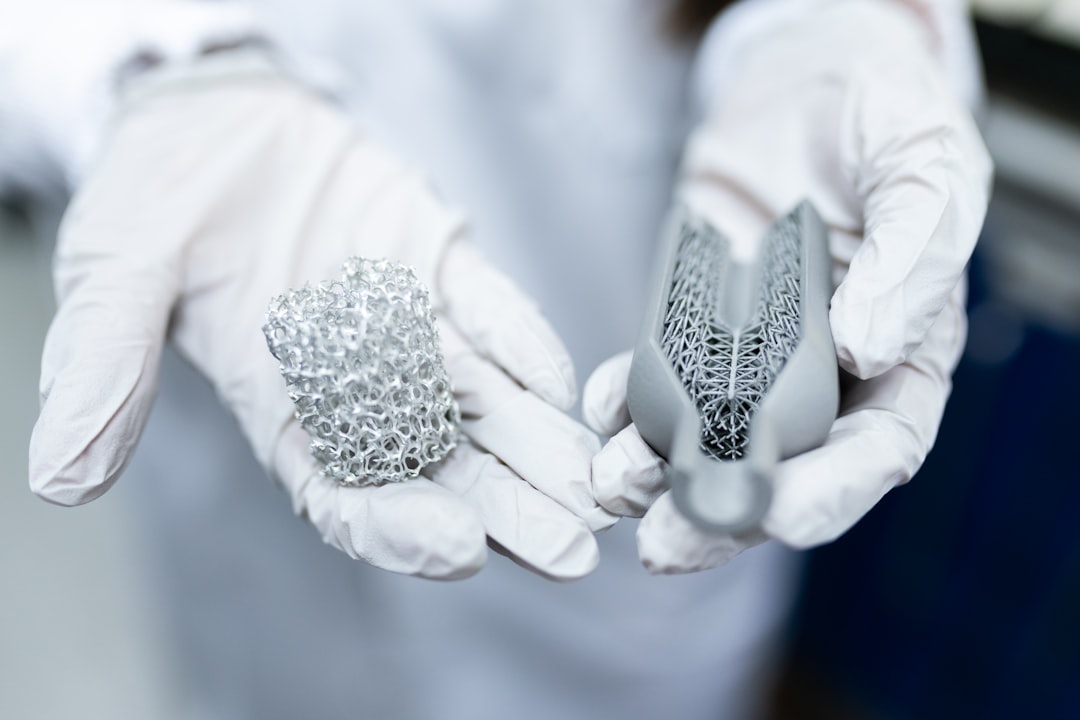
United States — New Balance’s “Infinite” Platform launched a fully on-demand precision-printed footwear line in Q1 2026, using HP’s Multi Jet Fusion 5600 series. Customers scan their feet via a smartphone app, and lattice-structure midsoles are printed to their exact geometry. The print resolution allows for variable density zones — firmer at the heel strike, more compliant at the forefoot — something injection molding simply cannot replicate economically at this scale.
Netherlands — Philips Healthcare is using high-resolution resin printing for patient-specific MRI coil geometries. Rather than fitting a standard coil to varied patient anatomies, they now print custom-contoured coils that improve signal-to-noise ratio by up to 30% for neurological imaging. Regulatory approval was granted by EMA in late 2025, and rollout is underway across 12 EU member states.
💡 What This Means for Different Readers — Let’s Be Realistic
Here’s where I want to think alongside you, because “precision 3D printing is incredible” isn’t a useful takeaway on its own. The honest answer depends on your situation:
If you’re a hobbyist or small creator: The direct impact of sub-10-micron industrial systems on your workflow is limited for now — but the trickle-down is real. Resin printers available in the $300–$800 range (Elegoo Saturn 4 Ultra, Bambu Photo P1) now offer 14K LCD resolution that would have been professional-grade just four years ago. For jewelry, miniature figurines, or custom enclosures, you’re benefiting from the R&D that industrial precision demands.
If you run a small manufacturing business: The realistic alternative to buying industrial metal printing in-house is partnering with a precision bureau service. Companies like Xometry, Protolabs, and South Korea’s MO:AI offer on-demand DMLS and SLS at per-part pricing. You get aerospace-grade precision without the $500K capital expenditure. For runs under 500 parts, this is almost always the smarter financial path in 2026.
If you’re a product designer or engineer: The most immediate and actionable shift is embracing topology optimization and generative design from the earliest concept stage. Designing for additive manufacturing (DfAM) rather than converting traditional designs is where the real performance gains live. Courses on nTopology and Fusion 360 generative design are genuinely worth your continuing education budget this year.
If you’re in healthcare or dental: The regulatory landscape has matured enough that point-of-care printing for certain device categories is no longer a distant promise. Engaging with your regional regulatory body’s additive manufacturing guidance documents (FDA’s 2024–2026 guidance series, or the EU MDR additive manufacturing supplement) now will put you ahead of peers who wait.
⚠️ The Challenges Nobody Talks About Enough
Precision 3D printing in 2026 is genuinely exciting, but let’s not gloss over the friction points. Post-processing remains a significant time and cost factor — even the most advanced metal prints require heat treatment, surface finishing, and inspection that can add 30–60% to total part cost. Skilled operators who understand both the machine physics and the metallurgical requirements are still in short supply globally. And the materials supply chain, while improved, remains vulnerable: specialized metal powders saw price increases of 18–25% in H2 2025 due to rare earth supply pressures. These aren’t reasons to avoid the technology, but they’re very real variables to build into any business case.
Editor’s Comment : What strikes me most about where precision 3D printing stands in 2026 is how it’s stopped being a conversation about possibility and started being a conversation about strategy. The technology works. It’s certified. It’s in your phone case molds and your hip implants and your aircraft brackets. The question now is whether you’re building the knowledge and relationships to use it well — or watching others do it first. If there’s one thing I’d encourage you to do this week, it’s to order one sample part from a bureau service in a material you’ve never worked with before. Touch it. Test it. The learning curve starts there, and it’s shorter than you think.
태그: [‘precision 3D printing 2026’, ‘additive manufacturing trends’, ‘DMLS metal printing’, ‘3D printing technology’, ‘industrial 3D printing’, ‘bioprinting 2026’, ‘generative design manufacturing’]
Leave a Reply