Author: likevinci

  • Precision 3D Printed Medical Implants in 2026: Real Cases Reshaping How We Heal

    Imagine waking up after surgery with a titanium jawbone that fits you so perfectly it feels like it was always there — because, in a very real sense, it was designed just for you. That’s not science fiction anymore. In 2026, precision 3D printing has moved well past the prototype stage and into hospital operating rooms across the globe, quietly rewriting what’s possible in reconstructive and restorative medicine.

    A few years ago, the idea of printing a patient-specific spinal cage or a customized hip socket overnight seemed like the kind of thing you’d read about in a tech magazine and forget. Now, orthopedic surgeons in Seoul, Berlin, and Houston are requesting these prints the same way they’d order a custom surgical tray. So let’s actually dig into what’s happening — with real numbers, real cases, and a clear-eyed look at where the limitations still lie.

    3D printed titanium medical implant surgical precision biomedical engineering

    Why Precision Matters More Than You Think

    Standard off-the-shelf implants work on the principle of “close enough” — a range of sizes that covers the statistical majority of patients. For most people, that’s fine. But for patients with unusual anatomy, trauma-related bone loss, or congenital conditions, “close enough” can mean the difference between full recovery and chronic pain.

    Precision 3D printing — technically called additive manufacturing (AM) in biomedical contexts — allows implants to be fabricated from a patient’s own CT or MRI scan data. The result is a device that mirrors the patient’s unique geometry down to fractions of a millimeter. Here’s why that’s transformative:

    • Reduced surgical time: When an implant fits perfectly, surgeons spend less time adjusting and more time closing. Studies published in early 2026 in the Journal of Orthopaedic Research show average surgical time reductions of 18–27% for custom 3D-printed hip and knee components compared to standard implants.
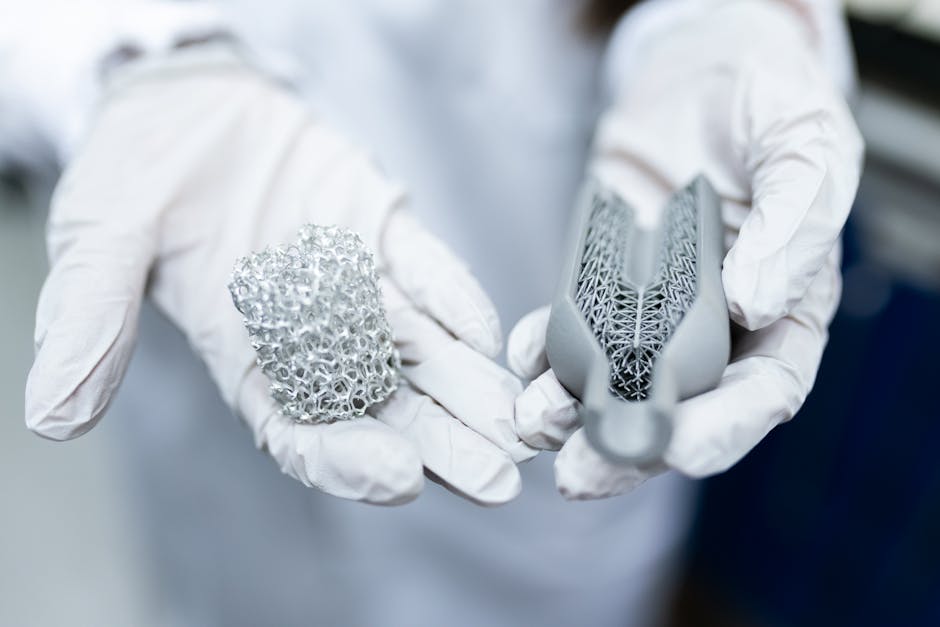
    • Better osseointegration: That’s the process where bone actually grows into the implant. Lattice-structured titanium surfaces, only possible through 3D printing, increase surface area and mimic the trabecular (spongy) structure of natural bone, dramatically improving bonding rates.
    • Lower revision rates: Early 2026 data from the Australian Orthopaedic Registry indicates a 14% lower 5-year revision rate for custom-printed implants versus conventional ones in complex pelvic reconstruction cases.
    • Reduced inventory burden: Hospitals don’t need to stock dozens of implant sizes. A digital design file plus a certified printer replaces a warehouse shelf.
    • Shorter patient recovery windows: Better fit generally means less micromotion at the implant site, which translates to faster and more stable healing.

    The Materials That Make It Possible

    Not every material can go inside a human body, so the material science here is just as important as the printing technology itself. Right now, the three dominant materials in biomedical 3D printing are:

    • Titanium alloy (Ti-6Al-4V): The gold standard for load-bearing implants — think spinal cages, hip cups, and cranial plates. It’s biocompatible, lightweight, and incredibly strong.
    • PEEK (Polyether ether ketone): A high-performance polymer used primarily in spinal and craniofacial applications. Its stiffness can be tuned to more closely match bone than metal, reducing stress shielding.
    • Bioactive ceramics (like hydroxyapatite): Often used as coatings or in composite structures to actively encourage bone growth. Research groups at ETH Zürich and Yonsei University are working on fully printable ceramic scaffolds as of 2026.

    Real-World Cases That Tell the Story

    Numbers are useful, but cases make it real. Let’s look at a few examples from across the world that illustrate just how far this technology has come.

    Case 1 — South Korea (Seoul National University Hospital, 2025–2026): A 34-year-old patient with aggressive osteosarcoma (bone cancer) in the pelvis underwent hemipelvectomy — the removal of half the pelvis. Traditionally, this procedure results in extreme functional limitation. Surgeons used a patient-specific titanium pelvic implant, 3D printed by the hospital’s in-house certified AM unit, in collaboration with a local biotech firm. The patient regained walking ability within 6 months, a timeline previously considered optimistic even under ideal conditions.

    Case 2 — Germany (Charité – Universitätsmedizin Berlin): In early 2026, Charité published outcomes for a series of 22 patients who received custom-printed titanium cranial implants following traumatic brain injuries. The traditional approach uses manually molded PMMA (acrylic). The 3D-printed group showed a 31% reduction in post-operative infection rates and significantly higher patient-reported satisfaction scores related to cosmetic outcome — a factor that genuinely impacts psychological recovery.

    Case 3 — United States (Mayo Clinic, Rochester): Mayo Clinic’s orthopedic division has been pioneering what they call “next-day implant” workflows — where a patient’s scan data is processed, the implant is printed and sterilized, and surgery happens within 36 hours of imaging. By Q1 2026, they’ve completed over 400 procedures using this workflow, primarily for acetabular (hip socket) reconstruction in revision surgeries where the original implant failed.

    custom hip implant 3D printing CT scan surgical workflow hospital

    Where Are the Bottlenecks?

    It wouldn’t be an honest conversation if we didn’t talk about friction points. Despite the excitement, there are real structural barriers to widespread adoption:

    • Regulatory lag: The FDA, CE marking bodies in Europe, and MFDS in South Korea all have rigorous approval processes for custom implants. Each new design technically requires individual review, creating significant administrative overhead. Regulatory sandboxes and expedited pathways exist, but they’re not universal.
    • Cost: A custom-printed titanium implant can cost 3–5x more upfront than a standard implant. Insurance reimbursement frameworks haven’t fully caught up with the technology, meaning cost often falls on hospitals or patients in non-covered cases.
    • Printer certification and quality control: Not all 3D printers are equal. A poorly calibrated machine can produce micro-voids in metal that only show up under failure conditions inside the body. ISO 13485 certification for medical AM processes is increasingly required but not yet universal.
    • Surgeon learning curve: Custom implants sometimes require modified surgical approaches. Training and workflow adaptation take time.

    Realistic Alternatives — Who Should Consider What?

    Here’s where I want to be genuinely helpful rather than just enthusiastic. 3D-printed custom implants are not the right answer for every patient or every hospital system. Let’s think through this together:

    If you’re a patient facing a straightforward primary hip or knee replacement with normal anatomy and good bone stock — a high-quality standard implant from an established manufacturer (Stryker, Zimmer Biomet, Smith+Nephew) will very likely serve you excellently at lower cost and with a faster supply chain.

    If you’re dealing with complex revision surgery, tumor resection, or congenital anomalies — this is where the custom 3D-printed route genuinely earns its premium. The functional and quality-of-life upside is demonstrably larger for these patient populations.

    If you’re a hospital administrator in a resource-limited setting — consider hybrid models: partnering with third-party certified AM bureaus rather than investing in in-house printing infrastructure. Several companies in 2026, including 3D Systems’ healthcare division and Materialise, offer on-demand custom implant services with regulatory documentation included.

    If you’re a healthcare policy maker — the data increasingly supports building reimbursement frameworks that differentiate “medically necessary custom” implants from elective customization. That distinction would unlock access for the patients who need it most without creating open-ended cost exposure.

    The technology is genuinely remarkable, and the cases we’ve walked through show that lives are being meaningfully changed. But the path to broader impact runs through pragmatic problem-solving — regulatory clarity, smart reimbursement, and honest patient selection — not just better printers.

    Editor’s Comment : What strikes me most about precision 3D printing in medicine isn’t the technology itself — it’s the philosophical shift it represents. For the first time, we’re seriously asking, “Why should the patient adapt to the implant?” and answering with “They don’t have to.” That’s a quiet revolution. But revolutions need infrastructure, and right now the gap between what’s technically possible and what’s systematically accessible is still wide. Keep an eye on how regulatory bodies in 2026 and beyond handle the classification of AI-assisted custom implant design — that’s the next pressure point, and honestly, it’s a fascinating one.

    태그: [‘3D printed medical implants’, ‘precision additive manufacturing healthcare’, ‘custom titanium implants 2026’, ‘biomedical 3D printing cases’, ‘patient-specific implants surgery’, ‘orthopedic 3D printing technology’, ‘osseointegration implant innovation’]


    📚 관련된 다른 글도 읽어 보세요

  • 정밀 3D 프린팅 의료 임플란트, 2026년 현재 어디까지 왔을까? 실제 적용 사례 총정리

    몇 년 전만 해도 ‘맞춤형 뼈’라는 단어는 SF 영화 속 이야기처럼 들렸을 거예요. 그런데 2026년인 지금, 실제로 어떤 환자가 티타늄 분말을 소결(Sintering)해 만든 맞춤형 척추 임플란트를 이식받고 재활에 성공했다는 뉴스가 심심찮게 들려옵니다. 저도 처음엔 ‘정말 그게 가능해?’라는 의문이 들었는데, 자료를 파고들수록 이게 먼 미래 이야기가 아니라 이미 우리 주변에서 조용히 일어나고 있는 혁명이라는 걸 느꼈어요. 오늘은 정밀 3D 프린팅 기술이 의료 임플란트 분야에서 어떻게 적용되고 있는지, 구체적인 수치와 사례를 통해 같이 살펴보겠습니다.

    medical 3D printing titanium implant surgical precision

    📊 숫자로 보는 3D 프린팅 의료 임플란트 시장 규모

    우선 시장 규모부터 짚어볼게요. 글로벌 시장조사 기관 Grand View Research의 최근 보고서에 따르면, 3D 프린팅 의료기기 시장은 2026년 기준 약 45억 달러(한화 약 6조 원) 규모로 추산되며, 2030년까지 연평균 성장률(CAGR) 17.3%를 유지할 것으로 전망된다고 합니다. 이 중 정형외과·치과 임플란트 분야가 전체 시장의 약 38%를 차지하는 것으로 보고 있어요.

    왜 이렇게 빠르게 성장하고 있을까요? 핵심은 ‘개인 맞춤화(Personalization)’에 있다고 봅니다. 기존의 규격화된 임플란트는 환자의 골격 구조, 밀도, 결함 형태가 제각각임에도 불구하고 ‘S, M, L’ 같은 표준 사이즈에 환자를 끼워 맞추는 방식이었어요. 반면 3D 프린팅 방식은 CT·MRI 데이터를 기반으로 0.05mm 오차 이내의 정밀도로 환자 개인의 해부학적 구조에 딱 맞는 보형물을 제작할 수 있습니다. 이식 후 골유합(Osseointegration) 속도가 기존 방식 대비 약 20~30% 빠르다는 연구 결과도 나오고 있어요.

    🌍 국내외 실제 적용 사례: 뼈, 치아, 그리고 그 너머

    📍 해외 사례 — 얼굴뼈 재건, 미국 Johns Hopkins 병원
    2025년 말 Johns Hopkins 병원에서는 안면 종양 제거 수술 후 광대뼈와 하악골 일부를 잃은 40대 환자에게 폴리에테르에테르케톤(PEEK) 소재로 3D 프린팅한 맞춤형 두개안면 임플란트를 이식하는 데 성공했습니다. 수술 전 디지털 시뮬레이션을 통해 이식물의 형태와 두께를 최적화했고, 수술 시간은 기존 유사 케이스 대비 약 40% 단축됐다고 알려져 있어요. 이처럼 3D 프린팅은 복잡한 재건 수술에서 수술 시간과 합병증 리스크를 동시에 줄이는 효과가 있는 것으로 보입니다.

    📍 국내 사례 — 척추 케이지 임플란트, 국내 주요 대학병원
    국내에서도 흐름이 빠릅니다. 서울 소재 대형 대학병원에서는 이미 2024년부터 티타늄 합금(Ti-6Al-4V) 분말을 레이저로 소결하는 SLM(Selective Laser Melting) 방식으로 제작한 척추 유합용 케이지 임플란트를 임상에 적용하고 있어요. 특히 이 임플란트는 표면에 다공성(Porous) 구조를 의도적으로 설계해 뼈 세포가 파고들기 좋은 환경을 만들어 줍니다. 실제로 해당 병원에서 진행한 소규모 임상 추적 결과, 골유합 성공률이 94.6%에 달했다는 발표가 있었어요.

    📍 치과 분야 — 디지털 덴티스트리와의 융합
    치과 임플란트 분야는 사실 3D 프린팅 기술을 가장 먼저, 그리고 가장 빠르게 흡수한 영역이라고 봅니다. 치과용 CAD/CAM 시스템과 결합해 크라운, 브릿지, 서지컬 가이드는 물론이고 맞춤형 임플란트 어버트먼트(Abutment)까지 당일 제작이 가능한 수준에 이르렀어요. 일부 디지털 치과에서는 구강 스캔부터 보철물 완성까지 2~3시간 안에 끝내는 ‘원데이 덴티스트리’를 이미 서비스하고 있습니다.

    3D printed spine cage implant porous titanium biomedical

    🔬 핵심 기술 3가지: 무엇이 정밀도를 만드는가

    3D 프린팅 의료 임플란트의 ‘정밀함’이 어디서 나오는지 궁금하신 분들을 위해, 현재 가장 많이 쓰이는 핵심 기술을 간략히 정리해 봤어요.

    • SLM (Selective Laser Melting, 선택적 레이저 용융): 티타늄·코발트-크롬 합금 분말에 고출력 레이저를 쏴 층층이 녹여 붙이는 방식이에요. 금속 임플란트에서 가장 높은 밀도와 강도를 구현할 수 있어 척추, 고관절, 두개골 재건에 주로 사용됩니다.
    • SLA (Stereolithography, 광경화 수지 조형): 자외선으로 액상 레진을 굳히는 방식으로, 치과용 수술 가이드나 모형 제작에 탁월해요. 해상도가 매우 높아 정교한 형태 구현이 가능하지만, 생체 적합성이 요구되는 영구 이식물에는 적합하지 않은 경우가 많아요.
    • FDM 바이오프린팅 (Fused Deposition Modeling 기반): 최근 가장 주목받는 분야로, 살아있는 세포를 포함한 ‘바이오잉크’를 노즐로 분사해 조직 스캐폴드(Scaffold)를 제작합니다. 아직 임상 적용 초기 단계이지만, 연골·피부 조직 재생 분야에서 유망한 결과를 보이고 있어요.
    • EBM (Electron Beam Melting, 전자빔 용융): SLM과 유사하지만 전자빔을 에너지원으로 사용해요. 고진공 환경에서 진행되기 때문에 산화가 거의 없고, 특히 다공성 구조 구현에 유리해 골유합이 중요한 정형외과 임플란트에 사용됩니다.
    • 규제 및 인증 현황: 국내에서는 식품의약품안전처(MFDS)가 3D 프린팅 의료기기에 대한 별도 가이드라인을 운용 중이며, 미국 FDA도 ‘Additive Manufacturing’ 전용 허가 트랙을 통해 빠른 승인 경로를 제공하고 있어요. 다만 여전히 인허가 리드타임이 상당하기 때문에 기술 발전 속도를 규제가 따라가는 데 한계가 있다는 지적도 있습니다.

    🤔 아직 풀리지 않은 과제들

    물론 장밋빛 전망만 있는 건 아니에요. 현실적으로 몇 가지 한계점도 함께 짚어볼 필요가 있다고 봅니다. 우선 비용 문제가 있어요. 맞춤형 3D 프린팅 임플란트는 현재 기준으로 표준 규격 제품 대비 2~5배 이상 비쌀 수 있고, 국내 건강보험 급여 적용이 제한적이라 환자 본인 부담이 상당한 경우가 많습니다. 또한 장기적인 임상 데이터 부족도 아직 과제예요. 이 기술 자체가 본격적으로 적용된 지 10년이 채 안 된 만큼, 10년·20년 후 이식물의 내구성이나 생체 반응에 대한 데이터가 아직은 충분하지 않은 상황이라고 봅니다.


    에디터 코멘트 : 정밀 3D 프린팅 의료 임플란트는 분명 ‘맞춤 의학(Precision Medicine)’의 물리적 구현이라는 점에서 그 방향성 자체는 굉장히 옳다고 느껴요. 다만 현재 이 기술의 혜택을 온전히 누리려면 비용과 접근성이라는 두 가지 장벽을 현실적으로 고려해야 합니다. 당장 임플란트 수술을 앞둔 분이라면, 주치의와 상담할 때 ‘3D 프린팅 맞춤 임플란트 옵션이 있는지, 보험 처리 가능 범위가 어떻게 되는지’를 구체적으로 물어보는 것이 좋은 시작점이 될 것 같아요. 기술은 이미 준비돼 있고, 이제는 그 기술을 얼마나 현명하게 활용하느냐가 관건인 시대가 된 것 같습니다.

    태그: [‘3D프린팅임플란트’, ‘의료3D프린팅’, ‘맞춤형임플란트’, ‘티타늄임플란트’, ‘정밀의료’, ‘바이오프린팅’, ‘디지털의료기기’]


    📚 관련된 다른 글도 읽어 보세요

  • Home Lab Network Setup in 2026: VLAN Segmentation & Firewall Configuration Done Right

    Let me paint you a familiar picture. It’s a lazy Sunday afternoon, and you’ve just finished racking your second-hand Cisco switch into a DIY server cabinet. You’re feeling pretty proud of yourself — until you realize your IoT smart bulbs, your NAS full of personal files, and your work laptop are all happily chatting on the same flat network. One compromised smart plug could theoretically reach everything. That’s the moment most home lab enthusiasts discover VLANs and proper firewall rules. I’ve been there, and honestly, it’s one of those rabbit holes that actually makes your setup dramatically more secure and professional.

    So let’s think through this together — from the basics of why network segmentation matters all the way to concrete firewall rules you can actually implement today.

    home lab server rack VLAN network diagram setup 2026

    Why a Flat Home Network Is a Hidden Risk in 2026

    In 2026, the average household has somewhere between 15 and 35 connected devices — a number that’s grown roughly 40% since 2022 according to connectivity research firm Parks Associates. That means your network is no longer just a laptop and a phone. It’s a smart TV, several IoT sensors, a NAS, a 3D printer with Wi-Fi, maybe a home server running Proxmox or TrueNAS, and guest devices for when friends visit.

    On a flat network, all of these devices can potentially communicate with each other. That’s fine when everything is trusted — but it almost never is. IoT firmware is notoriously slow to receive security patches. A compromised smart thermostat or IP camera can become a pivot point into your file server. This is not paranoia; it’s a documented attack vector that security researchers have been warning about since at least 2019, and it’s only more relevant now.

    The Core Concept: What Is a VLAN, Really?

    VLAN stands for Virtual Local Area Network. Think of it as drawing invisible walls inside your physical network. Your single switch can be logically divided into multiple isolated segments, each behaving as if it were its own separate switch. Devices in VLAN 10 cannot talk to devices in VLAN 20 unless you explicitly allow it through a router or firewall.

    Here’s the terminology you’ll want to know:

    • Access Port: A switch port assigned to one VLAN — used for end devices like a PC or IP camera.
    • Trunk Port: A port that carries traffic for multiple VLANs simultaneously, tagged with 802.1Q headers — used between switches or between a switch and a router.
    • 802.1Q Tagging: The IEEE standard that labels Ethernet frames with a VLAN ID so traffic stays organized across trunk links.
    • Inter-VLAN Routing: The process of allowing controlled traffic between VLANs, handled by a router or a layer 3 switch.
    • Native VLAN: The untagged VLAN on a trunk port — best practice is to assign it to an unused VLAN ID to prevent VLAN hopping attacks.

    Recommended VLAN Design for a Home Lab in 2026

    Here’s a segmentation structure that I’ve seen work really well for home lab enthusiasts at various skill levels. You don’t have to implement all of these at once — start with two or three and expand:

    • VLAN 10 — Management: Your switches, access points, and router/firewall management interfaces. Lock this down tightly. No IoT, no guests, ever.
    • VLAN 20 — Trusted Devices: Your personal laptops, desktops, and phones. This is your “home base” network with full internet access and controlled access to the NAS.
    • VLAN 30 — Servers / Home Lab: Proxmox, TrueNAS, Home Assistant, Plex, whatever you’re running. Accessible from VLAN 20 via specific rules only.
    • VLAN 40 — IoT: Smart bulbs, plugs, cameras, printers. Internet access allowed (for cloud sync if needed), but completely blocked from talking to VLANs 20 and 30.
    • VLAN 50 — Guest Wi-Fi: Isolated internet-only access. No visibility to anything on your internal network whatsoever.
    • VLAN 60 — Security Cameras (optional): Separated even from general IoT because camera footage is sensitive. Some people block internet access entirely for this VLAN and use a local NVR.

    Hardware That Makes This Practical in 2026

    You don’t need enterprise-grade gear to pull this off. The home lab community has rallied around a few accessible platforms:

    Firewall/Router: OPNsense or pfSense running on a mini PC (like the Protectli Vault or a repurposed Beelink mini PC) is the gold standard for home lab firewalls. OPNsense in particular has seen excellent development velocity in 2026, with a clean UI for firewall rules and VLAN interfaces. Alternatively, UniFi Dream Machine SE is a popular all-in-one option that handles routing, switching, and Wi-Fi with a polished interface.

    Managed Switch: You need a managed switch that supports 802.1Q VLANs. The TP-Link TL-SG108E (around $30) is a beloved entry-level option. For something more capable, MikroTik’s CRS series or UniFi switches offer more features and better VLAN management UI.

    Wi-Fi Access Points: Your AP must support multiple SSIDs, each mapped to a different VLAN. UniFi APs, TP-Link Omada series, and even newer consumer routers running OpenWrt can handle this.

    Real-World Examples: How Others Have Done It

    The home lab subreddit (r/homelab) and communities like ServeTheHome forums have been buzzing with VLAN setups. A common pattern seen from users in Germany and South Korea — where smart home adoption is particularly high — is separating Samsung SmartThings or KNX-based home automation onto a dedicated VLAN with a strict allowlist: only ports 443 and 80 outbound to known cloud endpoints, everything else blocked.

    In the US, a popular approach shared by the Home Assistant community is running HA on VLAN 30 (lab segment) and using firewall rules to allow only specific devices on VLAN 20 to reach the HA web interface on port 8123. The IoT devices themselves sit on VLAN 40 and can only communicate with HA through a controlled rule — not freely browse the whole network.

    A particularly clever setup I came across from a Japanese home lab blogger involved blocking all inter-VLAN traffic by default, then using OPNsense’s firewall alias feature to maintain a named list of allowed destinations. This made rule management much cleaner when the network grew to 8 VLANs.

    OPNsense firewall VLAN rules interface home network segmentation

    Writing Firewall Rules That Actually Make Sense

    Here’s where people often freeze up. Let’s reason through the logic rather than memorize rules. The golden principle is: default deny, then explicitly allow what you need.

    In OPNsense or pfSense, firewall rules are applied on the source interface (the VLAN the traffic is coming from). Here’s a logical walkthrough:

    • IoT VLAN (40) rules: Allow DNS to your firewall’s IoT interface IP. Allow DHCP. Allow outbound to internet (or restrict to known IPs). Block everything to RFC1918 private address ranges (your other VLANs). This last rule is critical and should come before any allow rules for internet traffic.
    • Trusted VLAN (20) rules: Allow DNS. Allow access to Servers VLAN (30) on specific ports only (e.g., TCP 445 for SMB to NAS, TCP 8096 for Jellyfin). Block access to Management VLAN (10). Allow internet.
    • Guest VLAN (50) rules: Allow DNS to firewall. Allow internet. Block everything else. Full stop.
    • Servers VLAN (30): Be very conservative here. Servers should rarely initiate connections outside. Allow update traffic outbound, allow responses to established connections, block unsolicited inbound from IoT and Guest VLANs absolutely.

    One practical tip: use firewall rule logging selectively. Log blocked traffic on your IoT VLAN for a week — you’ll be surprised what your smart devices are trying to reach, and it helps you tune your rules intelligently.

    Realistic Alternatives If Full VLAN Setup Feels Like Too Much Right Now

    Not everyone is ready to configure trunk ports and inter-VLAN firewall rules on day one, and that’s genuinely okay. Here are progressively simpler alternatives that still move the needle on security:

    • Start with just two networks: Most modern routers support a “Guest Network” feature that isolates devices. Put all IoT on guest Wi-Fi immediately — it’s not as granular as VLANs but it’s a massive improvement over a flat network.
    • Use your router’s client isolation feature: This prevents Wi-Fi clients on the same SSID from talking to each other, adding a layer of protection even without VLANs.
    • Try Firewalla: The Firewalla Gold or Purple devices are designed for technically curious non-experts. They sit inline on your network and offer VLAN-like segmentation, firewall rules, and visibility with a mobile app. Great stepping stone before going full OPNsense.
    • OpenWrt on a consumer router: If you already have a supported router, flashing OpenWrt gives you VLAN and firewall capabilities without new hardware investment. The learning curve is real but well-documented.

    The point is, perfect shouldn’t be the enemy of good. Even partial segmentation reduces your attack surface meaningfully.

    As you grow more comfortable, you can layer in more advanced features: IDS/IPS with Suricata on OPNsense, DNS-based filtering with Pi-hole or AdGuard Home assigned as your VLAN DNS servers, VLAN-aware VPN split tunneling, and certificate-based management access. The rabbit hole is deep, but every layer you add is genuinely rewarding to build and understand.

    Editor’s Comment : If there’s one thing I’d tell my past self when I first set up a home lab, it’s this — draw your network on paper first. Seriously, grab a notebook and sketch which devices you own, which ones you trust, and which ones you’re honestly a little skeptical about. That 10-minute exercise will make your VLAN design feel obvious rather than overwhelming. The technology (OPNsense, managed switches, UniFi) is really just the implementation of a logical plan you’ve already made. Start simple, get one VLAN working cleanly, celebrate that win, and build from there. Your home network in 2026 deserves the same thoughtfulness you’d give a small business setup — and with today’s affordable hardware, there’s no reason it can’t have it.

    태그: [‘home lab network setup’, ‘VLAN configuration 2026’, ‘OPNsense firewall rules’, ‘home network segmentation’, ‘IoT network security’, ‘pfSense VLAN tutorial’, ‘managed switch home lab’]


    📚 관련된 다른 글도 읽어 보세요

  • 홈랩 네트워크 구성 완전 가이드: VLAN 분리부터 방화벽 설정까지 (2026년 최신판)

    얼마 전 지인이 이런 말을 했어요. “집에서 NAS, 스마트홈 기기, 개인 PC가 다 같은 네트워크에 물려 있는데 괜찮은 거 맞지?” 그 말을 듣고 잠깐 생각해 봤습니다. IoT 기기 하나가 뚫리면 같은 네트워크 안의 NAS나 PC로 무방비 상태로 연결될 수 있거든요. 실제로 2026년 현재 국내 가정용 IoT 보안 침해 사고는 꾸준히 늘고 있고, 대부분의 원인은 ‘모든 기기가 같은 네트워크에 연결되어 있다’는 단순한 사실에서 출발합니다. 오늘은 홈랩(Home Lab)을 조금 더 진지하게 운영하고 싶은 분들을 위해 VLAN 분리와 방화벽 설정을 어떻게 현실적으로 구성할 수 있는지 함께 살펴보려 해요.

    home lab network VLAN diagram topology

    1. 홈랩 네트워크, 왜 분리가 필요할까? — 수치로 보는 위험

    보안 전문 기관인 ENISA(유럽 네트워크 정보 보안 기관)의 2025년 보고서에 따르면, 가정용 네트워크 침해 사고의 약 67%는 IoT 기기를 초기 진입점으로 활용한다고 합니다. 스마트 전구, IP 카메라, 로봇청소기처럼 보안 업데이트가 불규칙한 기기들이 주요 타깃이죠.

    국내 상황도 크게 다르지 않아요. KISA(한국인터넷진흥원)가 2025년 말 발표한 자료를 보면, 가정 내 네트워크 기기 수는 평균 12.4대에 달하는데, 이 중 보안 설정을 별도로 검토한 기기는 3대 이하인 경우가 전체의 70%를 넘는다고 합니다. 즉, 대부분의 가정에서 12개 중 9개 이상의 기기가 사실상 무방비 상태로 같은 네트워크 세그먼트에 연결되어 있는 셈이에요.

    VLAN(Virtual Local Area Network)은 이 문제를 해결하는 가장 현실적인 방법 중 하나라고 봅니다. 물리적인 스위치를 여러 대 두지 않아도 논리적으로 네트워크를 나눠서, 각 세그먼트 간 통신을 방화벽 규칙으로 제어할 수 있으니까요.

    2. 홈랩에 권장하는 VLAN 구성 설계

    일반적인 홈랩 환경이라면 아래와 같이 네트워크를 분리하는 것이 합리적이라고 봐요. 물론 환경마다 다르지만, 이 구조가 꽤 많은 케이스를 커버합니다.

    • VLAN 10 — 신뢰 네트워크 (Trusted): 개인 PC, 노트북, 스마트폰처럼 직접 관리하는 기기들을 배치해요. 가장 높은 신뢰도를 부여하고, 다른 VLAN으로의 접근도 제한적으로 허용하는 기준점이 됩니다.
    • VLAN 20 — 서버/홈랩 네트워크 (Server): NAS, 미디어 서버(Plex, Jellyfin), Proxmox 같은 하이퍼바이저가 여기에 들어가요. 신뢰 VLAN에서만 관리 포트에 접근 가능하도록 설정하는 것이 핵심입니다.
    • VLAN 30 — IoT 네트워크 (Isolated): 스마트홈 기기, IP 카메라, 스마트 스피커 등을 이곳에 격리해요. 인터넷 아웃바운드는 허용하되, 다른 VLAN으로의 인바운드 접근은 기본적으로 전부 차단합니다.
    • VLAN 40 — 게스트 네트워크 (Guest): 방문객 Wi-Fi 등 신뢰할 수 없는 외부 기기 전용이에요. 인터넷만 사용 가능하고 내부 네트워크와는 완전히 단절시키는 구조가 이상적입니다.
    • VLAN 99 — 관리 네트워크 (Management): 스위치, AP, 라우터의 관리 인터페이스만 별도로 분리해두는 VLAN이에요. 이 VLAN은 신뢰 네트워크에서만 접근 가능하게 하고, 그 외 모든 트래픽은 드롭(drop)하는 것이 안전합니다.

    3. 방화벽 규칙 설정 — 어디서, 어떻게?

    VLAN을 나누는 것만으로는 충분하지 않아요. VLAN 간 라우팅을 담당하는 L3 장비(라우터 또는 방화벽)에서 실제 트래픽 허용/차단 규칙을 정의해야 비로소 의미가 생깁니다. 홈랩에서 가장 많이 사용하는 솔루션은 pfSense 또는 그 포크 버전인 OPNsense예요. 2026년 현재 OPNsense는 24.7 버전대를 사용 중이며, 정기적인 보안 업데이트와 직관적인 UI로 홈랩 커뮤니티에서 높은 평가를 받고 있습니다.

    기본적인 방화벽 규칙 설계 원칙은 이렇습니다. 기본 차단(Default Deny)을 기반으로 하고, 필요한 통신만 명시적으로 허용하는 화이트리스트 방식이에요. 예를 들어 IoT VLAN(30)에서 서버 VLAN(20)으로의 트래픽은 기본적으로 모두 드롭하되, 특정 스마트홈 허브가 Home Assistant 서버의 특정 포트에만 접근하는 것은 예외적으로 허용하는 식이죠.

    국내 홈랩 커뮤니티에서도 이 구성이 점점 표준처럼 자리 잡고 있어요. ‘홈랩코리아’ 같은 커뮤니티를 보면 Proxmox + OPNsense 조합으로 VLAN을 운영하는 사례가 2026년 들어 부쩍 늘었고, 해외의 r/homelab 레딧 서브에서도 UniFi Dream Machine 또는 Mikrotik 기반의 VLAN 구성이 가장 활발하게 논의되는 주제 중 하나입니다.

    OPNsense firewall rules interface home network security

    4. 실제 구성에 필요한 하드웨어 — 현실적인 선택지

    VLAN을 제대로 사용하려면 관리형 스위치(Managed Switch)와 VLAN을 인식하는 AP(무선 액세스 포인트)가 필요해요. 2026년 기준으로 현실적인 선택지를 정리하면 이렇습니다.

    • 라우터/방화벽: OPNsense 또는 pfSense를 미니 PC(Beelink S12 Pro, 인텔 N100 기반)에 설치하는 방법이 가성비가 좋아요. 월 전력 소비 약 6~10W 수준이라 연간 전기요금 부담도 크지 않습니다.
    • 관리형 스위치: TP-Link TL-SG108E (8포트, 약 4~5만 원대) 또는 Netgear GS308E가 홈랩 입문용으로 무난해요. 802.1Q VLAN 태깅을 지원하고 관리 인터페이스가 직관적인 편입니다.
    • 무선 AP: UniFi U6 Lite 또는 TP-Link EAP670이 VLAN별 SSID 분리를 깔끔하게 지원합니다. SSID 하나당 VLAN ID를 매핑하면 IoT 기기와 개인 기기를 무선에서도 분리할 수 있어요.

    5. DNS 분리까지 고려하면 더 탄탄해집니다

    VLAN과 방화벽을 잘 구성했더라도 DNS 쿼리가 하나의 서버로 집중되면 어느 정도 정보가 혼합될 수 있어요. 이를 보완하는 방법 중 하나가 Pi-hole이나 AdGuard Home을 서버 VLAN에 배치하고, VLAN별로 다른 DNS 서버를 DHCP로 배포하는 방식입니다. IoT VLAN에는 광고 차단 + 의심 도메인 필터링이 강화된 프로필을, 신뢰 VLAN에는 좀 더 유연한 설정을 적용하는 식으로 세분화할 수 있어요.


    결론 — 완벽하지 않아도 괜찮아요, 일단 시작하는 것이 중요합니다

    홈랩 네트워크 구성은 처음에는 복잡하게 느껴질 수 있어요. 특히 VLAN 태깅, 트렁크 포트, 인터-VLAN 라우팅 같은 개념들이 낯설 수 있죠. 하지만 관리형 스위치 하나와 OPNsense가 설치된 미니 PC만 있으면 생각보다 빠르게 기본 구조를 잡을 수 있습니다. 완벽한 구성을 한 번에 만들려고 하기보다는, 일단 IoT 기기만 분리하는 것부터 시작해도 보안 수준이 눈에 띄게 달라진다고 봐요.

    처음엔 IoT VLAN 하나만 만들어서 스마트홈 기기들을 옮겨보세요. 그것만으로도 가정 내 네트워크의 공격 표면(attack surface)을 상당히 줄일 수 있습니다. 이후 여유가 생기면 서버 VLAN, 관리 VLAN 순으로 확장해가는 것이 현실적인 접근이라고 생각해요.

    에디터 코멘트 : 홈랩 네트워크를 처음 구성할 때 저도 ‘이게 정말 필요한가?’ 싶었는데, IoT VLAN을 분리하고 나서 방화벽 로그를 처음 들여다봤을 때 꽤 놀랐어요. 스마트 TV가 새벽 3시에 알 수 없는 외부 IP로 통신을 시도하는 로그가 버젓이 있더라고요. 그게 정상적인 업데이트 서버인지, 아닌지를 판단할 수 있는 것 자체가 이미 ‘구성이 있어서’ 가능한 일이에요. 완벽하지 않아도 괜찮습니다. 일단 들여다볼 수 있는 구조를 만드는 것이 시작이에요.

    태그: [‘홈랩’, ‘VLAN설정’, ‘홈네트워크보안’, ‘방화벽구성’, ‘OPNsense’, ‘IoT보안’, ‘네트워크분리’]


    📚 관련된 다른 글도 읽어 보세요

  • 2026 Global 3D Printing Market Size & Outlook: What the Numbers Are Really Telling Us

    A few years ago, I visited a small orthopedic clinic in Seoul where a surgeon casually handed me a custom-fit knee brace — printed overnight, perfectly matched to a patient’s MRI scan. No molds, no weeks of waiting. That moment stuck with me, because it wasn’t science fiction anymore. It was Tuesday morning. Fast-forward to 2026, and that kind of story is playing out across industries at a scale that’s genuinely hard to wrap your head around. So let’s think through this together — what does the 3D printing market actually look like right now, and where is it headed?

    3D printing factory floor industrial manufacturing 2026

    📊 The 2026 Market Size: Breaking Down the Big Numbers

    According to aggregated industry reports from analysts including IDC, Grand View Research, and Mordor Intelligence, the global 3D printing (additive manufacturing) market is projected to surpass $35 billion USD in 2026, up from roughly $21 billion in 2023. That’s a compound annual growth rate (CAGR) hovering around 18–20% — which, to put it in perspective, is roughly four times faster than the broader manufacturing sector’s average growth rate.

    But raw numbers can be misleading. Let’s dig into what’s actually driving this expansion:

    • Healthcare & Bioprinting: This is arguably the hottest segment. Custom surgical implants, dental aligners, and early-stage organ scaffolding have pushed healthcare’s share of the 3D printing market to nearly 22% globally in 2026. Companies like Stratasys and 3D Systems have doubled down on medical-grade polymer and titanium printing solutions.
    • Aerospace & Defense: Lightweighting is everything in aerospace. Boeing and Airbus now use additive manufacturing for over 1,000 components per aircraft model. The U.S. Department of Defense allocated an additional $1.2 billion in 2025–2026 budgets specifically for additive manufacturing R&D.
    • Automotive: With EV adoption accelerating, automakers are using 3D printing for rapid prototyping and end-use parts. Stellantis and Hyundai both operate dedicated in-house additive manufacturing centers as of 2026.
    • Consumer & Electronics: Desktop resin printers have become almost as common as inkjet printers in design studios. The prosumer segment alone is valued at over $4.5 billion in 2026.
    • Construction: Large-format concrete 3D printing is no longer a novelty. ICON’s projects in Texas and COBOD’s European housing initiatives are producing livable homes in under 48 hours, disrupting a traditionally slow-moving industry.

    🌍 Regional Breakdown: Who’s Leading the Charge?

    Geography matters a lot here. The United States still holds the largest single-country market share at approximately 32%, driven by defense contracts, a robust startup ecosystem (think Carbon, Desktop Metal, and Markforged), and deep university research pipelines. However, China is closing the gap fast — its domestic 3D printing market is growing at a staggering 25–28% CAGR, fueled by government subsidies under the “Made in China 2035” initiative and vertically integrated supply chains.

    Europe, led by Germany and the Netherlands, commands around 24% of the global market. Germany in particular has made additive manufacturing a cornerstone of its Industrie 4.0 strategy — the Fraunhofer Institute network alone runs 15 dedicated additive manufacturing research hubs. Meanwhile, South Korea (relevant since we started with that Seoul clinic story) is punching above its weight, with the Korean government investing ₩800 billion in additive manufacturing infrastructure between 2024 and 2026.

    global 3D printing market regional growth chart 2026

    🏭 Domestic & International Case Studies Worth Knowing

    Let’s ground this in real examples, because market reports can feel abstract:

    • Korea – Hyundai Motor Group: Hyundai’s Ulsan facility now uses metal 3D printing for custom tooling and select EV battery housing components, reducing tooling lead times from 12 weeks to under 5 days. Their in-house AM team has grown from 40 to over 200 specialists since 2023.
    • USA – GE Aerospace: GE’s LEAP engine fuel nozzles — 3D printed from nickel superalloy — remain the textbook case study for why additive manufacturing beats traditional casting. In 2026, GE has scaled this to over 100,000 nozzles produced annually, with a 25% weight reduction and 5x durability improvement over the legacy design.
    • Netherlands – Ultimaker (now UltiMaker): After its merger with MakerBot, UltiMaker has become the go-to platform for European educational institutions and SMEs, shipping over 200,000 desktop units in 2025 alone. Their open-material ecosystem is a smart moat against larger competitors.
    • China – BLT (Bright Laser Technologies): Often overlooked in Western coverage, BLT is now the world’s largest manufacturer of metal powder bed fusion (PBF) machines by volume. Their SLM machines are being adopted across Chinese aerospace and medical sectors at a pace that rivals EOS and Trumpf in unit economics.

    🔍 The Challenges Nobody’s Talking About Enough

    It’s tempting to read all this and think 3D printing is a guaranteed gold rush. But let’s be honest about the friction points:

    • Post-processing costs: Many analysts quote hardware and material costs but ignore that post-processing (support removal, sintering, surface finishing) can add 30–50% to total part cost. This is a real barrier for SME adoption.
    • Material certification bottlenecks: In aerospace and medical, getting a new 3D-printed material certified by the FAA or FDA can take 3–7 years. This slows the innovation-to-deployment cycle considerably.
    • Skilled labor gap: The demand for AM engineers and process specialists is dramatically outpacing supply. LinkedIn data from early 2026 shows additive manufacturing roles have a 40% longer average time-to-fill than equivalent traditional manufacturing positions.
    • Intellectual property vulnerabilities: As 3D printing enables distributed manufacturing (print-on-demand anywhere), protecting CAD file IP becomes a serious legal headache — one that current copyright frameworks aren’t fully equipped to handle.

    💡 Realistic Alternatives & Entry Points for Different Readers

    Whether you’re an investor, a small business owner, or just someone curious about this space, here’s how to think about your options realistically in 2026:

    • If you’re a small business owner: Rather than buying expensive industrial machines outright, explore 3D printing-as-a-service platforms like Xometry, Shapeways, or Protolabs. You get the benefits of additive manufacturing without the capital expenditure or the hiring headache.
    • If you’re an investor: Pure-play 3D printing stocks have historically been volatile. Consider a diversified approach — ETFs like the Global X 3D Printing ETF (PRNT) offer exposure with lower single-stock risk. Also watch material science companies (titanium powder suppliers, specialty polymer producers) — they’re the “picks and shovels” play.
    • If you’re a student or career-switcher: AM process engineering and CAD-for-additive design skills are genuinely in short supply. Certifications from institutions like SME (Society of Manufacturing Engineers) or MIT’s professional AM programs have strong ROI in 2026’s job market.
    • If you’re just curious: Entry-level resin printers from Elegoo or Bambu Lab now cost under $200 and produce remarkably precise outputs. Experimenting at home is the fastest way to develop an intuition for what additive manufacturing can and can’t do.

    The 2026 3D printing landscape isn’t a single story — it’s dozens of parallel revolutions happening at different speeds across different industries. Some are mature and investable right now; others are still 5–10 years from mainstream viability. The key is knowing which room you’re walking into before you open the door.

    Editor’s Comment : What genuinely excites me about the 2026 3D printing market isn’t just the revenue projections — it’s the democratization story underneath them. A surgeon in Seoul, a homebuilder in Austin, a defense engineer in Toulouse — they’re all using the same core technology, just tuned differently. If you take one thing from this piece, let it be this: the barrier to understanding additive manufacturing has never been lower. And in a market growing this fast, informed curiosity is itself a competitive advantage.

    태그: [‘3D printing market 2026’, ‘additive manufacturing trends’, ‘global 3D printing industry outlook’, ‘3D printing investment’, ‘additive manufacturing growth’, ‘3D printing technology sectors’, ‘manufacturing innovation 2026’]


    📚 관련된 다른 글도 읽어 보세요

  • 2026 3D 프린팅 시장 규모 전망 보고서 | 숫자로 보는 제조업의 대변혁

    얼마 전 지인이 자동차 부품 스타트업을 창업했다는 소식을 들었어요. 그런데 흥미로운 건, 공장 설비 대신 산업용 3D 프린터 3대로 시작했다는 점이었습니다. 불과 5~6년 전만 해도 “그게 되겠어?”라는 반응이 나왔을 이야기인데, 지금은 오히려 그 방식이 가장 빠르고 합리적인 선택으로 여겨지고 있어요. 그만큼 3D 프린팅 기술이 우리 삶과 산업 깊숙이 파고들었다는 증거라고 봅니다.

    2026년 현재, 3D 프린팅 시장은 단순한 ‘프로토타입 제작 도구’라는 이미지를 완전히 벗어던진 상태입니다. 오늘은 최신 데이터와 사례를 바탕으로 이 시장이 어디까지 왔고, 앞으로 어디로 가고 있는지 함께 살펴보겠습니다.

    3D printing industrial manufacturing global market 2026

    📊 2026년 글로벌 3D 프린팅 시장 규모, 숫자로 보면

    주요 시장 조사 기관들의 리포트를 종합해 보면, 2026년 글로벌 3D 프린팅 시장 규모는 약 320억~350억 달러(한화 약 43조~47조 원) 수준으로 추산됩니다. 2020년 시장 규모가 약 130억 달러 수준이었던 것과 비교하면, 불과 6년 만에 2.5배 이상 성장한 셈이에요.

    연평균 성장률(CAGR)은 약 17~20%로 집계되고 있는데, 이는 반도체 장비 시장의 성장률과 맞먹는 수준으로 제조업 전반에서 이례적으로 높은 수치라고 볼 수 있습니다. 특히 다음과 같은 분야가 시장 성장을 견인하고 있는 것으로 나타나요.

    • 항공우주·방산: GE Aerospace, Boeing 등이 엔진 부품과 구조재를 3D 프린팅으로 양산 전환. 전체 시장의 약 18% 비중 차지.
    • 의료·바이오: 맞춤형 인공관절, 치과 보철물, 의수·의족 등 환자 맞춤형 제품 수요 급증. 연평균 22% 이상 성장세.
    • 자동차: 전기차(EV) 전환과 맞물려 경량 부품 수요 증가. 특히 내장 부품과 냉각 시스템 부품 분야에서 활발.
    • 건설·건축: 콘크리트 3D 프린팅 기술이 저비용 주택과 재난 복구 시설 건축에 적용되며 급성장.
    • 소비재·패션: 나이키, 아디다스 등 글로벌 브랜드가 맞춤형 신발 밑창 양산에 도입.

    소재별로 보면, 금속 분말 기반의 금속 3D 프린팅(Metal AM) 시장이 전체의 30% 이상을 차지하며 가장 빠르게 성장하고 있어요. 폴리머(수지) 소재 시장도 여전히 크지만, 상대적으로 고부가가치 영역인 금속과 세라믹 소재로 무게중심이 이동하는 추세라고 봅니다.

    🌏 국내외 시장의 온도 차 — 어디가 가장 뜨거울까

    해외 사례를 먼저 살펴보면, 미국은 여전히 최대 시장으로 전 세계 점유율의 약 35%를 차지하고 있어요. 특히 방산과 항공우주 분야에서 미 국방부(DoD)가 3D 프린팅 기반 부품 조달을 공식 허용하면서 시장이 빠르게 제도화된 상황입니다. 독일을 중심으로 한 유럽 시장은 지멘스(Siemens), EOS, Trumpf 등 장비·소프트웨어 제조 강자들이 포진해 있어 기술 생태계 측면에서 가장 성숙한 시장으로 평가받고 있습니다.

    중국은 정부 주도의 적극적인 육성 정책 덕분에 연평균 25% 이상의 고성장을 이어가고 있어요. ‘중국제조 2025’ 정책의 연장선상에서 3D 프린팅을 핵심 제조 기술로 지정하고, 산업단지 내 장비 보급과 기업 R&D 보조금을 병행하고 있는 것으로 알려져 있습니다.

    국내 시장은 2026년 기준 약 1조 2,000억~1조 5,000억 원 규모로 추산되며, 글로벌 시장 대비 아직 점유율이 낮은 편이에요. 하지만 삼성, LG, 현대차 등 대기업 계열사들이 내부 부품 생산과 시제품 개발에 3D 프린팅을 적극 도입하면서 B2B 수요가 빠르게 확대되고 있는 상황입니다. 특히 현대차의 경우, 울산 공장 내 금속 3D 프린팅 셀을 운영하며 EV 전용 냉각 부품을 직접 생산하는 사례가 업계에서 주목받고 있어요.

    South Korea 3D printing factory smart manufacturing automotive medical

    🔍 시장을 바꾸는 핵심 기술 트렌드 3가지

    수치만으로는 시장의 본질을 파악하기 어렵죠. 지금 이 성장을 실제로 만들어내고 있는 기술적 배경을 짚어보면 크게 세 가지로 요약됩니다.

    • 멀티 머티리얼 프린팅: 하나의 출력물 안에 서로 다른 소재를 동시에 적층하는 기술. 단단한 부분과 유연한 부분이 공존하는 복합 구조 부품을 단번에 만들 수 있게 되었어요.
    • AI 기반 설계 자동화(Generative Design): AI가 목표 하중, 무게, 비용을 입력값으로 받아 최적 구조를 자동으로 설계해 줍니다. 인간이 설계하면 수주 걸릴 작업이 수시간으로 단축돼요.
    • 대형 포맷 바인더 제팅(Binder Jetting): 기존 방식보다 훨씬 빠른 속도로 금속 부품을 대량 생산할 수 있는 방식으로, 양산 적용의 가장 큰 걸림돌이었던 ‘속도’ 문제를 상당 부분 해결했습니다.

    ⚠️ 장밋빛 전망 속에 냉정하게 봐야 할 리스크

    물론 긍정적인 수치만 볼 것은 아니에요. 몇 가지 현실적인 제약도 짚고 넘어가는 게 맞는 것 같습니다.

    • 소재 단가 문제: 금속 분말 등 핵심 소재의 가격이 여전히 높아, 대량 생산 시 비용 경쟁력이 기존 주조·절삭 공정 대비 제한적인 경우가 많아요.
    • 품질 인증 장벽: 항공·의료 등 고규제 산업에서는 3D 프린팅 부품에 대한 국제 인증 기준이 아직 완전히 정립되지 않은 상태입니다.
    • 전문 인력 부족: 장비를 다루는 것을 넘어, 설계-소재-후가공을 통합적으로 이해하는 AM(적층 제조) 엔지니어의 공급이 수요를 따라가지 못하고 있어요.

    이런 리스크들이 해소되는 속도가 곧 시장 성장의 실질적인 가속 요인이 될 거라고 봅니다. 반대로 말하면, 이 문제들을 먼저 해결하는 기업이나 국가가 향후 시장 주도권을 쥘 가능성이 높다는 의미이기도 해요.


    에디터 코멘트 : 3D 프린팅 시장을 단순히 ‘기술 트렌드’로만 바라보면 정작 기회를 놓치기 쉬운 것 같아요. 지금은 장비를 만드는 기업보다, 특정 산업에 특화된 소재후가공 솔루션을 개발하는 기업들이 더 높은 마진을 가져가는 구조로 재편되고 있습니다. 투자자라면 장비 제조사보다 소재·소프트웨어 기업에 주목할 시점이고, 제조업 종사자라면 자사 공정 중 어느 단계에 적층 제조를 부분 도입할 수 있는지를 지금 당장 검토해볼 만한 때라고 생각합니다. 아직 ‘전면 대체’가 아니라 ‘선택적 도입’의 시대이기에, 오히려 진입 부담이 낮을 수 있어요.

    태그: [‘3D프린팅시장규모’, ‘2026적층제조’, ‘3D프린팅전망’, ‘AM시장트렌드’, ‘금속3D프린팅’, ‘스마트제조2026’, ‘3D프린팅투자’]


    📚 관련된 다른 글도 읽어 보세요

  • Best Compact Home Lab Low-Noise Cases in 2026: Quiet, Powerful, and Space-Smart Picks

    Let me paint you a picture. It’s 11 PM, you’ve finally set up your home lab after weeks of planning — a mini server rack tucked in the corner of your home office. Everything’s running. But then your partner knocks on the door: “What is that buzzing noise?” Sound familiar? If you’ve been there, you already know that picking the right low-noise case for your home lab isn’t just a tech decision — it’s a quality-of-life decision.

    In 2026, compact home labs have exploded in popularity. More people are self-hosting apps, running Proxmox clusters, experimenting with NAS builds, or just tinkering with Kubernetes at home. But with smaller living spaces and shared environments, the noise factor has become just as critical as processing power or storage capacity. So let’s think through this together — what actually makes a great small-form-factor (SFF) low-noise home lab case, and which ones are worth your money right now?

    compact home lab setup low noise server case 2026 desk

    Why Noise Matters More Than Ever in 2026 Home Labs

    The average urban apartment in 2026 sits around 45–55 dB ambient noise during the day. A typical home server fan can push 35–50 dB on its own — and if you’re stacking drives, CPUs, and networking gear, that adds up fast. Studies from acoustic researchers suggest that consistent background noise above 40 dB can disrupt sleep quality and concentration, especially in compact living spaces where the home lab is within 10 feet of a bedroom or workspace.

    The good news? Case manufacturers have caught up. We’re seeing a new generation of cases in 2026 that combine:

    • Passive or semi-passive cooling — relying on large, slow-moving fans (120mm or 140mm) that move more air at lower RPM and noise levels
    • Sound-dampening foam panels — acoustic insulation lining interior walls to absorb vibration and fan hum
    • Vibration-isolated drive mounts — rubber grommets and silicone decouplers that prevent HDD spin noise from resonating through the chassis
    • Fanless zones — separated compartments for storage bays that can operate with no active cooling at all
    • Mini-ITX and Micro-ATX compatibility — keeping the footprint small without sacrificing expandability

    Top Compact Low-Noise Cases to Consider in 2026

    Let’s walk through some standout options across different budgets and use cases. I’ve broken these down by what type of home labber you are, because one size definitely does not fit all here.

    1. Fractal Design Node 304 (Revised 2026 Edition)
    Fractal Design has long been a darling of the quiet PC community, and the Node 304’s 2026 refresh doubles down on what made it great. It fits Mini-ITX boards and supports up to six 3.5-inch drives — making it brilliant for a home NAS or Proxmox node. The dual 92mm front fans now ship with fluid dynamic bearings, dropping noise to around 18–22 dB at idle. At roughly $89 USD, it’s an exceptional value pick.

    2. Silverstone CS381
    This one’s more of a prosumer choice, aimed at homelab enthusiasts running TrueNAS or Unraid. It supports eight hot-swap 3.5-inch bays and Micro-ATX boards. Silverstone’s 2026 CS381 variant includes a newly redesigned airflow chamber that separates the storage bay from the motherboard area — a smart move that allows you to run drives passively while keeping CPU cooling active. Noise at full load sits around 28 dB, which is impressively quiet for a storage-dense build. Price: around $189 USD.

    3. Jonsbo N3 (Popular in Asia-Pacific Markets)
    Jonsbo has become a major name in 2026, especially in South Korea, Japan, and China where compact living spaces are the norm rather than the exception. The N3 is a gorgeous aluminum Mini-ITX NAS case that fits up to five 3.5-inch drives. Its all-aluminum construction acts as a natural heat sink, enabling near-silent operation. Korean tech community forums like ClienT and PPOMPPU consistently rank it as a top pick for home lab enthusiasts who want aesthetics alongside silence. It retails around ₩120,000–₩135,000 (approximately $90–$100 USD).

    4. Thermaltake Tower 100 Mini (Silent Edition)
    If you’re running a lightweight Proxmox node or a home automation hub rather than a storage-heavy rig, the Tower 100 Mini Silent Edition is worth a look. It’s a Mini-ITX tower with a tempered glass panel and comes pre-installed with a 140mm low-RPM fan. It’s not a NAS powerhouse, but for compute-focused mini homelabs, the silent 140mm fan keeps things whisper-quiet at around 20 dB. Around $75 USD.

    5. BeQuiet! Shadow Base 800 FX (SFF Variant)
    BeQuiet! — the German brand whose entire identity is built around silence — launched an SFF-focused variant of their Shadow Base 800 series in late 2025, and it’s been making waves through early 2026. The multi-layer noise dampening panels are genuinely impressive, and the Pure Wings 3 fans included are near-inaudible at low loads. It’s a pricier option at around $149 USD, but if silence is non-negotiable, this is your gold standard.

    quiet mini-ITX NAS case homelab acoustic foam interior 2026

    Domestic & International Use Case Examples

    In South Korea, a growing number of apartment-dwelling developers are building what they call ‘베란다 홈랩’ (balcony home labs) — compact setups on enclosed balconies using fanless or near-silent cases to avoid noise complaints from neighbors. The Jonsbo N3 and Fractal Node 304 dominate these setups because of their passive thermal capability combined with small footprints.

    In the US and Europe, the trend leans more toward under-desk or closet home labs. Reddit’s r/homelab community in 2026 shows a clear preference for Fractal Design and BeQuiet! cases, with users citing WAF (Wife/Partner Acceptance Factor) as a surprisingly common real-world metric for case selection. Multiple community threads confirm that cases below 25 dB at idle are the threshold where most household members stop noticing the server is running.

    In Japan, the mini-homelab culture is particularly advanced — builders often combine low-noise cases with vibration-dampening mats (like those from AudioQuest or local brand Oto-Mute) placed under the case to further reduce resonance transmitted through desks and floors.

    How to Choose the Right Case for Your Situation

    Rather than just handing you a ranked list and walking away, let’s think through your specific scenario:

    • Running a NAS or media server? → Prioritize drive bay count and vibration isolation. Silverstone CS381 or Jonsbo N3 are your friends.
    • Running compute-heavy workloads (Proxmox, Docker, K8s)? → Prioritize airflow and fan quality over drive bays. Tower 100 Mini or BeQuiet! Shadow Base SFF work well here.
    • Budget under $100? → Fractal Node 304 or Jonsbo N3 give you the most bang for your buck.
    • Noise is an absolute dealbreaker? → BeQuiet! products or fully passive/fanless builds using aluminum cases as heatsinks are your path forward.
    • Living in a shared apartment or small space? → Consider combining any of the above cases with an anti-vibration mat and placing the unit inside a closed cabinet with ventilation — this can drop perceived noise by another 5–8 dB easily.

    Realistic Alternatives If You’re on a Tight Budget

    Here’s the thing — you don’t always need a brand-new purpose-built case. In 2026, the used market for quality SFF cases is healthier than ever. Platforms like eBay, Japan’s Mercari, and Korea’s Joongonara regularly list previous-generation Fractal, Silverstone, and Cooler Master cases in excellent condition for 40–60% of retail price. Pairing a $40 used Node 304 with a $15 quality 92mm Noctua fan replacement can give you near-silent performance that competes with $150 new options.

    Another underrated alternative: repurpose a mini PC platform like an Intel NUC successor or a Beelink SER series unit. These are fanless or near-fanless out of the box, consume just 15–35W at load, and produce almost no audible noise. They won’t replace a full homelab, but for single-node experiments or lightweight services, they’re genuinely brilliant silent solutions.

    Editor’s Comment : The home lab hobby in 2026 has never been more accessible — but it’s also never been more important to think holistically about where and how you build. A case isn’t just a metal box; it’s the acoustic and thermal environment your entire setup lives inside. Whether you go with a proven classic like the Fractal Node 304, a storage beast like the Silverstone CS381, or a boutique option like the Jonsbo N3, the key is matching the case to your actual living situation, not just the spec sheet. Think about who shares your space, how close your lab is to sleeping or working areas, and whether silence or airflow is your primary constraint. Get that right first, and the rest falls into place naturally. Happy labbing!

    태그: [‘home lab case 2026’, ‘low noise server case’, ‘compact homelab setup’, ‘mini-ITX NAS case’, ‘silent PC case’, ‘SFF home server’, ‘Fractal Design Node 304’]


    📚 관련된 다른 글도 읽어 보세요

  • 소형 홈랩 저소음 케이스 추천 2026 – 조용하고 작은 서버, 제대로 고르는 법

    퇴근 후 거실 한쪽에 조그마한 홈랩 서버를 들여놓은 분이라면 한 번쯤 겪어봤을 겁니다. 밤 11시, 집 안이 조용해지면 갑자기 존재감을 드러내는 쿨러 소음. 파트너가 “저거 끄면 안 돼?”라고 물어보는 순간, 홈랩이 단순한 취미가 아니라 ‘가정 평화 위협 요소’가 되어버리죠. 2026년 현재, 미니 ITX 폼팩터와 저소음 설계가 동시에 진화하면서 예전보다 훨씬 현실적인 선택지가 생겼습니다. 오늘은 소형 홈랩 환경에 어울리는 저소음 케이스를 함께 살펴보고, 어떤 기준으로 골라야 하는지 논리적으로 따져보려고 합니다.

    small form factor PC case homelab quiet 2026

    📐 소형 홈랩 케이스, 수치로 따져보는 핵심 기준

    저소음 케이스를 고를 때 가장 먼저 마주치는 숫자가 dB(A) 수치입니다. 일반적으로 사람이 ‘조용하다’고 느끼는 환경은 30dB(A) 이하인데, 홈랩 케이스에서 이를 달성하려면 단순히 쿨러 크기만 키우는 것 이상의 설계가 필요해요.

    • 케이스 용적(리터 기준): 소형 홈랩에 주로 쓰이는 미니 ITX 케이스는 보통 7L~20L 사이입니다. 7~10L급은 내부 공기 순환이 제한되어 쿨러 RPM이 올라가기 쉽고, 12~20L급은 더 큰 팬을 장착하거나 팬 없이 자연 대류 방식(패시브 쿨링)을 쓸 여지가 생깁니다.
    • 팬 크기 vs. RPM: 팬 지름이 클수록 동일한 풍량을 낮은 RPM으로 낼 수 있어 소음이 줄어요. 40mm 팬 4,000RPM보다 120mm 팬 800RPM이 훨씬 조용하면서 풍량은 비슷하거나 더 많습니다. 저소음 케이스를 선택할 때 ‘몇 mm 팬을 지원하는가’를 먼저 확인하는 게 좋습니다.
    • 방음 소재(흡음재): 케이스 내부에 폼(foam) 또는 PETG 기반 흡음 패널이 붙어있으면 3~5dB(A) 정도 소음 감쇄 효과를 기대할 수 있습니다. 다만 흡음재는 내부 온도를 1~3°C 올리는 트레이드오프가 있어서, 발열이 심한 GPU를 쓰는 경우엔 오히려 역효과가 날 수 있어요.
    • 드라이브 베이 진동 차단: NAS 겸용 홈랩이라면 HDD 진동이 케이스 패널을 울려 소음을 증폭시키는 현상이 발생합니다. 실리콘 마운트 방식의 드라이브 베이가 있는지 확인하세요. SSD/NVMe 전용 구성이라면 이 부분은 신경 쓰지 않아도 됩니다.
    • TDP 한계: 저소음 설계는 결국 발열 관리의 여유에서 나옵니다. 홈랩 CPU TDP 기준으로 65W 이하(예: 인텔 Core i 시리즈 T 모델, AMD Ryzen Pro 저전력 라인)라면 패시브 또는 세미패시브 방식도 충분히 가능합니다.

    🌍 국내외 사례로 본 2026년 트렌드

    해외 홈랩 커뮤니티(Reddit r/homelab, ServeTheHome 포럼)에서 2025~2026년 사이 꾸준히 언급되는 케이스 설계 트렌드는 크게 두 가지 방향으로 갈리고 있습니다.

    첫 번째는 ‘패시브 쿨링 특화 케이스’의 부상입니다. Akasa와 같은 브랜드는 팬리스(fanless) 미니 ITX 케이스 라인을 꾸준히 확장하고 있고, 특히 인텔 N100·N305 계열이나 AMD Ryzen Embedded 기반 보드와 조합할 때 완전 무소음 홈랩 구성이 가능해졌습니다. Akasa의 Turing 시리즈는 케이스 자체가 대형 히트싱크 역할을 하도록 설계되어, 소비전력 35W 이하 CPU에서는 팬이 전혀 없어도 안정적으로 운용된다는 평이 지배적이에요.

    두 번째는 국내 DIY 커뮤니티(클리앙, 다나와 홈랩 게시판)에서의 흐름인데, “라즈베리파이 클러스터는 졸업했고, 이제 x86 저전력 미니 PC 여러 대를 랙리스(rack-less) 형태로 운용한다

    태그: []


    📚 관련된 다른 글도 읽어 보세요

  • Metal Additive Manufacturing Processes Compared: Which One Actually Fits Your Needs in 2026?

    A few years back, a friend of mine who runs a small aerospace components workshop called me in a mild panic. He’d just signed a contract requiring titanium brackets with internal cooling channels — the kind of geometry that would make any traditional machinist sweat. His question was simple: “Should I just buy a metal 3D printer?” My answer took about two hours, three cups of coffee, and a whiteboard covered in acronyms. That conversation is basically what inspired this deep dive.

    Metal additive manufacturing (AM) has exploded from a niche R&D curiosity into a genuine production workhorse. But here’s the thing — it’s not one technology. It’s a whole family of processes, each with its own quirks, costs, and sweet spots. In 2026, we’re seeing sharper segmentation than ever before, so let’s think through this together carefully.

    metal additive manufacturing process comparison laser powder bed fusion 2026

    The Big Players: A Process-by-Process Breakdown

    Let’s walk through the major metal AM processes that are actually seeing real commercial traction right now, not just lab demos.

    1. Laser Powder Bed Fusion (L-PBF)

    Still the gold standard for precision. L-PBF (sometimes called SLM or DMLS depending on the machine vendor) melts fine metal powder layer by layer using a focused laser. The resolution is exceptional — we’re talking feature sizes down to ~80–100 microns — which makes it the go-to for dental implants, turbine blades, and complex aerospace brackets.

    • Materials: Ti-6Al-4V, Inconel 625/718, AlSi10Mg, 316L stainless steel, cobalt-chrome
    • Build envelope (2026 leaders): Up to 800 × 400 × 500 mm on flagship systems (e.g., EOS M 400-4, Trumpf TruPrint 5000)
    • Surface finish (as-built): Ra 6–15 µm — typically requires post-processing
    • Typical cost per kg: $200–$600 depending on material and complexity
    • Best for: High-complexity, low-to-medium volume, safety-critical parts

    The catch? Support structures are non-negotiable for overhangs, and removing them from internal channels is a genuine headache. Also, residual stress is a real concern — proper thermal management during printing and post-build stress relief are non-negotiable steps.

    2. Directed Energy Deposition (DED)

    Think of DED as “metal welding on steroids with a robotic arm.” It deposits material (either powder or wire) directly onto a substrate using a laser, electron beam, or plasma arc. The build rates are dramatically higher than L-PBF, but the resolution is lower.

    • Sub-variants: Laser DED (powder-fed), Wire Arc Additive Manufacturing (WAAM), Electron Beam DED
    • Build rates: WAAM can deposit 2–10 kg/hour — game-changing for large structural parts
    • Part size: Potentially meters-scale (think ship propellers, wing spars)
    • Best for: Large near-net-shape parts, repair of high-value components, multi-material structures

    WAAM in particular has been getting serious traction in 2026 for naval and heavy industry. Cranfield University’s WAAM3D spinout, for instance, has been delivering large titanium aerospace frames for European clients with lead times cut by over 60% compared to forging routes.

    3. Binder Jetting (BJT)

    This one is the dark horse that’s really grown up in 2026. A printhead deposits a liquid binder onto metal powder — no melting during printing. The green part then gets sintered in a furnace. Desktop Metal, ExOne (now owned by Desktop Metal), and HP’s Metal Jet S100 are key players.

    • Speed advantage: Up to 100× faster than L-PBF for medium-complexity parts
    • Cost per part: Dramatically lower at volume — HP’s Metal Jet claims sub-$1/cm³ at scale
    • Shrinkage: ~15–20% sintering shrinkage must be compensated in design — this is the skill gap to watch
    • Best for: High-volume production of small-to-medium steel, stainless, and copper parts

    GKN Powder Metallurgy and Volkswagen have been running binder jetting lines for structural automotive components since 2024, and by 2026 the yield rates have matured considerably. If you’re making thousands of the same part under ~30 cm in each dimension, binder jetting deserves serious consideration.

    4. Material Extrusion for Metals (MEX / FFF-Metal)

    This is the most accessible entry point — essentially metal-loaded filament printed like FDM plastic, then debound and sintered. Markforged Metal X and Desktop Metal Studio System are the familiar names here.

    • Upfront cost: $100K–$200K range (vs. $500K–$2M for L-PBF)
    • Material options: 17-4 PH stainless, H13 tool steel, Inconel 625, pure copper
    • Accuracy: Lower than L-PBF; expect ±0.2–0.5 mm on typical features
    • Best for: Prototyping, small batch tooling, in-house R&D without a cleanroom
    binder jetting metal 3D printing sintering furnace industrial process

    5. Electron Beam Powder Bed Fusion (EB-PBF)

    GE Additive’s Arcam EBM line and the newer Freemelt ONE represent this category. By using an electron beam instead of a laser in a vacuum environment, EB-PBF achieves lower residual stress and can process reactive metals like titanium and niobium more safely. The tradeoff is a rougher surface finish and a higher minimum powder layer thickness. For orthopedic implants with intentional porosity (for osseointegration), it’s arguably unmatched.

    Real-World Examples: Who’s Doing What in 2026?

    Let’s ground this in some actual use cases, because specs on paper only tell half the story.

    South Korea — Hanwha Aerospace: Hanwha has been scaling L-PBF for turbofan combustor components using Inconel 718. By integrating in-situ monitoring (melt pool analytics via photodiode arrays), they’ve pushed first-pass yield rates above 94% — a figure that would have seemed ambitious just three years ago.

    Germany — Siemens Energy: Their Berlin facility is using DED for gas turbine blade repair. Instead of scrapping a $40,000 blade with a worn tip, they’re DED-depositing new material and re-machining. ROI is reportedly under 18 months per repair cell.

    USA — SpaceX (Starship supply chain): While SpaceX famously uses in-house processes, their tier-1 suppliers have adopted binder jetting heavily for brazed heat exchanger plates — the speed and cost fit perfectly for parts that aren’t load-bearing but are geometrically complex.

    Japan — Mitsubishi Heavy Industries: MHI published results in late 2025 showing WAAM-built titanium structural frames for next-generation aircraft achieving equivalent fatigue life to forged parts after HIP (Hot Isostatic Pressing) treatment. The lead time went from 26 weeks (forging route) to 9 weeks.

    The Decision Matrix: Thinking It Through Realistically

    Here’s how I’d suggest thinking about process selection — not as a rigid flowchart, but as a set of honest questions to ask yourself:

    • Volume: Under 50 parts/year → L-PBF or DED. Over 500 parts/year → Binder jetting or MEX seriously compete.
    • Part size: Larger than 500 mm in any direction → DED (especially WAAM) is often the only practical AM route.
    • Tolerance requirements: Tighter than ±0.05 mm → L-PBF with post-machining, or reconsider AM entirely.
    • Material: Reactive metals (Ti, Nb) → EB-PBF or DED in inert atmosphere. Tool steels at scale → MEX or binder jetting.
    • In-house vs. outsourced: If you’re printing fewer than 200 builds/year, service bureaus like Materialise, Protolabs, or Stratasys Direct likely beat ownership economics.

    What’s New in 2026 That Changes the Calculus

    A few developments this year genuinely shift the decision landscape:

    Multi-laser L-PBF has gone mainstream: 4- and 8-laser systems are no longer exotic. EOS, Trumpf, and Nikon SLM Solutions all offer multi-beam platforms under $1.5M, making L-PBF build rates competitive with DED for medium-sized parts.

    AI-assisted process parameter optimization: Tools like Sigma Labs PrintRite3D and Ansys Additive Suite have matured to where new alloy qualification that used to take 18 months can be compressed to 3–4 months. This matters enormously if you’re working with proprietary alloy chemistries.

    Copper and precious metal AM: Green laser L-PBF (using 515 nm wavelength instead of 1064 nm IR) has finally made high-density copper parts reliable. This is opening doors in EV motor windings and thermal management components.

    Realistic Alternatives to Metal AM (Yes, Really)

    Let me be the voice that says it plainly: metal AM isn’t always the answer. If your part has simple geometry, tolerances tighter than ±0.025 mm, or you need 10,000+ units per year, conventional manufacturing routes — CNC machining from billet, investment casting, or metal injection molding (MIM) — may still win on cost and reliability. MIM in particular deserves more credit; for small, complex steel parts at high volume, it’s devastatingly cost-effective compared to any AM process.

    The smart move in 2026 is a hybrid strategy: use AM for the portions of your assembly that genuinely benefit from geometric freedom or consolidated part count, and conventional manufacturing for everything else. Design for the process, not the other way around.

    Editor’s Comment : If I had to leave you with one thought, it’s this — the question is never “should I use metal AM?” The right question is “which specific process, for which specific part, at which specific volume, justifies the investment?” Spend time with that question before you spend money on equipment. The technology in 2026 is genuinely mature enough to deliver on its promises, but only when it’s matched to the right problem. And if you’re still not sure? Call a service bureau first. A few real builds will teach you more than any spec sheet ever could.

    태그: [‘metal additive manufacturing 2026’, ‘laser powder bed fusion comparison’, ‘binder jetting metal 3D printing’, ‘WAAM wire arc additive manufacturing’, ‘DED directed energy deposition’, ‘metal AM process selection guide’, ‘industrial 3D printing review 2026’]


    📚 관련된 다른 글도 읽어 보세요

  • 금속 적층 제조 공정 완전 비교 리뷰 2026 | SLM·EBAM·DED, 어떤 방식을 선택해야 할까?

    얼마 전, 국내 한 중소 항공부품 제조사 대표님과 이야기를 나눈 적이 있어요. 티타늄 브래킷 부품을 소량 생산해야 하는데, 기존 CNC 가공으로는 재료 손실이 너무 크고, 그렇다고 금형을 파기엔 수량이 너무 적다는 고민이었죠. 결국 ‘금속 3D 프린팅’을 알아보기 시작했는데, 막상 찾아보니 SLM이니 EBAM이니 DED니 하는 용어들이 쏟아져서 머리가 아프다고 하시더라고요. 사실 저도 처음 이 분야를 들여다봤을 때 딱 그런 느낌이었어요. 그래서 오늘은 2026년 현재 시점에서 실제로 쓰이고 있는 주요 금속 적층 제조(Metal Additive Manufacturing) 공정들을 하나씩 비교해 보려고 합니다.

    metal additive manufacturing 3D printing comparison industrial 2026

    금속 적층 제조, 왜 지금 다시 주목받는가?

    2026년 현재 글로벌 금속 AM 시장 규모는 약 62억 달러에 달하는 것으로 추산되며, 2030년까지 연평균 성장률(CAGR) 약 18~20%를 유지할 것이라는 전망이 우세해요. 특히 항공·우주, 의료 임플란트, 방위산업 분야에서의 수요가 폭발적으로 늘고 있는데, 그 이유는 단순히 ‘신기술이어서’가 아니라 기존 제조 방식으로는 도저히 구현할 수 없는 복잡한 내부 채널 구조나 경량화 토폴로지 최적화 형상을 실현할 수 있기 때문이라고 봅니다.

    ① SLM (Selective Laser Melting) / LPBF (Laser Powder Bed Fusion)

    가장 널리 알려진 방식이에요. 금속 분말을 얇은 층(보통 20~100μm)으로 깔고, 고출력 레이저로 선택적으로 용융·소결하는 방식입니다. 정밀도가 매우 높아 표면 조도(Ra)가 4~12μm 수준까지 가능하고, 스테인리스, 티타늄, 인코넬, 알루미늄 합금 등 다양한 소재를 처리할 수 있어요.

    • 장점: 높은 치수 정밀도, 복잡한 내부 구조 구현 가능, 소재 선택 폭 넓음
    • 단점: 빌드 속도가 느림(대형 부품 시 수십 시간 소요), 잔류 응력 관리 필수, 분말 취급 안전 문제
    • 대표 장비: EOS M 시리즈, Trumpf TruPrint, SLM Solutions NXG XII 600(멀티 레이저로 생산성 대폭 향상)
    • 적합 용도: 의료용 임플란트, 항공 부품, 공구 인서트 등 소형 고정밀 부품

    ② EBM (Electron Beam Melting) / EPBF (Electron Powder Bed Fusion)

    레이저 대신 전자빔을 사용하는 방식으로, 진공 챔버 내에서 작동합니다. 빌드 온도를 700~1,000°C로 높게 유지하기 때문에 잔류 응력이 SLM 대비 현저히 낮고, 후처리로 HIP(열간 등방압 성형) 없이도 밀도 99.9% 이상 확보가 가능한 경우가 많아요. 티타늄 합금(Ti-6Al-4V) 처리에 특히 강점을 보입니다.

    • 장점: 낮은 잔류 응력, 고밀도 출력물, 티타늄 계열 소재 최적화
    • 단점: 진공 장비로 인한 높은 초기 투자비, 표면 조도 SLM 대비 거침(Ra 25~35μm), 소재 다양성 제한
    • 적합 용도: 정형외과용 임플란트, 항공우주 구조재

    ③ DED (Directed Energy Deposition) — LMD / LENS / WAAM 포함

    분말 또는 와이어 형태의 금속 재료를 레이저, 전자빔, 아크(플라즈마) 등의 에너지원으로 실시간 용융하면서 적층하는 방식이에요. 빌드 속도가 PBF 방식 대비 5~15배 빠르고, 부품 크기 제한이 훨씬 적습니다. 특히 WAAM(Wire Arc Additive Manufacturing)은 대형 구조물 제작에서 두각을 나타내고 있어요.

    • 장점: 빠른 적층 속도, 대형 부품 대응 가능, 기존 부품 보수(리페어) 작업 가능
    • 단점: 치수 정밀도가 PBF 대비 낮음, 후가공(CNC 마무리) 거의 필수, 표면 품질 조도 높음
    • 적합 용도: 조선·해양 대형 구조재, 금형 보수, 우주발사체 부품

    ④ Binder Jetting (바인더 젯팅)

    금속 분말 층에 액상 바인더를 선택적으로 분사하여 그린 파트(Green Part)를 만든 후, 소결 공정을 거쳐 최종 부품을 얻는 방식입니다. 2026년 현재 Desktop Metal, HP Metal Jet S100 등의 장비가 양산 라인에 적용되기 시작하며 주목받고 있어요. 적층 속도가 매우 빠르고(SLM 대비 최대 50배 빠른 처리량 주장), 대량 소품종보다는 중간 규모 다품종 생산에 적합한 것으로 보입니다.

    • 장점: 높은 처리량, 지지대 불필요(분말이 지지 역할), 비교적 낮은 운영 비용
    • 단점: 소결 수축(약 15~20%) 관리가 핵심 난제, 복잡한 내부 채널 탈지 어려움
    • 적합 용도: 자동차 부품 대량 생산, 소비재 금속 부품

    SLM DED binder jetting metal 3D printing process comparison chart

    국내외 실제 적용 사례로 보는 공정 선택의 기준

    해외 사례로는 에어버스(Airbus)가 A350 XWB 항공기 브래킷을 SLM(LPBF) 공정으로 제작해 기존 알루미늄 가공 대비 중량을 30~55% 절감한 것이 잘 알려져 있어요. 또한 NASA는 RS-25 로켓 엔진 부품 제작에 DED 방식을 활용해 기존 제작 대비 리드타임을 대폭 단축했습니다.

    국내에서도 2025~2026년 사이 의미 있는 움직임들이 포착돼요. 한국항공우주연구원(KARI)은 소형 위성 구조체에 EBM 기반 티타늄 적층 부품을 적용하는 프로젝트를 진행 중이라고 알려져 있고, 현대제철과 포스코는 WAAM 공정을 활용한 대형 금형 보수 및 부품 제작 파일럿을 운영하고 있는 것으로 전해지고 있습니다. 국내 의료기기 분야에서는 오스템임플란트를 비롯한 몇몇 기업이 SLM을 활용한 맞춤형 티타늄 임플란트 양산 체계를 구축하고 있는 것으로 보여요.

    공정 선택 시 반드시 따져봐야 할 핵심 지표

    • 부품 크기: 소형(200mm 이하) → SLM/EBM, 대형(500mm 이상) → DED/WAAM 유리
    • 요구 정밀도: 고정밀(±0.05mm 이내) → SLM/EBM, 형상 위주 → DED, Binder Jetting
    • 생산 수량: 소량(1~수십 개) → SLM/DED, 중대량(수백~수천 개) → Binder Jetting
    • 소재: 티타늄 계열 → EBM 강점, 인코넬·스테인리스·알루미늄 → SLM, 저합금강 대형재 → WAAM
    • 후처리 허용 여부: 후가공 여유가 없다면 PBF(SLM/EBM) 계열이 유리
    • 초기 투자비: SLM 중급형 약 3~8억 원, EBM 5~15억 원, WAAM 2~6억 원, Binder Jetting 고급형 10억 원 이상(2026년 기준 대략적 시세)

    2026년 주목해야 할 트렌드 — 멀티머티리얼과 하이브리드 공정

    최근 가장 흥미로운 흐름은 하이브리드 AM이라고 봅니다. DED 헤드와 CNC 가공 스핀들을 하나의 기계에 통합한 장비(예: 마자크 INTEGREX i-400 AM, 드무트 5축 하이브리드)가 상용화되면서 ‘적층 → 절삭 → 재적층’을 한 번의 셋업으로 처리할 수 있게 됐어요. 이렇게 되면 DED의 단점인 치수 정밀도 문제를 CNC가 보완해 주니, 현장에서의 활용도가 상당히 높아졌습니다.

    또 하나는 멀티머티리얼 적층이에요. 단일 빌드 내에서 두 가지 이상의 금속 합금을 구역별로 달리 적용하는 기술인데, 예를 들어 내열성이 요구되는 부위에는 인코넬을, 강성이 필요한 부위에는 스테인리스를 쓰는 식이죠. 아직은 연구·파일럿 단계가 많지만, 2026년 하반기부터 일부 항공·방산 적용 사례가 나올 것으로 예상되고 있어요.

    결론 — 정답은 없다, 맥락이 있을 뿐

    금속 적층 제조 공정 선택은 “어떤 게 가장 좋냐”가 아니라 “내 부품에 무엇이 맞냐

    태그: []


    📚 관련된 다른 글도 읽어 보세요